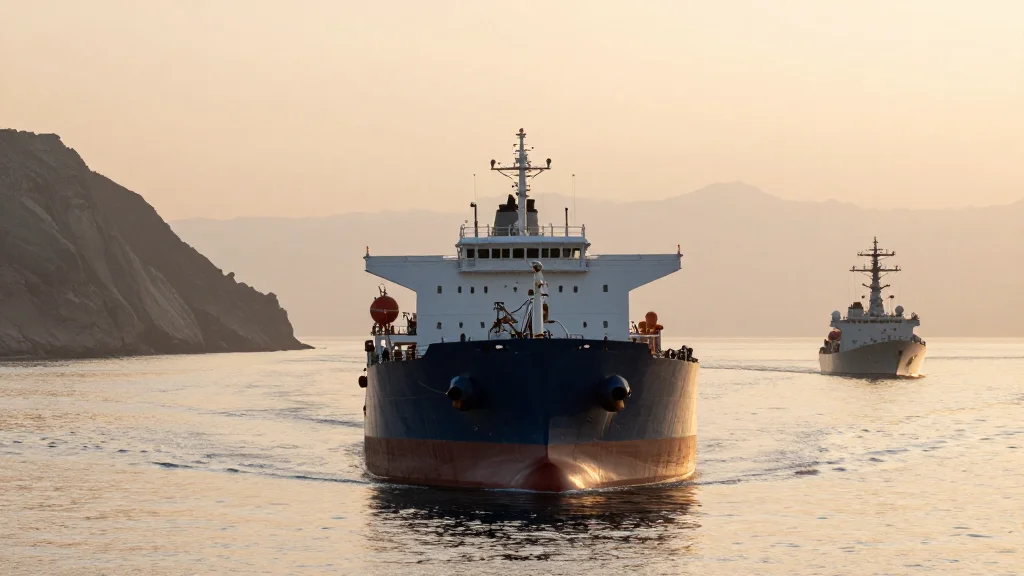
U.S. Sanctions Iran’s New Strait of Hormuz Agency, Targeting $2 Million Vessel Toll

Why It Matters
The Strait of Hormuz is a linchpin of global energy security; any sustained disruption reverberates through oil markets, inflation rates, and the balance of trade for oil‑importing nations. By targeting the Persian Gulf Strait Authority, the United States is striking at a revenue source that funds Iran’s war effort while also signaling to other regional actors that unilateral control of international waterways will not be tolerated. The sanctions could accelerate diplomatic resolution, but they also risk further escalation if Iran perceives the move as an existential threat to its sovereignty. Beyond immediate price spikes, the episode highlights the fragility of maritime chokepoints in an era of heightened great‑power competition. A precedent of using sanctions to enforce open navigation could shape future U.S. policy toward other strategic passages, such as the Bab el‑Mandeb or the South China Sea, where state‑backed tolls or blockades threaten global supply chains.
Key Takeaways
- •U.S. Treasury adds Iran’s Persian Gulf Strait Authority to sanctions list, targeting $2 million per‑vessel tolls
- •Authority created to manage Hormuz traffic; sanctions aim to cut off revenue and force reopening of the waterway
- •Strait of Hormuz carries roughly 20% of global oil and gas shipments, making any closure a major market shock
- •Oil prices rose >2% after the latest U.S.–Iran exchanges, with WTI at $90.87/barrel
- •Iran’s deputy security council chief Ali Bagheri Kani warned the U.S. of legal rights to reclaim blocked Iranian assets
Pulse Analysis
The sanctions against Iran’s Persian Gulf Strait Authority represent a calculated escalation that blends economic coercion with kinetic pressure. Historically, the U.S. has relied on naval presence to keep the Hormuz lane open; now it is adding a financial choke point to the mix. By criminalizing any cooperation with the Authority, Washington hopes to starve Tehran of the $2 million‑per‑ship fees that have become a lifeline for its war‑time budget. The move also serves a domestic political purpose, showing voters that the administration is taking decisive action amid rising energy costs ahead of the midterms.
However, the strategy carries risk. Iran’s Revolutionary Guard has already framed the tolls as a defensive measure against “unlawful” U.S. interference, and any further pressure could provoke retaliatory attacks on commercial shipping, which would amplify the very market disruptions the sanctions seek to avoid. Moreover, the sanctions could push Tehran to deepen ties with non‑Western partners—China and Russia—who may step in to finance the Authority or provide alternative routing for oil, thereby eroding U.S. leverage.
In the broader context, this episode underscores the growing importance of legal and financial tools in maritime security. As great‑power rivalry intensifies, control over chokepoints will increasingly be contested not just with ships and missiles but with sanctions regimes and international law. The outcome of the Hormuz standoff will likely inform future U.S. policy toward other strategic passages, setting a precedent for how economic pressure can be wielded alongside traditional military deterrence.
U.S. Sanctions Iran’s New Strait of Hormuz Agency, Targeting $2 Million Vessel Toll
Comments
Want to join the conversation?
Loading comments...