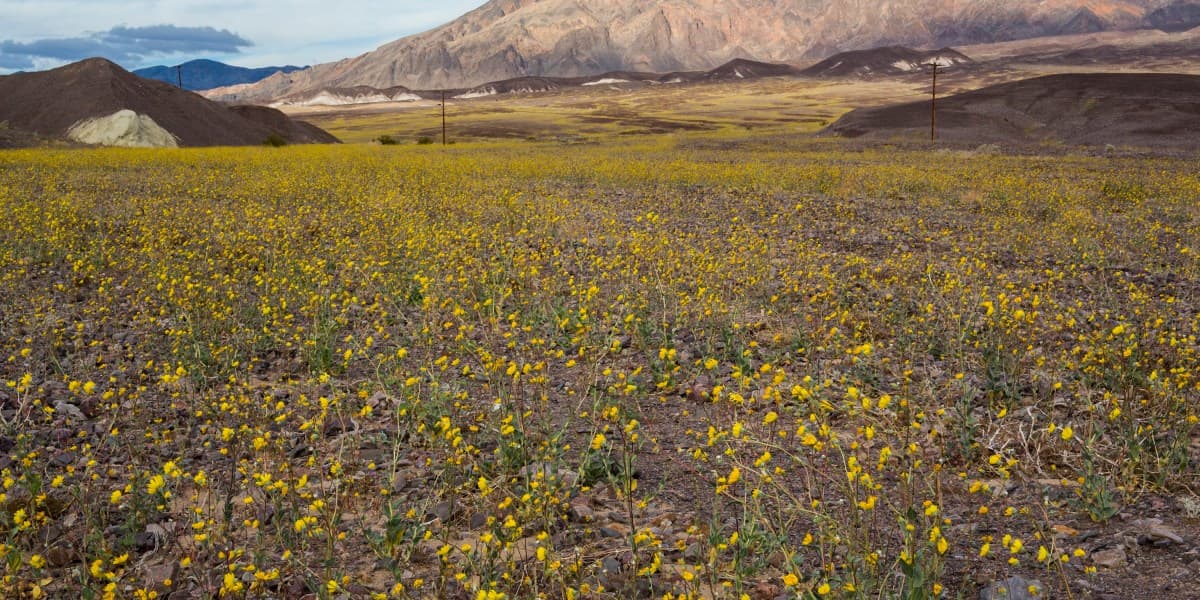
A Once-in-a-Decade Wildflower Superbloom Is Sweeping Across Death Valley
•March 9, 2026
0
Why It Matters
The superbloom drives a tourism surge and highlights how climate variability directly influences desert ecosystems, creating economic and scientific opportunities for the region.
Key Takeaways
- •Record 2.41 inches rain triggered superbloom.
- •First bloom of this magnitude since 2016.
- •NPS forecasts low-elevation blooms through March.
- •Picking flowers prohibited to protect fragile ecosystem.
- •Visitors can view blooms along Badwater and Highway 190.
Pulse Analysis
The sudden burst of color across Death Valley is more than a visual spectacle; it is a direct response to an atypically wet winter that delivered 2.41 inches of rain—far above the desert’s average. Desert wildflowers, especially species like desert gold and desert sand verbena, lie dormant as seeds for years, waiting for sufficient moisture and mild temperatures. When those conditions align, a cascade of germination occurs, turning alluvial fans and foothills into vibrant carpets of yellow, orange, and purple. This 2026 superbloom mirrors the 2016 event, underscoring how narrow climate windows dictate desert biodiversity.
From a business perspective, the bloom translates into a surge of visitor traffic that can double or triple typical park attendance. Local hotels, tour operators, and food vendors in nearby towns such as Beatty and Pahrump see bookings fill weeks in advance, while the National Park Service ramps up staffing and interpretive programs to manage crowds and protect fragile habitats. The economic ripple extends to regional transportation services and outdoor apparel retailers, all of which benefit from heightened demand for guided hikes, photography workshops, and eco‑friendly merchandise. Proper visitor management is essential to sustain both revenue and conservation goals.
Ecologically, the superbloom offers scientists a rare field laboratory to study seed bank dynamics, pollinator interactions, and the effects of short‑term precipitation spikes on arid ecosystems. Researchers can track phenology shifts and assess whether such blooms become more frequent under changing climate patterns. However, the delicate balance also raises concerns: increased foot traffic can compact soil and damage nascent plants, prompting the NPS to enforce strict no‑picking rules and stay‑behind‑your‑selfie policies. Continued monitoring will inform adaptive management strategies, ensuring that future generations can experience Death Valley’s fleeting floral display without compromising its long‑term resilience.
A Once-in-a-Decade Wildflower Superbloom Is Sweeping Across Death Valley
0
Comments
Want to join the conversation?
Loading comments...