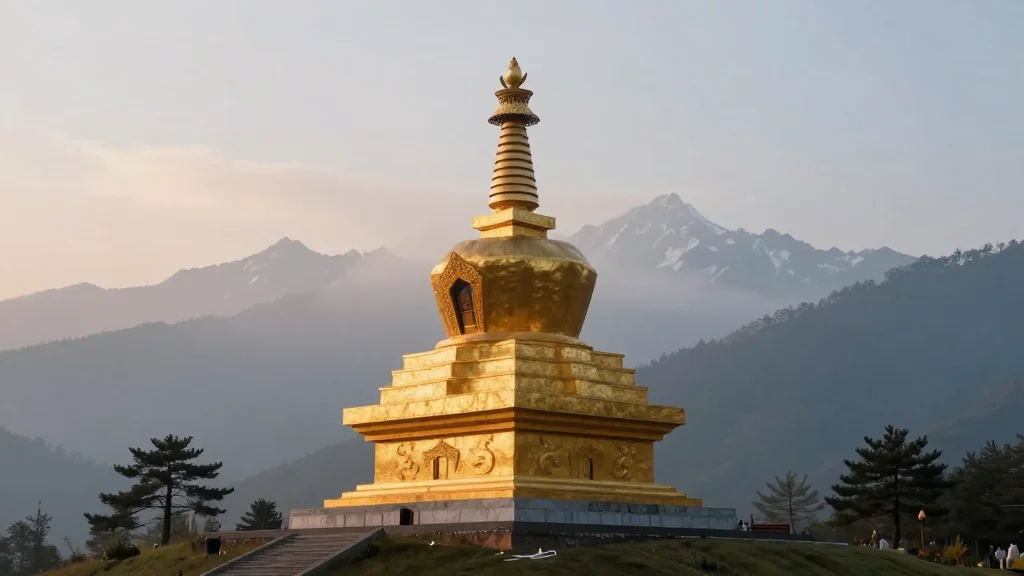
Why It Matters
Understanding Buddhist monuments informs heritage‑tourism strategies and preservation priorities, as these sites attract millions of visitors and embody cross‑cultural exchange.
Key Takeaways
- •Stupas originated in 3rd‑century B.C. India under Emperor Ashoka
- •Pagodas, monasteries, and chaityas spread with Buddhism across Asia
- •Local artisans reshaped monuments, blending Buddhist forms with regional styles
- •Nepal, Thailand, and Taiwan showcase distinct adaptations of Buddhist architecture
- •Heritage maps and glossaries aid tourists and scholars navigating Buddhist sites
Pulse Analysis
Buddhist architecture began with the stupa, a dome‑shaped reliquary mound commissioned by Emperor Ashoka in the third‑century B.C. India. As the earliest stone constructions in the subcontinent, stupas served both devotional and political purposes, cementing Buddhism’s visual identity while signaling imperial patronage. The simplicity of the form— a solid mound topped with a parasol‑like chatra— allowed it to be replicated across diverse terrains, laying the groundwork for a pan‑Asian architectural language.
When Buddhism migrated eastward, its signature structures were reinterpreted through local lenses. In Nepal, stone‑carved stupas blend Hindu motifs with Tibetan influences, while Thailand’s iconic tiered pagodas echo Khmer rooflines and indigenous woodwork. Taiwan’s modern temples fuse traditional Chinese courtyard layouts with contemporary materials, illustrating the religion’s capacity for continual reinvention. This cross‑pollination sparked a flourishing of regional craftsmanship, turning each monument into a cultural hybrid that reflects both Buddhist doctrine and indigenous aesthetics.
Today, these monuments are linchpins of heritage tourism and cultural preservation. Travelers flock to sites like Swayambhunath in Kathmandu, Wat Arun in Bangkok, and the Fo Guang Shan monastery in Kaohsiung, generating significant economic activity for local communities. Governments and NGOs leverage detailed maps, timelines, and glossaries— tools highlighted in the article— to protect vulnerable structures from urban encroachment and climate threats. By contextualizing Buddhist monuments within broader historical and economic frameworks, stakeholders can balance visitor access with conservation, ensuring these symbols of adaptability endure for future generations.
A Primer on Buddhist Monuments
Comments
Want to join the conversation?
Loading comments...