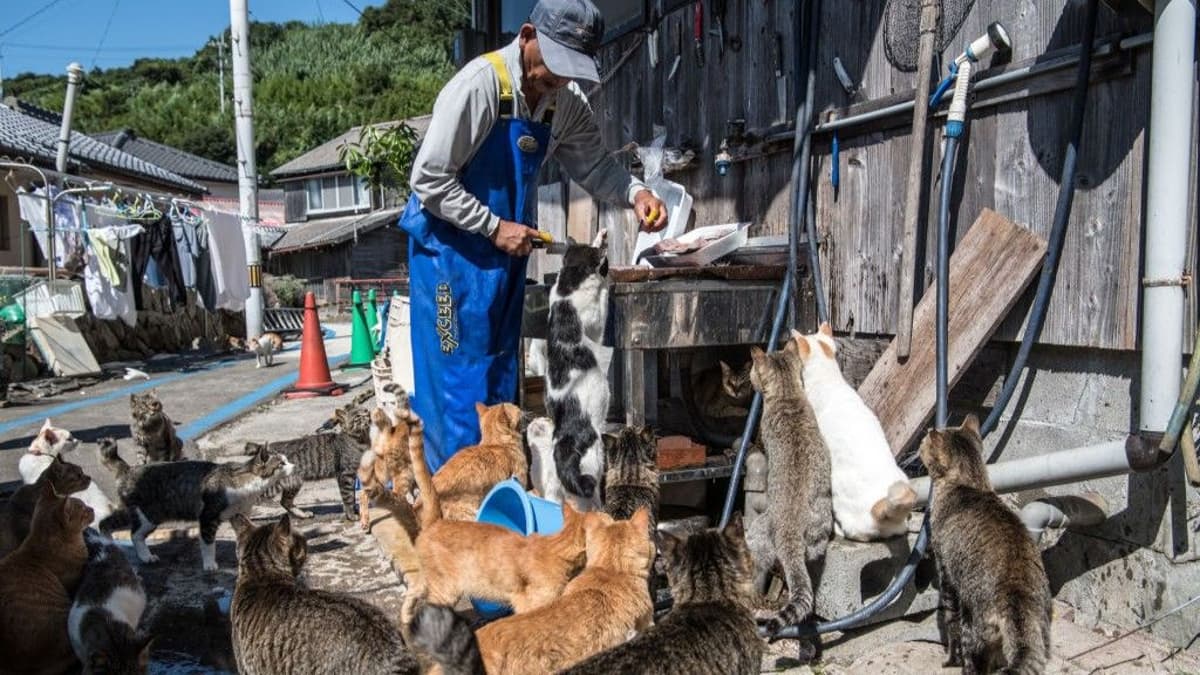
Aoshima: Japan's Tiny 'Cat Island' Where Felines Hugely Outnumber Humans
Companies Mentioned
Why It Matters
Aoshima illustrates how Japan’s rural depopulation can spawn unique animal‑welfare challenges while also creating niche tourism opportunities that support aging communities.
Key Takeaways
- •Cats outnumber humans 27 to 1 on Aoshima’s 0.2‑sq‑mi island.
- •2018 spay‑and‑neuter effort halved the island’s cat count.
- •Remaining felines are all over seven years old, many ill.
- •Visitors feed cats and generate tourism revenue for the aging residents.
Pulse Analysis
Japan’s “cat islands” have long been curiosities, but Aoshima stands out for its extreme demographic imbalance. Once a bustling sardine‑fishing settlement of nearly 900 people, the island now hosts three senior residents who tend to about 80 feral cats. The dramatic decline in human population mirrors broader rural depopulation trends across Japan, where aging demographics and urban migration leave remote communities with dwindling resources. Aoshima’s transformation into a feline‑centric destination showcases how cultural heritage and wildlife can be leveraged to attract niche tourism, providing a modest economic lifeline for its remaining inhabitants.
The cats themselves present a complex animal‑welfare case. A 2018 sterilization program cut the population by more than half, yet all surviving cats are senior, with many displaying health problems linked to decades of inbreeding—a finding confirmed by a 2023 genetic study that highlighted distinct coat‑color gene variations. Local caretaker Naoko Kamimoto feeds the cats twice daily and administers medication, while volunteers and donors from mainland Japan supply additional food. This collaborative model underscores the importance of proactive health interventions and community involvement in managing isolated animal populations.
Tourism now fuels Aoshima’s fragile economy. Day‑trip visitors arrive by boat, drawn by the novelty of feeding dozens of cats that roam abandoned homes and crumbling structures. Their contributions cover food, veterinary care, and modest infrastructure upkeep, effectively turning a depopulated island into a sustainable micro‑attraction. The Aoshima example suggests that other shrinking rural locales could explore wildlife‑centric tourism as a strategy to generate revenue, preserve cultural narratives, and support aging residents, provided ecological impacts are carefully monitored.
Aoshima: Japan's tiny 'Cat Island' where felines hugely outnumber humans
Comments
Want to join the conversation?
Loading comments...