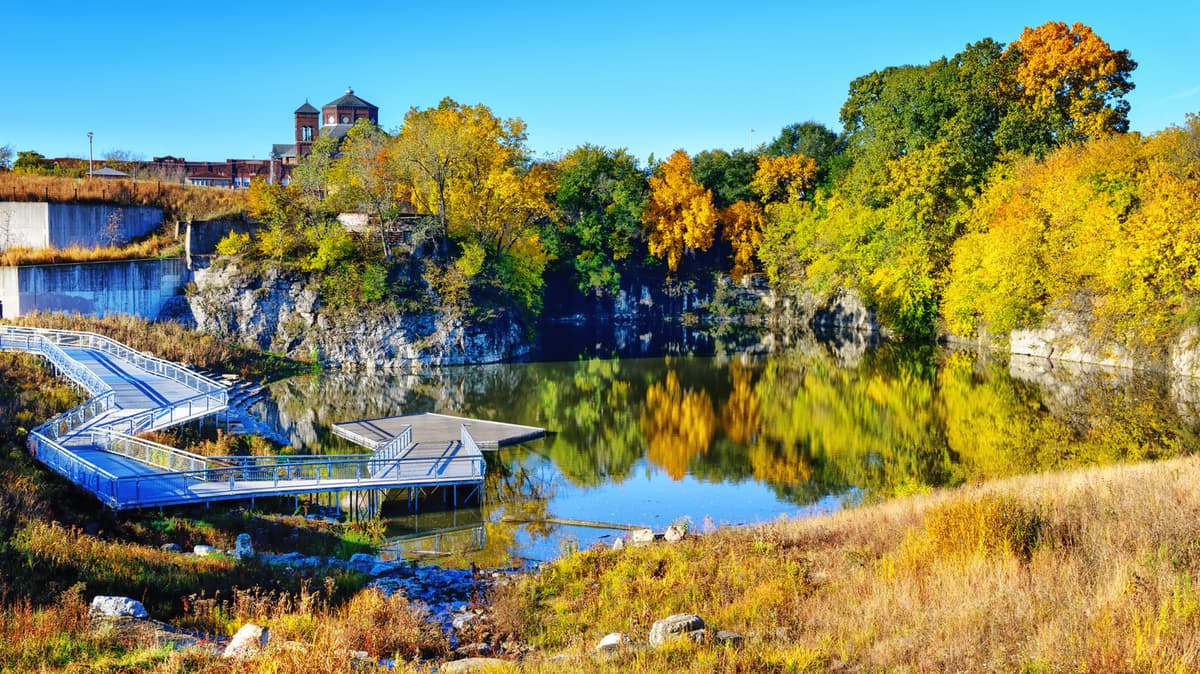
Chicago's Once-Thriving Quarry Turned Landfill Is Now A Vibrant Haven For Trails, Fishing, And Birdwatching
Why It Matters
The park demonstrates how costly brownfield remediation can generate high‑value public green space, boosting community health and biodiversity while showcasing Chicago’s commitment to sustainable urban redevelopment.
Key Takeaways
- •26‑acre former quarry turned park offers 1.7 mi of mixed‑surface trails
- •33‑ft artificial hill provides sledding and skyline views in winter
- •Stocked pond yields 5‑lb bass, supports catch‑and‑release fishing
- •Over 140 bird species recorded, making it a prime birdwatching site
- •Park exemplifies Chicago’s brownfield remediation and community‑focused redevelopment
Pulse Analysis
Chicago’s legacy of heavy industry has left a patchwork of abandoned sites, many of which sit idle as environmental liabilities. Converting these brownfields into public amenities addresses both ecological concerns and the city’s chronic shortage of green space. Palmisano Park illustrates how strategic investment in remediation—soil testing, water treatment, and habitat restoration—can transform a former quarry‑turned‑landfill into a vibrant community asset, aligning with broader sustainability goals and federal clean‑up incentives.
The park’s design leverages its industrial past while prioritizing ecological function. Reclaimed limestone walls frame a 1.7‑mile trail network that weaves through terraced wetlands, supporting native prairie grasses and water‑filtration habitats. A 33‑foot artificial hill offers winter sledding, while a stocked pond and reclaimed‑water waterfall provide year‑round fishing and birdwatching opportunities. By integrating recycled timber boardwalks and a crane‑inspired sculpture, the landscape honors its heritage while delivering low‑maintenance, nature‑based recreation for residents.
Beyond recreation, Palmisano Park serves as a replicable model for other post‑industrial cities seeking to revitalize underused parcels. The project spurs local economic activity through increased foot traffic, property value uplift, and potential tourism tied to its birding reputation. Moreover, it contributes to public health by offering accessible outdoor space that encourages physical activity and mental well‑being. As municipalities grapple with legacy pollution, the park underscores that thoughtful remediation can yield both environmental and socioeconomic dividends.
Chicago's Once-Thriving Quarry Turned Landfill Is Now A Vibrant Haven For Trails, Fishing, And Birdwatching
Comments
Want to join the conversation?
Loading comments...