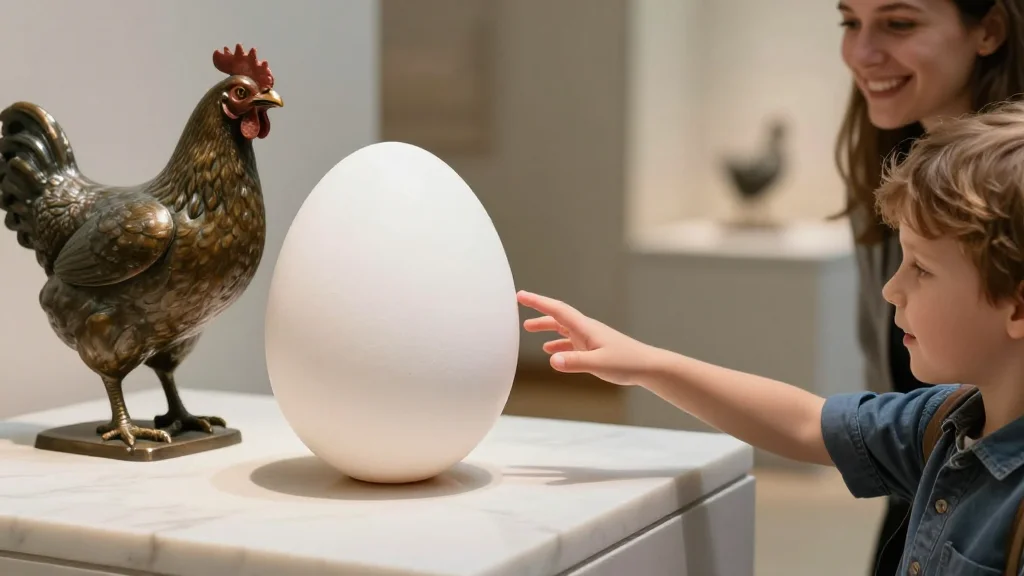
Colmar’s ‘Egg or Chicken’ Tour Offers Hands‑On Look at Animal History

Why It Matters
The launch of the “Egg or Chicken” guided tour underscores how mid‑size museums can reinvent their value proposition in a crowded tourism market. By embedding interactive storytelling into existing collections, the Musée d'Histoire naturelle et d'Ethnographie de Colmar not only enriches the visitor experience but also generates ancillary demand for local hospitality services. This model demonstrates a scalable approach for other regional attractions seeking to attract families and educational groups without heavy capital investment. Moreover, the tour taps into the growing demand for experiential travel, where tourists prioritize authentic, hands‑on activities over passive sightseeing. As travelers increasingly seek deeper connections with a destination’s natural and cultural heritage, programs like this can become a differentiator for smaller cities competing with major metropolitan centers.
Key Takeaways
- •Daily “Egg or Chicken” guided tour launches at 15:00 at Colmar’s Natural History Museum
- •Open to adults and children aged 8+, included in standard admission fee
- •Tour explores animal domestication with questions about wolves, chickens, and more
- •Designed to boost family and school group visitation during shoulder seasons
- •Potential future bundles with local vineyards and hotels to create full‑day itineraries
Pulse Analysis
Colmar’s decision to embed an interactive, question‑driven tour within its natural history museum reflects a strategic pivot toward experiential tourism that many European mid‑tier destinations are adopting. Historically, museums relied on static displays and occasional special exhibitions to draw crowds. The shift toward daily, narrative‑focused programming lowers the barrier to entry for casual visitors while delivering educational value that aligns with school curricula and family learning goals.
From a market perspective, the tour’s inclusion in the base ticket price is a savvy pricing tactic. It eliminates the friction of upselling and encourages higher per‑visitor engagement, which can translate into longer dwell times and increased ancillary spend at museum cafés, gift shops, and nearby businesses. In the competitive Alsace tourism ecosystem—where Strasbourg, Mulhouse, and the wine route dominate—Colmar’s ability to offer a unique, low‑cost educational experience could capture a larger share of the family segment, especially during off‑peak periods.
Looking ahead, the museum’s plan to rotate thematic content seasonally and to partner with local hospitality providers suggests a roadmap for sustainable growth. If successful, this model could be replicated across other cultural institutions in the region, creating a network of interconnected experiences that collectively raise the profile of Alsace as a destination for immersive, learning‑focused travel. The key will be maintaining content freshness and measuring visitor satisfaction to ensure the program continues to meet the evolving expectations of today’s experience‑seeking traveler.
Colmar’s ‘Egg or Chicken’ Tour Offers Hands‑On Look at Animal History
Comments
Want to join the conversation?
Loading comments...