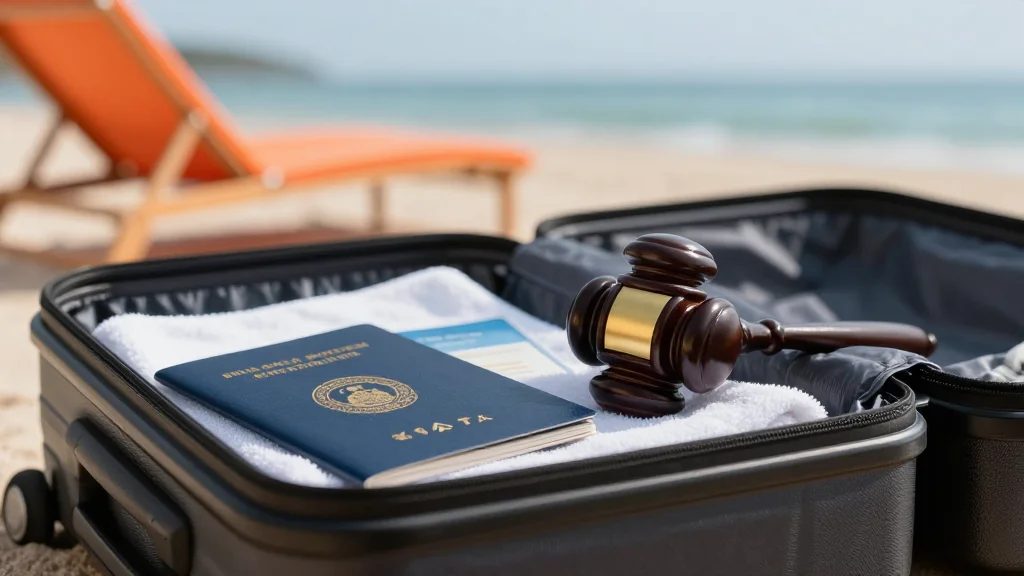
Four UK Summer Holiday Shifts: Flight Mergers, Sun Lounger Lawsuit, US Aversion and Staycation Surge

Companies Mentioned
Why It Matters
The four developments signal a broader shift toward risk‑averse travel behavior in the UK. By allowing airlines to merge flights, regulators acknowledge that fuel security will increasingly dictate operational decisions, potentially reshaping route networks and pricing structures. The sun‑lounger verdict empowers consumers to demand tangible value for high‑priced packages, pressuring tour operators to tighten quality controls. Together, these trends could accelerate the growth of domestic tourism and reinforce the importance of transparent, flexible booking policies. For the travel industry, the changes present both challenges and opportunities. Airlines must balance cost‑saving measures with passenger experience, while tour operators may need to renegotiate supplier contracts to guarantee amenities. Investors will watch how these dynamics affect profit margins, especially as fuel volatility and geopolitical risk remain high.
Key Takeaways
- •UK regulators allow airlines to merge same‑day flights to save fuel amid Iran‑US tensions.
- •German court orders tour operators to ensure a reasonable number of sun loungers per guest.
- •David Eggert paid €7,186 (~$7,830) for a Kos holiday that lacked promised loungers.
- •Travel expert Declan Somers says the lawsuit reflects rising consumer expectations.
- •Staycation bookings rise 12% as US travel interest wanes among British holidaymakers.
Pulse Analysis
The convergence of operational, legal and consumer‑behavior shifts this summer marks a pivotal moment for the UK travel market. Historically, fuel shocks have prompted airlines to adjust capacity, but the current guidance goes further by institutionalising flight‑merging as a standard contingency. This could lead to a permanent re‑calibration of slot allocation, especially at congested hubs like Heathrow, where airlines might trade frequency for larger, more fuel‑efficient aircraft.
The sun‑lounger ruling, while niche, taps into a growing legal trend where travelers leverage consumer‑protection law to enforce service standards. Similar to the recent surge in airline‑delay compensation claims, this case could catalyse a wave of class‑action lawsuits targeting ancillary amenities. Tour operators will likely respond by embedding stricter service‑level agreements with hotels, potentially raising package prices but also offering clearer value propositions.
Finally, the dip in US travel interest underscores how geopolitical risk is reshaping destination hierarchies. With fuel costs and political uncertainty acting as deterrents, the UK market may see a sustained pivot toward short‑haul and domestic tourism. Companies that can bundle flexible booking, robust insurance, and transparent amenity guarantees will be best positioned to capture the evolving demand. The next quarter will reveal whether these regulatory tweaks become permanent fixtures or temporary stop‑gaps in a volatile global environment.
Four UK Summer Holiday Shifts: Flight Mergers, Sun Lounger Lawsuit, US Aversion and Staycation Surge
Comments
Want to join the conversation?
Loading comments...