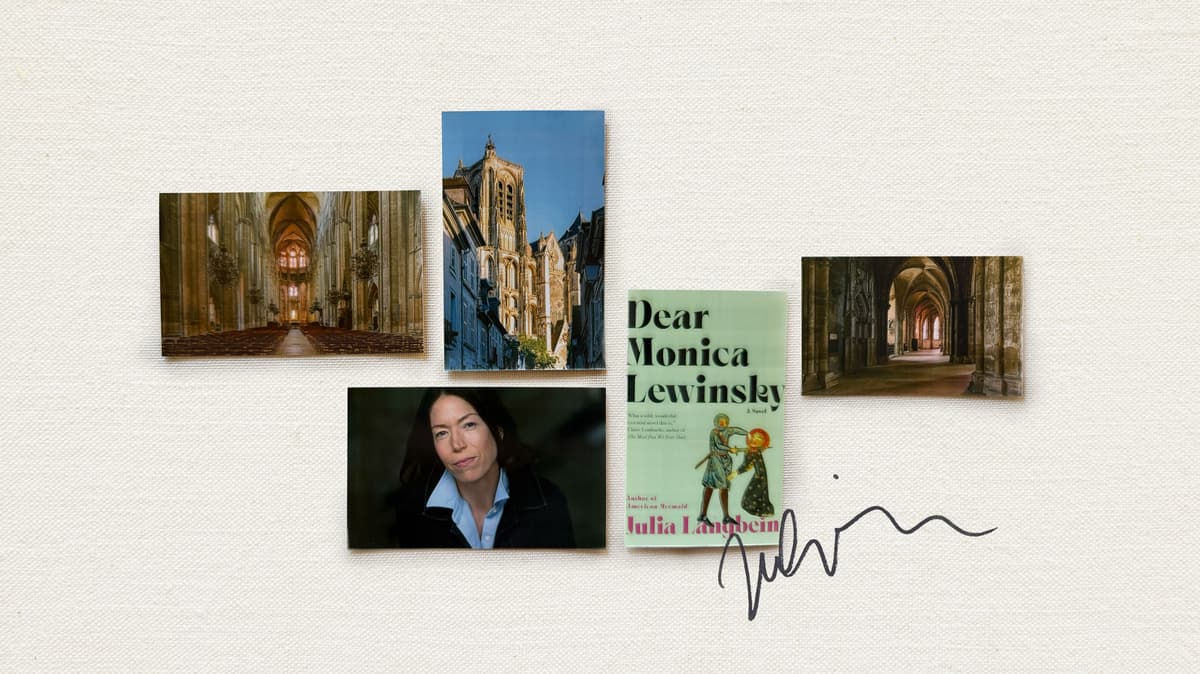
French Cathedral Towns Are a Stage for Human Comedy, According to Author Julia Langbein
Why It Matters
The piece illustrates how immersive, on‑site research can enrich narrative authenticity and offers a fresh lens on cultural tourism, showing that everyday comedy can coexist with historic grandeur.
Key Takeaways
- •Langbein visited Amiens and Bourges to research cathedral settings.
- •Family visit to Amiens hindered her note‑taking for the book.
- •Solo trip to Bourges produced vivid details used in the novel.
- •She observed comedy emerging from everyday life inside grand cathedrals.
- •A carved butt in Bourges crypt inspired a humorous scene.
Pulse Analysis
Julia Langbein’s recent fieldwork in northern and central France underscores a growing trend among novelists: turning travel into a laboratory for storytelling. By stepping inside the 13th‑century Cathédrale Notre‑Dame d’Amiens and the expansive Gothic vaults of Bourges, she captured sensory details that could not be gleaned from books alone. This tactile immersion allowed her to translate stone, light, and even the awkward behavior of tourists into narrative beats, enriching the texture of *Dear Monica Lewinsky* and demonstrating the value of place‑based research for literary authenticity.
Beyond the author’s personal journey, the article highlights how cathedral towns like Amiens and Bourges serve as microcosms where daily commerce and medieval grandeur intersect. Visitors encounter cobblers, cafés, and notaries nestled against soaring arches, creating a subtle comedy that resonates with modern audiences. Such juxtaposition fuels a niche of cultural tourism that seeks not just the iconic façade but the lived experience of locals navigating these monumental spaces. The observation that ordinary life feels “incompatible” with sacred architecture offers a fresh narrative angle for travel writers and marketers alike.
For publishers and readers, Langbein’s experience signals that novels rooted in genuine observation can bridge the gap between high culture and popular appeal. By weaving humor—like the unexpected carved butt in Bourges’ crypt—into scenes of reverence, the author invites a broader audience to engage with heritage sites without the weight of solemnity. This approach may inspire other creators to explore similar contradictions, ultimately enriching the cultural dialogue around historic landmarks while boosting interest in responsible, experience‑driven travel.
French Cathedral Towns Are a Stage for Human Comedy, According to Author Julia Langbein
Comments
Want to join the conversation?
Loading comments...