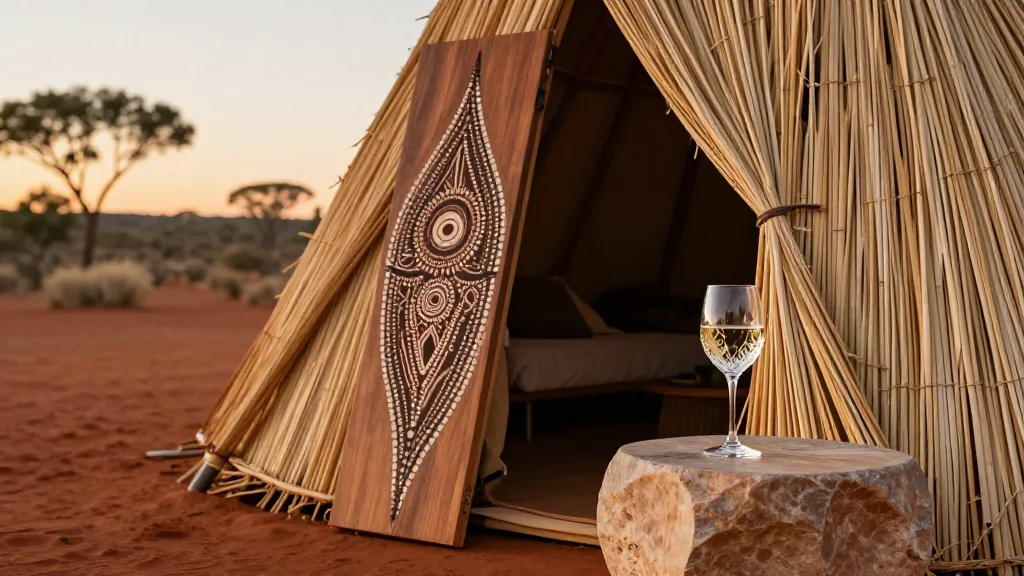
Indigenous Luxury Travel Surges as Communities Lead High-End Journeys

Companies Mentioned
Why It Matters
Indigenous luxury travel reshapes the high‑end market by aligning profit with cultural preservation and environmental stewardship. By channeling visitor spending into language programs, ranger patrols, and artisan cooperatives, the model demonstrates a viable path for tourism that benefits both hosts and guests. The sector’s rapid growth signals a broader consumer shift toward purpose‑driven experiences, pressuring traditional luxury providers to adopt more ethical practices. Furthermore, the expansion of Indigenous‑led itineraries strengthens economic resilience in remote communities, creating jobs, supporting youth training, and protecting biodiversity. As governments and industry bodies formalize standards, the model could become a benchmark for regenerative tourism worldwide.
Key Takeaways
- •Indigenous luxury travel demand up 20‑25% annually, generating ≈$1 bn in Australia by 2025
- •Intrepid Travel and G Adventures each offer over 100 Indigenous‑led experiences
- •60% of Australia’s landmass now Aboriginal‑owned or managed, creating a vast luxury arena
- •Visitor spending funds language programs, ranger patrols, and artisan cooperatives
- •2026 joint certification program to standardize impact metrics across operators
Pulse Analysis
The surge in Indigenous luxury travel reflects a convergence of consumer values and market opportunity. High‑net‑worth travelers are increasingly seeking authenticity and impact, a trend amplified by pandemic‑induced reflection on purpose and sustainability. Indigenous operators meet this demand by offering curated experiences that are both luxurious and rooted in living cultural traditions, turning heritage into a competitive advantage.
Historically, luxury travel emphasized exclusivity and isolation. The current paradigm shift—where stewardship and cultural immersion are paramount—forces legacy brands to re‑evaluate their offerings. Those that fail to integrate Indigenous narratives risk losing relevance, while early adopters can differentiate themselves through genuine partnerships that deliver measurable social returns.
Looking forward, the sector’s scalability hinges on robust certification and data transparency. The upcoming 2026 certification initiative could provide the industry with a trusted framework for assessing cultural integrity and environmental impact, encouraging further investment and consumer confidence. If the growth trajectory holds, Indigenous luxury travel may become a cornerstone of the broader regenerative tourism movement, influencing policy, funding, and the next generation of high‑end travel experiences.
Indigenous Luxury Travel Surges as Communities Lead High-End Journeys
Comments
Want to join the conversation?
Loading comments...