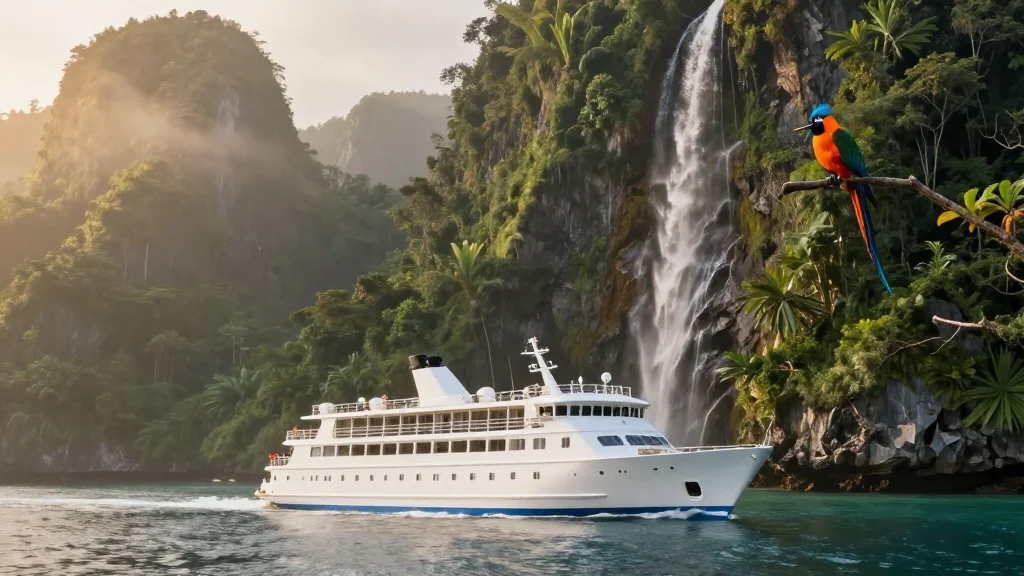
New Expedition Cruise Opens Access to West Papua’s Remote Sanctuary

Why It Matters
The West Papua expedition cruise signals a shift in the travel sector toward ultra‑remote destinations, expanding the frontier of adventure tourism. By offering access to a region renowned for its biodiversity, the cruise could stimulate economic opportunities for local communities while raising awareness of conservation challenges. However, the venture also raises questions about the capacity of fragile ecosystems to accommodate even limited tourism, underscoring the need for robust stewardship frameworks. If the model proves successful, it may encourage other operators to explore similarly remote locales, potentially reshaping global tourism patterns. Conversely, any missteps could amplify concerns about the environmental footprint of high‑end adventure travel, prompting stricter regulations and a reevaluation of how remote natural areas are marketed to affluent travelers.
Key Takeaways
- •New expedition cruise announced for West Papua, one of the world’s most remote natural sanctuaries
- •Operator emphasizes small‑group, expedition‑style travel with onboard naturalists
- •Pricing, ship capacity, and exact itinerary details were not disclosed
- •Launch aligns with growing demand for remote, adventure‑focused tourism
- •Potential economic benefits for local communities balanced against ecological concerns
Pulse Analysis
The West Papua cruise reflects a maturation of the adventure‑travel market, moving beyond the classic polar and African safaris to embrace Southeast Asia’s lesser‑known frontiers. Historically, remote destinations have been the preserve of scientific expeditions; the commercial pivot signals confidence that luxury travelers will fund and respect conservation goals. This confidence is rooted in a decade‑long trend where high‑net‑worth tourists seek authenticity, driving operators to craft experiences that blend education, exclusivity, and low‑impact design.
From a competitive standpoint, the cruise enters a niche dominated by a handful of specialist operators who have built reputations on delivering access to fragile ecosystems. Differentiation will hinge on the quality of the naturalist program, the vessel’s environmental credentials, and the depth of community engagement. If the operator can demonstrate measurable contributions to local conservation projects—such as reef monitoring or community‑based tourism initiatives—it will set a benchmark for responsible remote tourism.
Looking ahead, the success of this venture could catalyze a wave of similar offerings in other under‑touristed regions, from the Amazon’s tributaries to the Pacific’s uninhabited islands. Regulators and NGOs will likely intensify scrutiny, demanding transparent sustainability reporting and caps on visitor numbers. The West Papua cruise thus sits at a crossroads: it can become a model for how premium travel fuels both economic development and environmental stewardship, or it can serve as a cautionary tale if ecological impacts outweigh the benefits. The industry’s next steps will be defined by how well operators, governments, and local stakeholders align their objectives around preservation and profit.
New Expedition Cruise Opens Access to West Papua’s Remote Sanctuary
Comments
Want to join the conversation?
Loading comments...