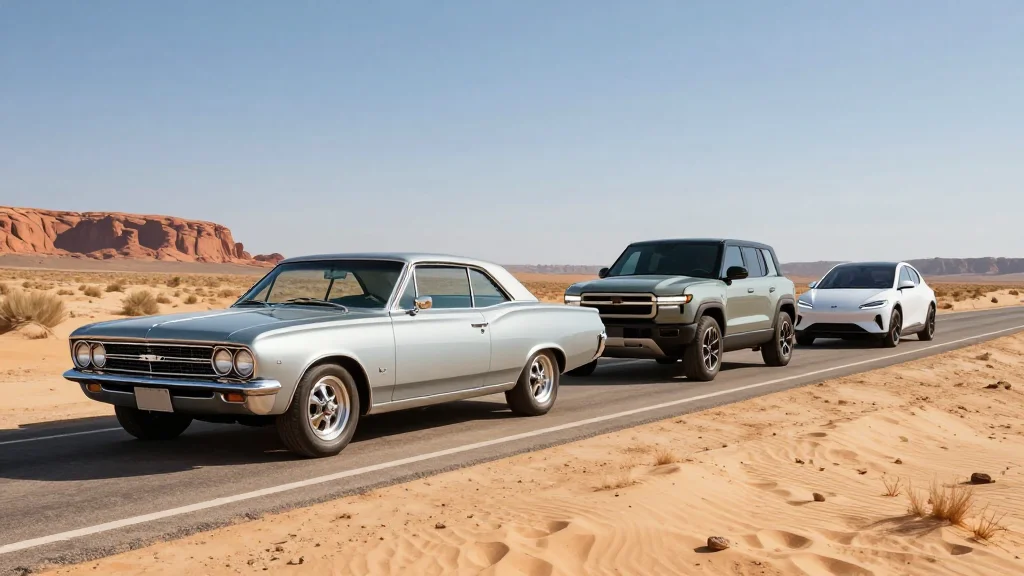
Route 66 Marks 100 Years with Time‑Travel Road Trip Across Classic, Hybrid and Autonomous Cars

Companies Mentioned
Why It Matters
Route 66’s centennial celebration arrives at a moment when travel preferences are shifting toward experiential, heritage‑focused journeys. By juxtaposing classic, hybrid and autonomous vehicles on the same historic pavement, the road‑trip illustrates how legacy infrastructure can adapt to emerging mobility trends, from electric charging networks to driverless technology. The renewed interest in Route 66 also signals economic opportunities for small towns along the corridor, which can leverage nostalgia to attract tourists while investing in modern amenities. Moreover, the experiment offers a micro‑cosm of the broader automotive transition. As manufacturers accelerate the rollout of electric and autonomous fleets, the ability of historic routes to support these vehicles will influence policy decisions on infrastructure funding, zoning and preservation. Route 66’s evolution from a post‑war artery to a showcase for future mobility underscores the interplay between cultural heritage and technological progress in the travel industry.
Key Takeaways
- •Four vehicles—1966 Oldsmobile, 2017 Chevrolet Volt, Rivian R1S, Waymo Jaguar I‑Pace—were used to traverse ~900 miles of Route 66.
- •The trip marked the highway’s 100th anniversary, highlighting its cultural and historical significance.
- •Stops included the Wigwam Motel, Peggy Sue’s ’50s Diner and the Sidewinder Café, emphasizing heritage tourism.
- •EV charging stations and autonomous driving tests demonstrated modern infrastructure integration.
- •The journey underscored the potential for legacy highways to support electric and driverless travel.
Pulse Analysis
Route 66’s centennial road‑trip serves as a case study in how heritage tourism can coexist with, and even accelerate, the adoption of new mobility technologies. The presence of an autonomous Jaguar on a dusty, under‑maintained stretch of pavement challenges the notion that driverless cars require pristine, purpose‑built corridors. Instead, it suggests that software and sensor suites are becoming robust enough to handle real‑world imperfections, a critical step for broader market acceptance.
From an economic perspective, the renewed focus on Route 66 is likely to funnel federal and state dollars into infrastructure upgrades, particularly EV charging and broadband connectivity for remote monitoring of autonomous fleets. Small‑town entrepreneurs can capitalize on this by offering niche experiences—retro‑themed lodging, curated dining, and guided tours that blend history with technology demos. The ripple effect could revitalize communities that have long struggled since the interstate system diverted traffic.
Looking ahead, the experiment hints at a future where historic routes become living laboratories for sustainable travel. As manufacturers push for higher electric ranges and autonomous capabilities, policymakers will need to balance preservation with modernization. Route 66’s 100‑year milestone demonstrates that nostalgia does not preclude innovation; rather, it can provide a compelling narrative that drives investment, attracts visitors, and showcases the next chapter of American road‑trip culture.
Route 66 Marks 100 Years with Time‑Travel Road Trip Across Classic, Hybrid and Autonomous Cars
Comments
Want to join the conversation?
Loading comments...