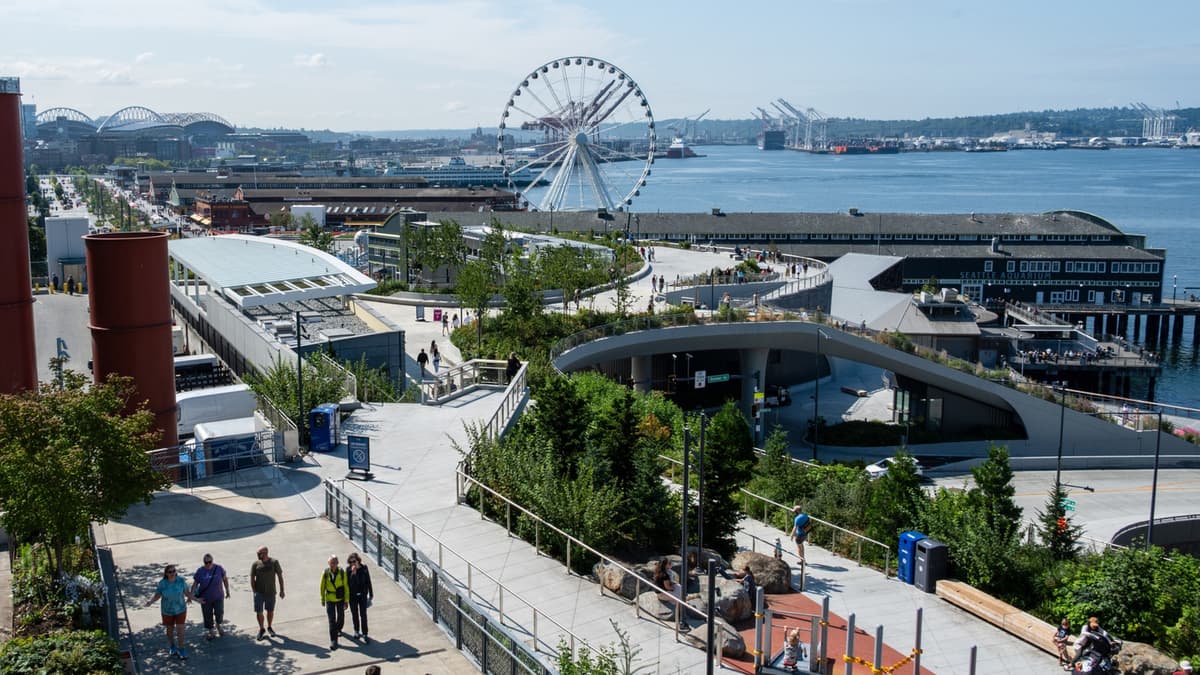
Seattle's Redeveloped Waterfront Park Is The West Coast Answer To New York City's High Line
Companies Mentioned
Why It Matters
The redevelopment transforms a long‑standing eyesore into a vibrant public realm, driving tourism, boosting local businesses, and reinforcing Seattle’s reputation as a walkable, environmentally conscious city.
Key Takeaways
- •20‑acre park replaces former Alaskan Way Viaduct
- •Designed by the High Line team, emphasizing greenery and public art
- •Hosts salmon habitat, ocean pavilion, and Seattle Great Wheel
- •Draws 3,000+ Google reviews, averaging 4.5 stars
- •Boosts walkability, linking bike lanes to Elliott Bay Trail
Pulse Analysis
Seattle’s Waterfront Park illustrates how cities can turn obsolete infrastructure into economic engines. By removing the Alaskan Way Viaduct—a noisy, traffic‑laden structure—and installing a linear park, the city has unlocked prime waterfront real estate for mixed‑use activity. Real‑estate analysts project a 12% uplift in nearby property values, while hospitality firms report a surge in bookings tied to the park’s attractions. This mirrors the High Line’s impact on Manhattan’s Meatpacking District, where a similar conversion sparked a cascade of retail, residential, and cultural investment.
Beyond fiscal gains, the park delivers measurable environmental benefits. Integrated rain gardens and native plantings improve storm‑water management, reducing runoff into Puget Sound by an estimated 30%. The salmon‑friendly habitat at Pioneer Square Habitat Beach supports juvenile runs, aligning with regional restoration goals. Moreover, the park’s extensive bike lanes and pedestrian pathways encourage active transportation, contributing to Seattle’s broader climate‑action plan to cut vehicle miles traveled by 15% over the next decade.
Culturally, Waterfront Park reinforces Seattle’s identity as a progressive, arts‑friendly metropolis. Public art installations, rotating food‑truck programs, and flexible event spaces create a dynamic social hub that attracts both residents and tourists. The park’s connectivity to King Street Station and the free summer shuttle enhances multimodal access, making it a model for future waterfront projects on the West Coast. As other cities watch Seattle’s success, the park may set a new benchmark for integrating urban design, ecology, and economic development in post‑industrial landscapes.
Seattle's Redeveloped Waterfront Park Is The West Coast Answer To New York City's High Line
Comments
Want to join the conversation?
Loading comments...