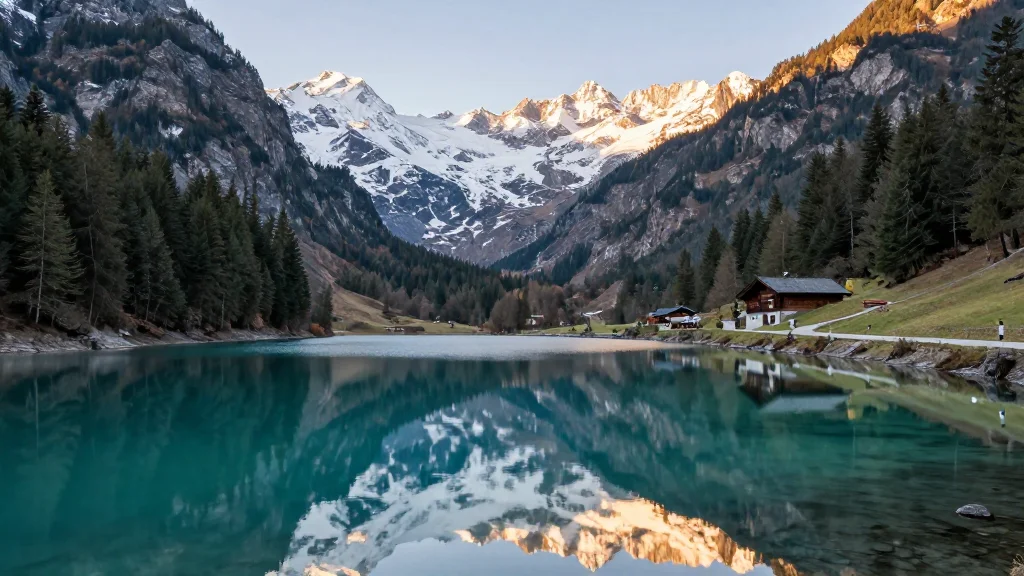
Stelvio National Park Named One of the World’s Most Beautiful Places

Why It Matters
Stelvio National Park’s elevation to a globally recognized beauty spot signals a broader trend: travelers are gravitating toward destinations that combine striking natural scenery with sustainable practices. As climate concerns reshape vacation preferences, parks that can offer low‑impact experiences while delivering dramatic landscapes stand to capture a growing market segment. For the Alpine region, this could translate into increased revenue for local economies, provided that visitor management safeguards the delicate ecosystems. Moreover, the accolade reinforces the credibility of editorial rankings that rely on on‑the‑ground reporting rather than social‑media hype. By emphasizing journalist‑verified experiences, Time Out sets a benchmark for future travel guides, encouraging destinations worldwide to prioritize authenticity and environmental responsibility to earn similar recognition.
Key Takeaways
- •Time Out adds Stelvio National Park to its list of the world’s most beautiful places.
- •The park features year‑round attractions, from summer meadows to the Forni Glacier’s winter vistas.
- •Selection is based on journalists’ personal visits, ensuring authentic, off‑social‑media destinations.
- •Recognition aligns with rising demand for sustainable, nature‑focused travel in the Alps.
- •Local authorities pledge to balance increased tourism with conservation of fragile alpine ecosystems.
Pulse Analysis
Stelvio’s ascent onto the global stage reflects a pivot in travel demand toward places that can deliver both visual grandeur and a sense of stewardship. Historically, Alpine tourism has been dominated by ski resorts and well‑known peaks like Mont Blanc. By spotlighting a protected national park, Time Out nudges the market toward lesser‑trodden paths that promise lower crowd density and richer ecological experiences. This shift could pressure traditional ski‑centric operators to diversify their offerings, integrating guided hikes, glacier education programs, and community‑led cultural events.
From a competitive standpoint, the accolade gives Italy a fresh lever against neighboring Alpine nations such as Switzerland and Austria, whose tourism strategies heavily rely on luxury ski infrastructure. Stelvio’s branding as a sustainable, season‑spanning destination may attract a new cohort of eco‑conscious travelers, prompting regional governments to invest in green transport links and renewable‑energy accommodations. The challenge will be to scale visitor services without eroding the very qualities—pristine landscapes, biodiversity, and cultural authenticity—that earned the park its place on the list.
Looking ahead, the real test will be how effectively Stelvio’s management translates this publicity into a sustainable growth model. Monitoring visitor numbers, enforcing trail limits, and expanding low‑impact amenities will be critical. If successful, Stelvio could become a template for other protected areas seeking to balance exposure with preservation, reinforcing the notion that beauty and sustainability are not mutually exclusive but mutually reinforcing pillars of modern travel.
Stelvio National Park Named One of the World’s Most Beautiful Places
Comments
Want to join the conversation?
Loading comments...