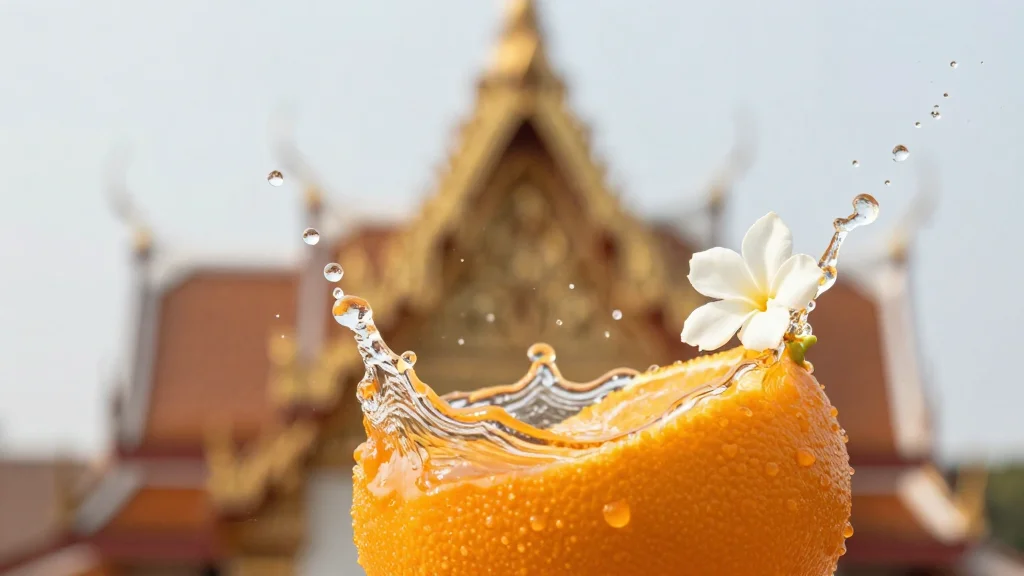
Thai Songkran Crowned April’s Top Global Travel Destination for 2026

Why It Matters
The Songkran ranking signals a shift in traveler preferences toward immersive cultural experiences that combine festivity with authentic local interaction. By converting a traditional holiday into a global tourism engine, Thailand demonstrates how heritage can be monetized without eroding its core values. The economic boost—nearly $1 billion—provides a template for other destinations seeking to harness seasonal events for year‑round growth. Furthermore, the accolade strengthens Thailand’s bargaining position in regional tourism negotiations, potentially attracting more airline routes and investment in hospitality infrastructure. As climate concerns and post‑pandemic travel habits evolve, Songkran’s success underscores the resilience of culturally anchored tourism in driving economic recovery.
Key Takeaways
- •Songkran named April 2026’s No. 1 global travel destination by Big 7 Travel
- •Projected 6.5 million participants generate ~30 billion baht ($940 million) in economic activity
- •Culture Minister Sabida Thaised highlighted the festival’s role in renewing human connections
- •Celebrations continue beyond Bangkok in provinces like Chon Buri and Nan
- •Government plans infrastructure upgrades and marketing campaigns to sustain momentum
Pulse Analysis
Songkran’s ascent to the top of the April travel rankings reflects a broader industry trend: travelers are gravitating toward experiences that offer both spectacle and cultural depth. Unlike generic beach resorts, festivals like Songkran provide a narrative hook that can be packaged across multiple media channels, from social influencers to traditional travel guides. This narrative advantage translates into higher willingness to spend, as evidenced by the projected $940 million economic impact.
Historically, Thailand has relied on its natural attractions—beaches, islands, and wildlife—to draw tourists. The shift toward a festival‑centric strategy diversifies the country’s tourism portfolio, reducing over‑dependence on any single asset. It also mitigates seasonality; while beach tourism peaks in the winter months, Songkran injects demand in April, smoothing revenue streams for hotels and airlines.
Competitively, other Asian nations are eyeing similar models. Japan’s cherry‑blossom season and India’s Holi festival have long attracted international visitors, but they lack the coordinated national branding that Thailand now exhibits. By aligning government ministries, local businesses, and cultural campaigns under a unified “Proudly Wearing Thai” banner, Thailand creates a replicable framework for other destinations.
Looking forward, the sustainability of this growth hinges on managing crowding, environmental impact, and the authenticity of the experience. Over‑commercialization could dilute the cultural essence that makes Songkran appealing. Policymakers must balance infrastructure upgrades with preserving the festival’s grassroots character. If managed well, Songkran could become a perennial driver of tourism, setting a benchmark for how cultural heritage can be leveraged in the modern travel economy.
Thai Songkran Crowned April’s Top Global Travel Destination for 2026
Comments
Want to join the conversation?
Loading comments...