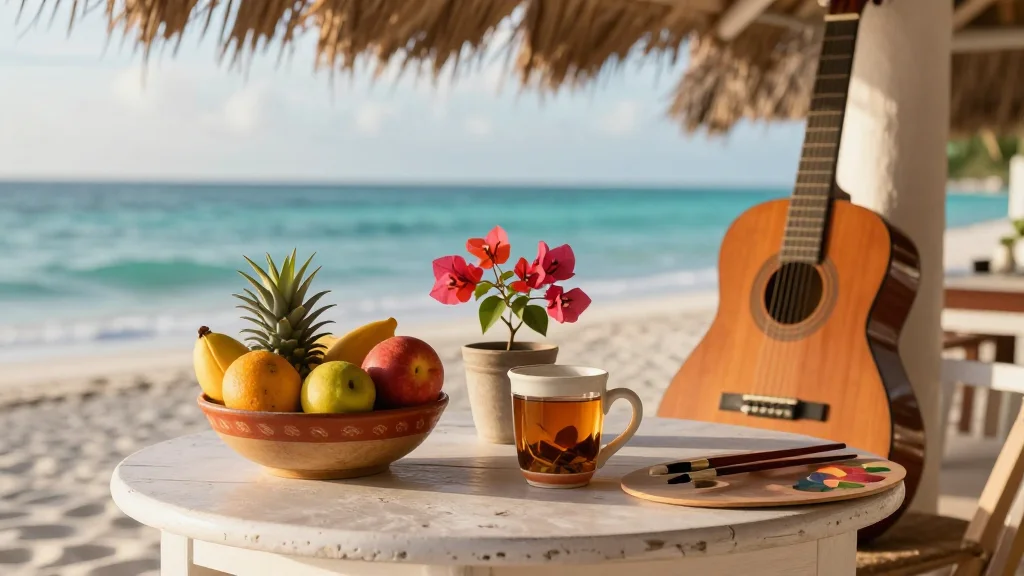
Three Boutique Resorts in Tulum and Holbox Launch Creative Season Artist Retreats

Why It Matters
Creative Season reflects a decisive pivot in travel preferences toward immersive, purpose‑driven experiences that extend beyond traditional leisure. By converting the slower summer months into a vibrant creative ecosystem, the resorts not only generate revenue during traditionally low‑demand periods but also set a template for how boutique hotels can leverage cultural programming to attract high‑spending guests. This approach could reshape occupancy strategies across the Caribbean, encouraging more properties to embed arts and wellness into their core offerings. If the model proves financially sustainable, it may accelerate a broader industry trend where hospitality brands partner directly with independent creators, blurring the line between accommodation and cultural institution. Such a shift could also influence destination marketing organizations to promote artistic residencies and workshops as key tourism assets, diversifying the economic base of regions that have historically relied on beach‑centric tourism.
Key Takeaways
- •Three boutique resorts—The Nômade Temple Tulum, The Nômade Temple Holbox, Be Destination Tulum—launch Creative Season, an artist‑focused retreat program.
- •Programming centers on five pillars: movement, meditation, nourishment, music and artistic expression.
- •The initiative targets the off‑peak summer season, aiming to attract wellness‑oriented, experience‑driven travelers.
- •Limited capacity preserves intimacy, but may restrict scalability and broader market impact.
- •Organizers hint at future expansion to additional Caribbean locations if demand remains strong.
Pulse Analysis
Creative Season arrives at a moment when the travel industry is recalibrating its value proposition. Post‑pandemic travelers have shown a willingness to pay more for authenticity, community and personal growth, a trend that boutique hotels are uniquely positioned to capture. By embedding creators directly into the guest experience, the three resorts are effectively turning their properties into living galleries, a strategy that can command premium rates and foster repeat visitation. This aligns with the broader rise of "staycation"‑style experiences where the destination itself becomes a workshop, studio, or performance space.
Historically, Caribbean tourism has hinged on sun‑sand‑sea packages, with seasonality dictating revenue cycles. Creative Season disrupts that model by generating a distinct product offering that thrives precisely when beach crowds thin out. If the program can maintain high occupancy and price points, it could inspire a wave of similar initiatives, prompting hotels to re‑engineer staffing, supply chains and marketing to support year‑round, experience‑centric operations. However, the success of such a model depends on careful curation; over‑commercialization could dilute the authenticity that draws creative travelers in the first place.
Looking ahead, the key variables will be guest satisfaction metrics, the ability to attract high‑profile creators, and the scalability of the programming without sacrificing intimacy. Should Creative Season demonstrate strong financial returns and positive brand equity, we may see a cascade of destination‑wide collaborations between hospitality groups, local artists and cultural institutions, fundamentally reshaping the Caribbean’s tourism narrative from passive consumption to active creation.
Three Boutique Resorts in Tulum and Holbox Launch Creative Season Artist Retreats
Comments
Want to join the conversation?
Loading comments...