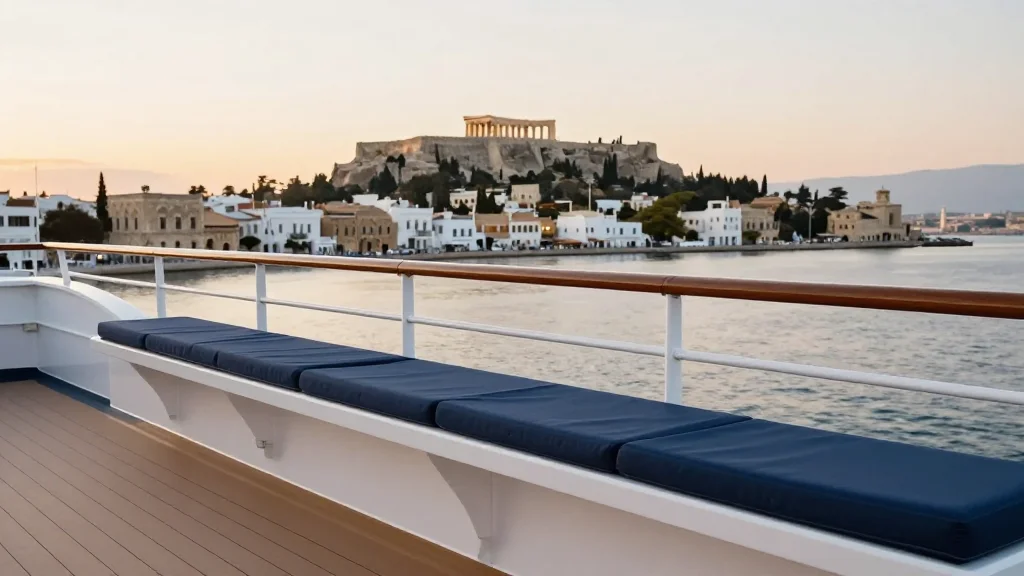
Viking’s Quiet‑Season Mediterranean Cruises Offer Crowds‑Free Exploration

Why It Matters
Viking’s quiet‑season cruises illustrate a shift in the travel industry toward demand‑driven scheduling, where operators capitalize on off‑peak periods to deliver premium experiences at lower cost. By alleviating crowding at world‑renowned sites, these voyages enhance cultural immersion and reduce the environmental strain of mass tourism during summer peaks. The model also provides a template for other cruise lines and destination marketers aiming to distribute visitor flow more evenly throughout the year, potentially extending the economic benefits of tourism beyond the conventional summer window. For travelers, the approach offers a tangible solution to the perennial dilemma of choosing between iconic destinations and manageable crowds. The combination of milder weather, better value and authentic interactions may redefine expectations for Mediterranean travel, encouraging a broader demographic to consider cruise vacations as a viable, low‑stress alternative to traditional land‑based tours.
Key Takeaways
- •Viking deploys over 50% of its fleet to Mediterranean quiet‑season cruises (early spring, late fall, winter).
- •Seven‑night "Ancient Mediterranean Treasures" itinerary visits six+ ports, including Rhodes, Crete, and Istanbul.
- •Travelers experience reduced crowds, with temperatures in the high 60s°F and low humidity.
- •Off‑peak pricing delivers better fare value while maintaining upscale service standards.
- •Viking plans to add themed voyages and expand the quiet‑season calendar through 2027.
Pulse Analysis
Viking’s quiet‑season strategy is a pragmatic response to two converging forces: the saturation of Mediterranean tourism in summer and the growing appetite for experiential, low‑stress travel. Historically, cruise lines have treated the Mediterranean as a summer‑only market, leaving ships idle or under‑utilized during the colder months. By repurposing capacity for off‑peak itineraries, Viking not only improves asset utilization but also taps into a niche of affluent travelers who value exclusivity and cultural depth over the party atmosphere of peak cruises.
The move also aligns with broader sustainability goals. Dispersing visitor numbers across the calendar mitigates the environmental impact of mass tourism—particularly in fragile heritage sites that suffer wear during high‑season peaks. As climate change makes summer heat more oppressive, the appeal of milder off‑season conditions is likely to grow, positioning Viking ahead of competitors still focused on traditional peak‑season models.
Looking forward, the success of Viking’s quiet‑season cruises could prompt a cascade effect. Other premium operators may launch similar off‑peak offerings, while destination authorities could develop complementary infrastructure—such as extended opening hours for museums and local events—to attract these travelers. The key challenge will be maintaining the balance between exclusivity and accessibility; if demand outpaces supply, prices could rise, eroding the value proposition that currently differentiates these voyages. Nonetheless, Viking’s initiative signals a meaningful evolution in Mediterranean tourism, one that could reshape travel patterns for years to come.
Viking’s Quiet‑Season Mediterranean Cruises Offer Crowds‑Free Exploration
Comments
Want to join the conversation?
Loading comments...