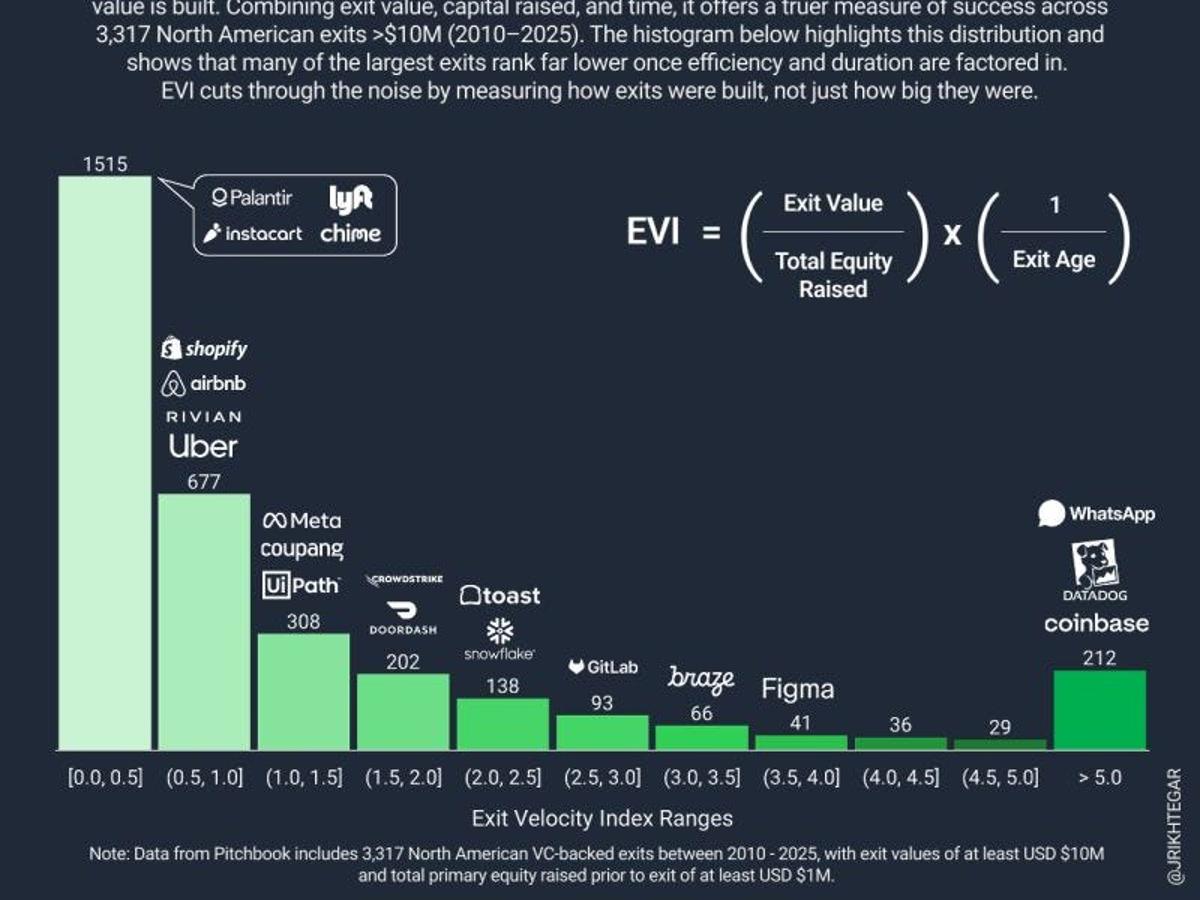
Y-Combinator’s New Batch Doubles Down on Production-Ready AI, Unconventional Tactics for Validating Your Startup Ideas & Measuring True Efficiency in Venture Exits.
Venture Capital

Y-Combinator’s New Batch Doubles Down on Production-Ready AI, Unconventional Tactics for Validating Your Startup Ideas & Measuring True Efficiency in Venture Exits.

Sahil S
Sahil SOct 31, 2025

Why It Matters

The trends reshape capital allocation: investors must adjust expectations, startups need scalable AI stacks, and talent strategies must align with longer‑term value creation.

Y-Combinator’s new batch doubles down on production-ready AI, Unconventional tactics for validating your startup ideas & Measuring true efficiency in Venture exits.

By Sahil Sr. · October 31 2025

Big idea + report of the week

  • Paid AI adoption hits its first slowdown, but enterprise spending keeps climbing.

  • Y‑Combinator’s 2025 Summer batch doubles down on production‑ready AI.

  • Why early‑stage VC returns are quietly collapsing.


Paid AI adoption hits its first slowdown, but enterprise spending keeps climbing

Ramp’s latest AI Index reveals that U.S. companies are entering a new phase of the AI curve, one where adoption is stabilising while spending intensifies.

After nearly two years of explosive growth, paid AI adoption dipped 0.7 % in September, marking the second decline this year. Beneath the headline, the story is less about retreat and more about market maturity.

Here’s what’s happening:

  • Adoption plateaus in tech and finance. About 73 % of tech firms and 58 % of finance companies now pay for AI tools, but growth has slowed as most early adopters consolidate spend and refine ROI.

  • Retention is rising fast. Annualised retention for AI tools has climbed from < 50 % in 2022 to ≈ 60 % in 2023, and is forecasted to hit 80 %+ in 2025. Companies are sticking around longer once they integrate AI into workflows.

  • Enterprise spending explodes. The average contract value jumped from $143 K in 2024 to $530 K in 2025, with projections near $1 M in 2026. Businesses may be buying fewer new tools, but they’re spending far more per vendor.

OpenAI continues to dominate (35.6 % of paid adoption), while Anthropic trails at 12.2 %, and smaller players like xAI, Google, and DeepSeek remain in the single‑digit range. AI adoption is entering its scaling era: companies have picked their tools, now they’re integrating them deeply, standardising workflows, and spending big to scale use cases.


Y‑Combinator’s 2025 Summer batch doubles down on production‑ready AI

CB Insights’ breakdown of Y Combinator’s Summer 2025 batch shows a clear shift: AI is no longer experimental, it’s enterprise‑ready. The 165+ startups funded this season mark YC’s most practical, infrastructure‑heavy cohort yet.

  • Voice AI enters regulated industries. Sixteen startups target complex, compliance‑heavy sectors like finance and insurance (e.g., Altur, Veritus Agent, Qualify.bot, Wayline). Others, such as Liva AI and Panels, are building proprietary training datasets—a moat that general‑purpose models can’t match.

  • Software‑development agents dominate. With 20 dev‑focused startups, YC continues its bet on AI engineering tools. Companies like Stagewise (frontend agents) and Interfere (autonomous debugging) go beyond Copilot‑style assistance, tackling full‑lifecycle automation, including testing and hardware integration.

  • The agent stack is maturing fast. Nearly 50 % of the batch builds AI agents, and 14 focus on agent infrastructure, evaluation (AgentHub), debugging (Fulcrum Research), and monitoring (Mohi). Others like Nozomio Labs and Imprezia are building new layers for context and monetisation.

  • Efficiency replaces capability as the next frontier. Startups such as Stellon Labs (tiny frontier models), Herdora (low‑latency inference), and DeepAware AI (data‑centre energy optimisation) reflect a market shift toward scaling AI affordably—latency, cost, and sustainability now define adoption barriers.

Implication for founders: the AI story has moved from demos to deployment. YC’s next generation isn’t chasing hype; they’re building the infrastructure and vertical tools enterprises will soon depend on.


Why early‑stage VC returns are quietly collapsing

PitchBook’s latest note by Kyle Stanford, Director of US Venture Research, highlights how today’s market dynamics are tightening returns for early‑stage investors from both sides: larger seed rounds and longer exit timelines.

  • Seed rounds are bigger and ownership is shrinking. Rising round sizes have reduced seed investors’ average stake, making it harder to build diversified portfolios or maintain meaningful ownership in breakout companies.

  • More startups, but thinner slices. First‑time financings in 2025 are pacing 16 % ahead of 2023, yet investors’ share of equity in eventual $500 M+ exits has fallen from 68 % in 2015 to 55 % in 2025.

  • Companies are staying private longer. The median time from first VC check to IPO is now 11.5 years, up from 7.4 years a decade ago, creating liquidity pressure across the venture stack.

  • Secondaries offer relief, but at a cost. Selling early in secondary markets helps recycle capital but limits the upside LPs expect from long‑duration VC bets.

  • 800+ US unicorns and counting. The growing backlog of billion‑dollar private companies is delaying exits and compounding the liquidity bottleneck.

As valuations stretch and holding periods lengthen, seed investors face a return‑compression era, forced to balance liquidity needs against ownership dilution. The traditional “spray and pray” seed model may soon need rethinking.


What early‑stage founders should really know about compensation

Compensation advice is everywhere, but most of it doesn’t apply to a five‑person startup trying to make its first few hires. Early‑stage founders often overthink the rules, benchmarking against Google, overpaying to win talent, or giving away too much equity too soon. Leaders from Clay, Instacart, Google, Applied Intuition, and Confluent stress that early‑stage comp is less about formulas and more about philosophy.

Rules to break

  1. “Give big equity to land talent.”

    • Why it’s risky: Early equity is far more expensive than it looks. Kaitlyn Knopp (Pequity, ex‑Instacart) recommends that the first 10 hires receive a combined maximum of 10 % of the total pool; even 1 % each can be aggressive.

    • Practical tip: Outline a clear compensation philosophy and stick to it. Teach candidates what equity actually means—transparency turns fear into trust (e.g., Facebook’s “Understanding Your Equity” guide).

  2. “Pay top‑of‑market to attract talent.”

    • Why it’s risky: Qasar Younis (Applied Intuition) warns that inflating salaries destroys incentives and makes the business unsustainable.

    • Practical tip: Keep cash low, equity high, and let wealth come from company growth. At Applied, employees are now in the 99th percentile of compensation not because of high initial salaries, but because their stock grew dramatically.

  3. “Wait for review cycles before adjusting comp.”

    • Why it’s risky: Delaying adjustments can demotivate early hires and lead to turnover when competitors move faster.

    • Practical tip: Conduct quarterly compensation reviews that factor in both cash and equity vesting progress, aligning incentives with the company’s runway and milestones.

Rules worth keeping

  • Align compensation with milestones. Tie equity refreshers to product or revenue targets to ensure founders and employees stay on the same growth trajectory.

  • Be transparent about runway. Candidates who understand the financial reality are more likely to accept a balanced cash‑equity mix.

  • Prioritise cultural fit over headline salary. Early hires shape the company’s DNA; shared values often outweigh marginal pay differences.


End of article.

Comments

Want to join the conversation?

Loading comments...