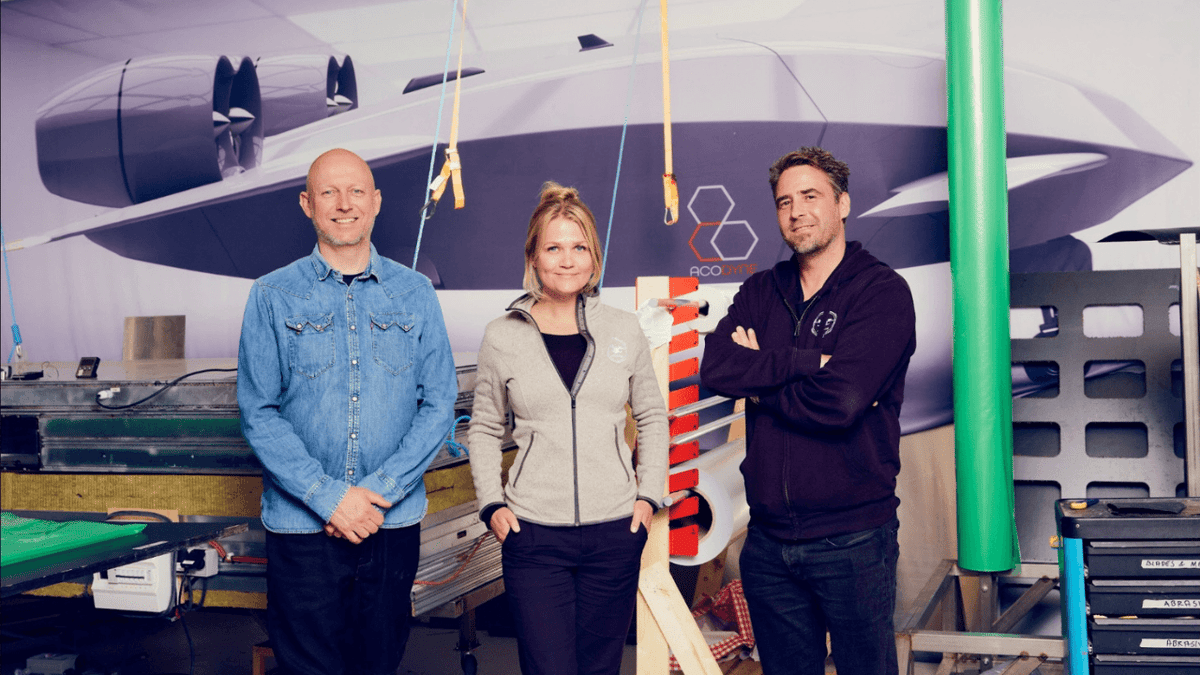
Acodyne Secures €2.5M to Develop Next-Generation Autonomous Logistics Aircraft
Why It Matters
The funding moves Acodyne from concept to flight‑tested hardware, promising faster, crew‑less resupply for NATO and commercial operators and potentially reshaping high‑value logistics in contested or hard‑to‑reach areas.
Key Takeaways
- •Acodyne raised €2.5M (~$2.7M) pre‑seed for autonomous cargo eVTOL.
- •Aircraft target 100‑500 kg payloads, 450 km/h speed, 500 km range.
- •Hybrid version adds kerosene extender for longer missions without charging.
- •Focus on defence, offshore and remote logistics before civilian markets.
- •First flight tests of the E100 prototype slated for late 2026.
Pulse Analysis
The emergence of autonomous cargo eVTOLs marks a turning point for heavy‑lift logistics, especially in defence and offshore sectors where speed and survivability are paramount. Acodyne’s approach—combining ducted‑fan propulsion, AI‑driven autonomy and modular design—addresses the twin challenges of payload capacity and operational flexibility. By fitting inside a standard 20‑foot container, the aircraft can be rapidly deployed to forward bases, reducing reliance on costly manned helicopters and mitigating personnel risk in hostile environments.
Battery advances driven by the electric‑vehicle market have lowered weight and increased energy density, making all‑electric vertical take‑off feasible for payloads up to 500 kg. Yet Acodyne recognizes that many remote theatres lack charging infrastructure, prompting a hybrid variant that uses a kerosene range extender for cruise flight. This dual‑mode strategy preserves the efficiency of electric lift while extending mission range to 1,000 km, opening new use cases such as medical evacuation and critical component delivery for offshore rigs.
Regulatory frameworks like Europe’s U‑space and NATO’s push for logistics resilience are converging, creating a fertile ecosystem for unmanned cargo operations. While vertiport infrastructure in the Nordics remains nascent, the company’s modular, container‑compatible design positions it to plug into emerging flight corridors as they materialize. Successful flight tests slated for late 2026 will be a litmus test for scaling, potentially unlocking larger funding rounds and partnerships with defence ministries, infrastructure operators, and commercial logistics providers seeking faster, crew‑less supply chains.
Deal Summary
Copenhagen‑based deep‑tech startup Acodyne raised €2.5 million in a pre‑seed round led by Gungnir Capital and PSV Hafnium, with participation from EIFO, SAP9 Group and GreenUP IV Invest. The funding will be used to develop and test its autonomous eVTOL cargo aircraft for heavy‑lift logistics in defence, offshore and remote operations. The round was announced on June 22 2026.
Comments
Want to join the conversation?
Loading comments...