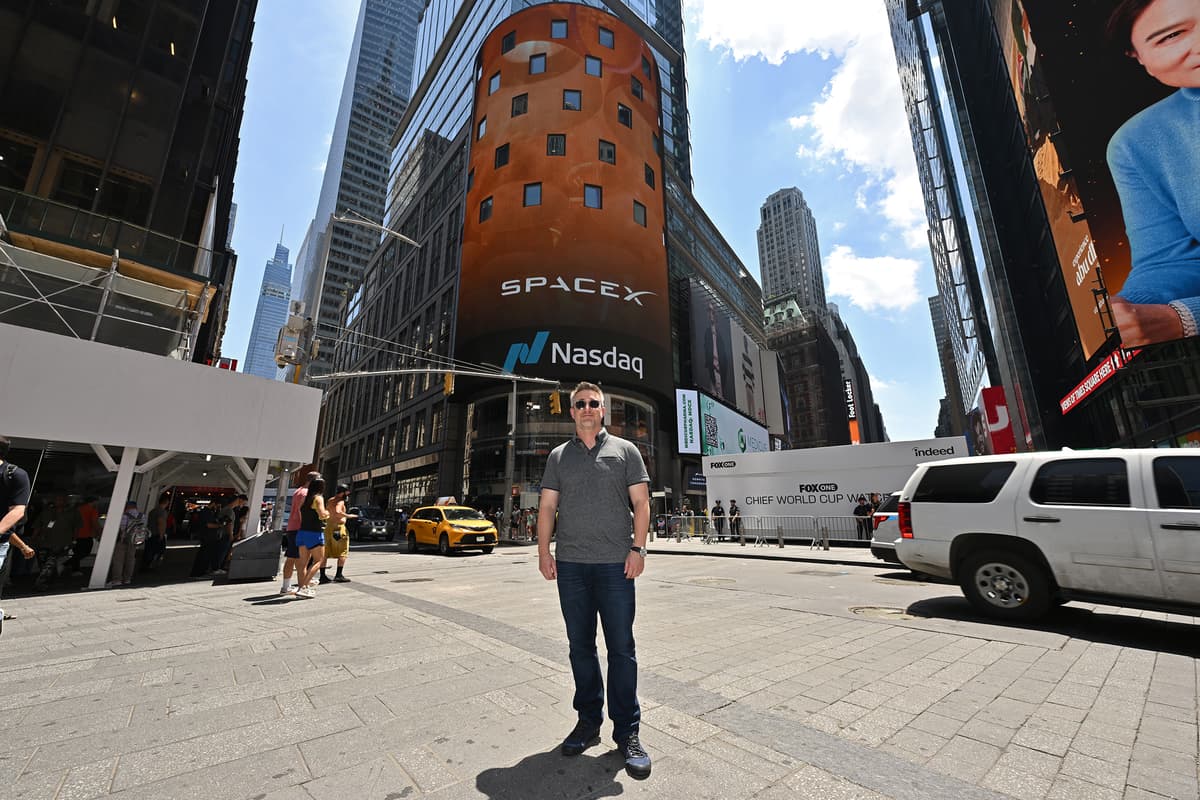
He Spent 15 Years Quietly Buying SpaceX Shares. Now His Stake Is Worth $20 Billion.
Companies Mentioned
Why It Matters
Holding an early‑stage stake through SpaceX’s IPO turned a modest $20 million bet into a $20 billion windfall, underscoring how long‑term patience can dramatically amplify returns in breakthrough industries.
Key Takeaways
- •137 Ventures invested $20M in SpaceX in 2011.
- •Stake now exceeds 1% of SpaceX, valued at $20B.
- •Fishner‑Wolfson never sold shares despite early rocket failure.
- •Patience outperformed typical venture exit strategies.
- •SpaceX IPO valuation set at $1.77T.
Pulse Analysis
The SpaceX saga illustrates how early‑stage venture capital can generate outsized returns when investors commit to a long‑term horizon. In 2011, 137 Ventures placed a $20 million bet on a fledgling launch company valued at just $1 billion. At the time, the sector was still proving the commercial viability of reusable rockets, and many investors balked at the technical risk. By staying the course, Fishner‑Wolfson captured the upside of SpaceX’s rapid ascent, from delivering cargo to the International Space Station to pioneering Starlink satellite broadband.
When SpaceX finally filed for an IPO at a $1.77 trillion valuation, the firm’s 1 % stake translated into roughly $20 billion. This outcome starkly contrasts with the typical venture‑capital model that seeks early exits through secondary sales or acquisitions. Fishner‑Wolfson’s refusal to liquidate demonstrates that patient capital can outperform conventional strategies, especially in capital‑intensive, breakthrough industries where value creation unfolds over a decade or more. His experience also highlights the importance of founder resilience; after a 2008 launch explosion, SpaceX’s leadership doubled down, reinforcing investor confidence.
For future investors, the lesson is clear: deep conviction in a transformative technology, combined with the willingness to endure short‑term volatility, can yield exponential gains. As private‑equity firms and sovereign wealth funds increasingly allocate capital to space and deep‑tech sectors, the SpaceX example may encourage more patient‑capital funds to hold stakes through multiple funding rounds and eventual public listings. The broader market may see a shift toward longer investment horizons, reshaping how venture capitalists evaluate risk and reward in the next wave of frontier innovations.
He Spent 15 Years Quietly Buying SpaceX Shares. Now His Stake Is Worth $20 Billion.
Comments
Want to join the conversation?
Loading comments...