HTGF: Where Public Mandate Meets Venture Discipline
SaaSVenture Capital

HTGF: Where Public Mandate Meets Venture Discipline

Tech.eu
Tech.euJan 15, 2026

Why It Matters

HTGF’s hybrid mandate shows public money can coexist with disciplined venture returns, filling a critical early‑stage funding gap and strengthening Europe’s deep‑tech ecosystem.

HTGF: Where public mandate meets venture discipline

While many venture capital funds are optimised for speed, scale, and short fund lifecycles, High-Tech Gründerfonds (HTGF) was built to address a structural gap in Germany’s innovation ecosystem.

HTGF combines public mandate with private capital to back technically complex startups that require time, industrial grounding, and early conviction to succeed.

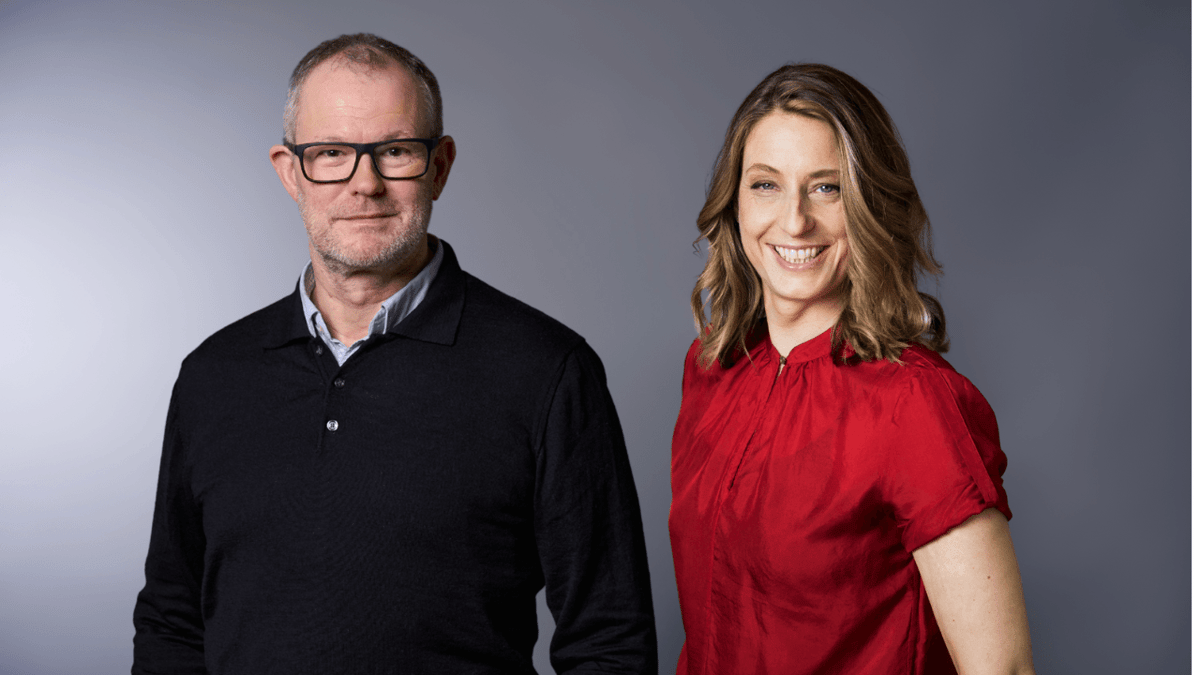
I spoke to Dr Achim Plum (Managing Director) and Dr Tanja Emmerling (Partner) at HTGF to learn all about it. 

From scientist to investor: Achim Plum’s path into venture

Dr Achim Plum, one of the three managing directors, joined HTGF in January 2025, strengthening the firm’s life science industry expertisewithin management. He is a geneticist by training and began working in industry after completing his PhD.

A defining strength of Plum’s profile is the combination of scientific depth with strategic business acumen. 

Earlier in his career, Plum spent several years at Siemens in a specialised role focused on licensing research innovation. His role as Head of Diagnostics & BioScience Research contributed to strengthening the connection between Siemens’ research excellence and its core business, with the goal of translating innovation into long-term strategic value.

His professional background includes roles at Epigenomics, Siemens, Curetis, Ares Genetics, SphingoTech, and InfanDx. He also brings a strong corporate finance track record, including involvement in two IPOs, and a clear understanding of financing dynamics across all stages of company development. 

He’s since founded companies, scaled them, and also overseen liquidations — gaining first-hand experience of the full company lifecycle.

He recalls: 

“I’ve mostly been interested in smaller companies with disruptive ideas — diagnostics, medtech, life science tools, less classic pharma.

Over the years, I’ve raised around €200 million, done two IPOs, and lots of follow-ons. At this stage, I thought changing perspectives and moving to the investor side would be interesting. And I don’t regret it.”

Taking risk where it matters

Tanja Emmerling has been at HTGF since 2014, after serving as Head of New Venture at a B2B publishing business with a value-investing family office.   

“At some point, I felt that if you really want to change something, you need to be in the startup world — more risk-taking. So I switched to HTGF and started in the digital tech team. I built a portfolio of around 15 companies, most of which I’ve exited. The portfolio ranged from IT security to e-commerce, depending on what was popular at the time,” she recalled. 

“In 2018, I helped build up the Berlin office, which has grown from a couple of people to about 17.”

What makes HTGF different

Most VC funds raise capital from limited partners, deploy it over a fixed fund lifetime, and are judged primarily on financial return. HTGF, by contrast, was created as a public–private partnership with a long-term mission to strengthen Germany’s — and Europe’s — innovation ecosystem.

According to Plum, originally, when the fund started in 2005, Germany’s startup ecosystem was still in its early stages, and Seed financing had largely stalled. There were very few institutional investors willing to take the risk of backing tech founders at the idea stage. The fund was created to fix a funding gap.

“Back then, it was seen as a public vehicle. The expectation was that the fund might lose money, 50 per cent research, 50 per cent loss.

In reality, we’ve proven that early-stage investing can be both impactful and financially successful. We now have around 30 per cent private capital and 70 per cent public.

There’s a misconception that public money limits us. It doesn’t. We can invest alone, set prices, and act like a normal VC. The only restriction is that we can’t match other public money.”

Public mandate, private discipline

HTGF’s capital comes from a mix of the German federal government, public institutions, and a large group of industrial partners. That structure gives HTGF a strategic and systemic role that goes beyond maximising short-term returns. While financial discipline matters, the fund is equally focused on technology transfer, industrial relevance, and helping research-driven startups cross the gap from lab to market. This also shapes how HTGF invests.

It typically enters at the very earliest stages, often before a conventional VC would engage, backing companies that are still highly technical, capital-intensive, or long-cycle — particularly in life sciences, chemistry, industrial tech, climate tech, and deep tech more broadly.

Many of these businesses require patient capital, strong operational support, and access to industrial networks rather than rapid scaling alone.

Unlike many funds, HTGF is not tied to a single general partner model or a purely external-facing leadership structure. Each managing director is responsible for a specific investment domain and combines internal portfolio leadership with external ecosystem building — working closely with founders, corporates, research institutions, and later-stage investors.

As well as anchor public investors like the German Federal Ministry for Economic Affairs and Energy and KfW Capital, HTGF IV’s investor roster includes 45 companies from industry, including Adesso, Fraunhofer, Deutsche Bank, PwC and DHL, as well as SMEs and family offices. 

HTGF’s ambition is to be financially successful — like any other VC — while keeping its political mandate in mind: investing early, taking risk, and crowding in private capital. 

“Last year, for every euro we invested, about €14 came in from other investors, Plum asserts.

“But we also need to be realistic. If we invest in something and no follow-on funding exists, that’s a problem. So we have to balance how far ahead of the market we go.”

Emmerling agrees, asserting:  

“We always have to think ahead of hype cycles. Topics come and go — blockchain, IoT, Industry 4.0, AI — but long-term you need a diverse portfolio that survives those shifts.” 

The firm also thinks about follow-on funding:

“If a topic isn’t attractive to later-stage investors, companies can struggle. So we have to balance technological conviction with market realities.”

A Seed fund — with room to grow

HTGF focuses on Seed investments, defined as tech companies younger than 3 years old. 

Because HTGF specialises in Pre-Seed and Seed financing, most of its companies are very early-stage when it invests — so hitting billion-dollar valuations later is proportionally less common than for later-stage funds.

Still, there have been notable exceptions, especially in life sciences: Cardior Pharmaceuticals, for example, reached a unicorn‑level outcome when Novo Nordisk agreed to acquire the company in a deal worth up to €1.025 billion.

[MYR](US pharmaceutical company Gilead Sciences acquired German biotech start-up MYR ) is another example of an early HTGF success that later achieved a unicorn‑scale exit.  EGYM — a major standout in HTGF’s portfolio — officially became a unicorn in 2024 after raising around $200 million at a valuation.

In addition, several HTGF companies raised major rounds in late 2025, including FMC, Neural Concept, and Tubulis, contributing to the €1.2 billion in follow‑on financing raised by the portfolio last year, with around 90% of that coming from private investors.

HTGF’s portfolio: from space to biotech to cybersecurity

Recent investments include:

Marble Imaging: A Bremen Earth observation spacetech company developing a high-resolution satellite constellation and analytics tools to provide up-to-hourly data for defence, climate, and crisis response.

Tubulis: A German biotech focused on next-generation antibody-drug conjugates (ADCs) that secured a record-breaking €308 million Series C to advance its cancer therapy pipeline.

TrustNXT:  A deep-tech spin-off developing cryptography-enhanced computer vision solutions to protect images and video from AI-driven manipulation and cyberattacks.

SereneDB: A Berlin-based database startup building a unified search, analytics, and PostgreSQL engine to deliver real-time data insights without stitching together multiple tools. 

RedMimicry: A cybersecurity startup offering realistic cyber-attack emulation to help organisations test and strengthen their defences against complex threats.

nuuEnergy: A Munich-based energy startup combining digital planning and local craft installation to deliver high-quality heat pump solutions and simplify the energy transition for homeowners.

Emerge Tech: A HRtech company founded by veteran founders from Babbel and WorkGenius that uses AI agents to greatly reduce recruitment costs and help SMEs enhance employer branding. 

Acting as a bridge between startups and the Mittelstand

A big part of HTGF's mandate is connecting startups with German industry.  “Many of our private LPs are Mittelstand companies,” shared Plum.

“They often struggle to work with startups. We act as a bridge: they see our deal flow, co-invest, partner, and sometimes acquire portfolio companies.”

Built for the long haul

When asked how HTGF balances early-stage investing with the long innovation cycles typical of biotech and life sciences, the answer is patience backed by a broad portfolio.

“We’re patient,” said Achim Plum.

“Our first fund started in 2005, and we still hold around 30 companies from it. We don’t push for premature exits. Deep tech and biotech need longer cycles.

Scientific breakthroughs, industrialisation and regulatory pathways don’t happen overnight. That’s why patience isn’t a luxury for us, it’s part of the model.”

That long-term mindset is reflected in HTGF’s exit timelines. “On average, an exit takes around eight years.” Plum added. “Sometimes longer.”

According to Dr Tanja Emmerling, HTGF’s ability to support long-cycle technologies is also a function of portfolio design. The fund invests at volume, allowing different technology sectors to mature at their own pace.

“Our large portfolio helps,” Emmerling said.

“We invest around 40 companies per year. Digital tech may move faster; life sciences take longer. But we can balance that.”

Staying active in down markets

While 2023 and 2024 reflected a downturn in funding across the sector, Emmerling revealed:

“We never stopped investing — even during COVID. We stuck to our pace, which paid off. It also stabilises the market. When others pull back, we’re still active.”

Plum agreed, asserting:

“Consistency is a competitive advantage in downturns, and it creates opportunities. When others retreat, you can do great deals.”

HTGF now has an Opportunity Fund that allows the team to invest up to €30 million into existing portfolio companies. The seed fund is capped at €8 million per company.

“This helps us stay involved longer and avoid dilution,” explained Plum. 

"We like the real challenges"

Rather than chasing trends, HTGF uses a technology-first thesis investing in teams with deep technical insight and scalable innovation, across sectors such as industrial deeptech, life sciences and digital tech."

Emmerling professed an interest in digital tech, proclaiming:

“We like the real challenges, problems that are hard to solve, capital-intensive, and therefore difficult to copy.”

“AI is everywhere, but we focus on concrete use cases: productivity tools, cybersecurity, health IT, legal and regulatory tech, and govtech.”

At the risk of a massive understatement, Germany is very bureaucratic. Emmerling sees this as both a burden and an opportunity.  

“Digitisation would change everything — even starting a company is still too slow here.”

Category leaders, capital gaps, and Europe’s growth challenge

For Plum, one structural weakness in Europe’s startup ecosystem is the tendency to exit too early — often before companies have a chance to become true category leaders. “We’d like to see more category leaders,” Plum said.

“Too many exits happen too early.”

A key driver, he argues, is the scarcity of late-stage capital in Europe. Without sufficient growth funding, startups are pushed toward early profitability at the expense of long-term scale.

“Late-stage funding scarcity pushes companies toward early profitability, which kills growth,” he said.

“In the US, companies grow aggressively while loss-making. Europe still struggles with that mindset.”

In a significant shift for Germany’s venture funding landscape, the federal government has moved to integrate the DeepTech & Climate Fonds (DTCF) into HTGF, creating a more unified public–private VC platform spanning seed to growth-stage deep tech.

The move is intended to reduce fragmentation between early and later-stage funding and give founders a clearer capital pathway as they scale. For HTGF, it reinforces its role as a central pillar of Germany’s — and increasingly Europe’s — deep-tech financing infrastructure. According to Plum;

“With the vision of a joint investment platform, we are creating the public-private VC structure that Germany and Europe need right now: continuous innovation financing – from technological idea to market leadership.

Companies like FMC and Proxima Fusion already show how seamlessly HTGF and DTCF complement each other.

Talent isn’t the bottleneck — scale is

While Europe is often framed as facing a talent shortage, both Plum and Tanja Emmerling see the issue differently. For Emmerling, the challenge lies in building a stronger market for innovation itself. “We need European buyers willing to pay for innovation,” she said.

Plum is even more direct:

“Talent isn’t the problem. Scale capital is.”

He argues that Europe’s fragmented approach to growth financing and market building continues to hold companies back. “We need to think European, not national.”

“Europe needs entrepreneurs willing to take risks”

Looking ahead, Plum believes Europe must become more comfortable with risk — and with failure — if it wants to produce globally competitive technology companies.

“Europe needs entrepreneurs willing to take risks,” he said.

“Germany excels at incremental innovation — now we need disruption.”

Failure, he added, should be seen as part of that process rather than an endpoint. “Failure isn’t the end. Founders who fail learn fast and often come back stronger.”

Emmerling shares the optimism, pointing less to missing ingredients than to missing links.“The ingredients are all here,” she said. “We just need better connections between them.”

Comments

Want to join the conversation?

Loading comments...