Panthalassa Raises $140 Million Led by Peter Thiel to Build Wave‑Powered AI Compute Centers

Companies Mentioned
Why It Matters
The infusion of $140 million into Panthalassa illustrates a convergence of two megatrends—AI compute demand and the search for sustainable, location‑agnostic power sources. By attempting to co‑locate energy generation and compute, the startup could redefine data‑center economics, reducing reliance on grid upgrades and land acquisition. For the venture‑capital ecosystem, the deal validates a willingness to fund capital‑intensive, high‑risk infrastructure that blends clean‑energy innovation with AI, potentially unlocking a new niche of climate‑positive tech investments. If Panthalassa’s model proves viable, it could catalyze a wave of similar ventures seeking to harness underutilized renewable resources for compute workloads, expanding the frontier of venture capital beyond traditional software and cloud services. Conversely, failure would reinforce the historical caution around wave energy, reminding investors that physics and marine engineering remain formidable barriers.
Key Takeaways
- •Panthalassa raised $140 million, led by Peter Thiel’s Founders Fund.
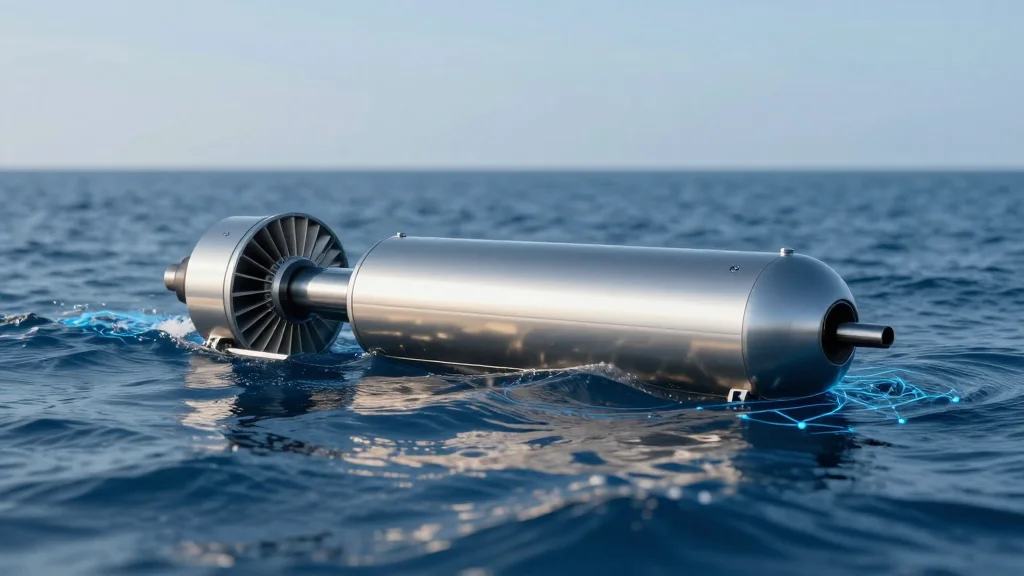
- •Funding will support autonomous floating nodes that convert wave motion into electricity for on‑site AI inference.
- •Founders Garth Sheldon‑Coulson and Brian Moffat previously built Ocean‑1, Ocean‑2 and Wavehopper wave‑energy prototypes.
- •The approach avoids grid connections, subsea cables, and land‑use constraints by using satellite links for data transmission.
- •First commercial wave‑powered compute node targeted for deployment within 18 months.
Pulse Analysis
Panthalassa’s financing reflects a strategic shift in venture capital toward infrastructure that can simultaneously address climate goals and the exploding demand for AI compute. Historically, wave‑energy projects have been plagued by high capital costs and low capacity factors, leading many investors to deem the sector too risky. By embedding AI workloads directly on the energy‑generation platform, Panthalassa attempts to create an immediate revenue stream that justifies the upfront expense, a model that could make wave energy financially attractive for the first time.
The involvement of Peter Thiel is noteworthy beyond the headline. Thiel’s track record of backing unconventional technologies—ranging from PayPal to SpaceX—suggests a belief that the existing energy‑grid paradigm is a bottleneck for AI scaling. If Panthalassa can demonstrate reliable, year‑round power output and maintain AI hardware in a harsh marine environment, it could set a precedent for offshore compute farms that compete with traditional land‑based data centers on both cost and carbon footprint.
However, the path forward is fraught with engineering and regulatory hurdles. Marine corrosion, storm survivability, and the logistics of servicing floating compute nodes are non‑trivial challenges that have derailed previous wave‑energy ventures. Moreover, the satellite‑link model must deliver latency and bandwidth comparable to fiber‑optic connections to satisfy AI customers. Investors will be watching key performance indicators—capacity factor, mean‑time‑between‑failures, and data‑throughput—closely. Success could unlock a new class of climate‑positive compute assets; failure would reinforce the cautionary tale of wave energy’s long‑standing commercial difficulties.
Panthalassa Raises $140 Million Led by Peter Thiel to Build Wave‑Powered AI Compute Centers
Comments
Want to join the conversation?
Loading comments...