Panthalassa Secures $140 Million Led by Peter Thiel for Wave‑Powered AI Data Centers

Companies Mentioned
Why It Matters
The financing of Panthalassa illustrates a growing willingness among venture capitalists to fund infrastructure that merges clean energy with AI compute, two sectors traditionally funded separately. By targeting the power bottleneck that limits AI model scaling, the company could redefine how and where compute resources are provisioned, potentially reducing reliance on land‑based data centers and grid capacity. If successful, the model could catalyze a wave of capital toward other unconventional energy‑compute hybrids, reshaping investment theses around sustainability and AI performance. Moreover, the round signals that high‑profile investors like Peter Thiel are prepared to back high‑risk, capital‑intensive projects that challenge entrenched utility models. This may encourage other funds to allocate larger, longer‑duration capital pools for deep‑tech ventures that require extensive hardware deployment and regulatory navigation, expanding the venture ecosystem’s appetite for infrastructure‑heavy bets.
Key Takeaways
- •Panthalassa closed a $140 million Series B round led by Peter Thiel
- •Founders Garth Sheldon‑Coulson and Brian Moffat pivoted from pure wave‑energy to AI compute on ocean nodes
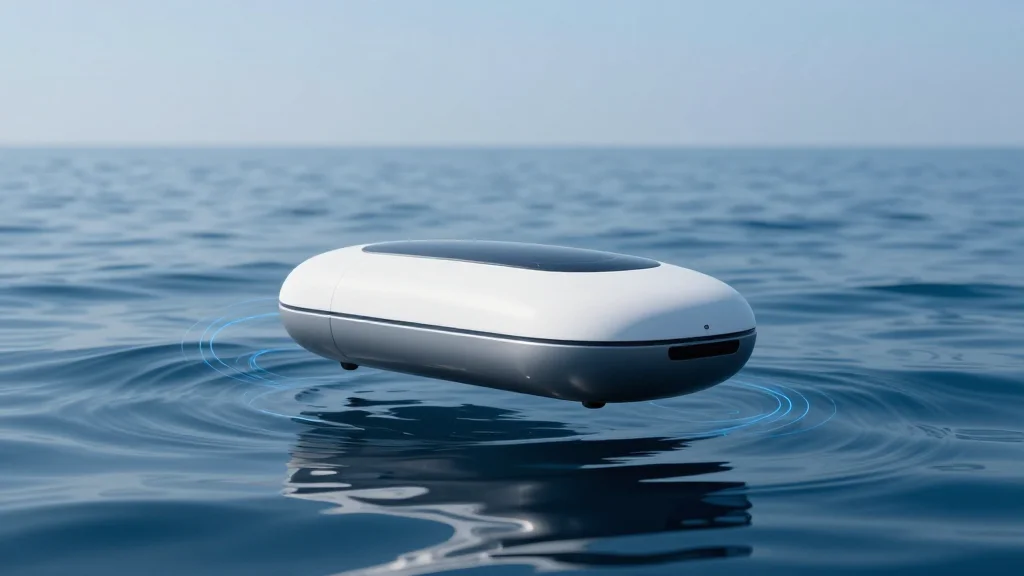
- •The model places GPU racks on autonomous floating platforms that harvest wave power and transmit results via satellite
- •Pilot deployment of ten 2 MW nodes is planned for the Pacific by Q4 2026
- •Success could create a new asset class linking clean‑energy infrastructure with AI workload provisioning
Pulse Analysis
Panthalassa’s funding sits at the confluence of two megatrends: the relentless scaling of AI models and the search for decarbonized power sources. Historically, wave energy has been a cautionary tale—promising physics hampered by harsh marine realities. By embedding compute directly on the energy source, Panthalassa attempts to sidestep the most costly part of the equation: grid interconnection. If the pilot demonstrates high availability, the approach could undercut traditional data‑center capex, especially in regions where land and grid capacity are scarce.
From a venture perspective, the round reflects a shift toward "infrastructure‑as‑AI" thinking. Investors are no longer content to fund only the software stack; they are looking to own the underlying hardware and energy that enable next‑generation models. This mirrors earlier trends where VC money moved into chip design and edge compute. However, the risk profile is markedly higher. Marine deployments involve long lead times, regulatory hurdles, and maintenance logistics that differ from silicon fab investments. Limited partners will likely demand clear milestones and perhaps co‑investment from strategic players in telecom or offshore energy to mitigate exposure.
Looking ahead, the market will gauge Panthalassa’s progress against two benchmarks: cost per compute watt and operational uptime. A competitive cost structure could force traditional data‑center operators to explore hybrid models, perhaps leasing ocean‑based compute capacity. Conversely, if the pilot falters, it may reinforce the prevailing view that wave energy remains a niche, and AI compute will stay tethered to terrestrial grids. Either outcome will inform how venture capital allocates capital across the emerging frontier of energy‑intensive AI infrastructure.
Panthalassa Secures $140 Million Led by Peter Thiel for Wave‑Powered AI Data Centers
Comments
Want to join the conversation?
Loading comments...