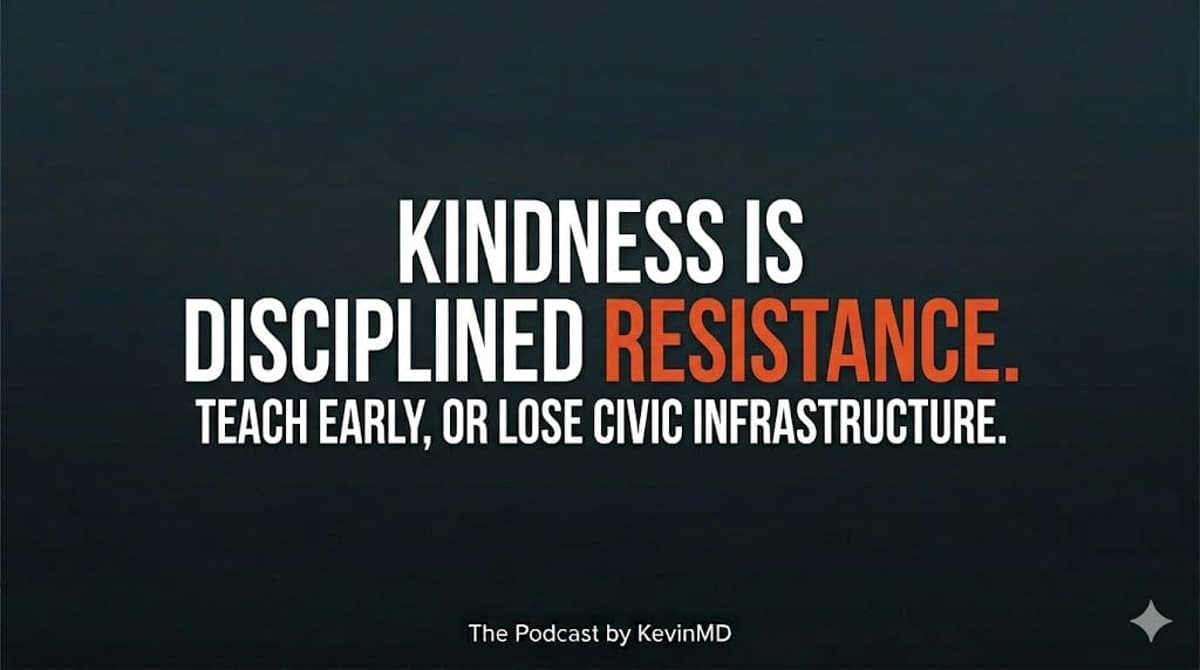
The Medical Case for Teaching Kindness in Early Childhood Development
Key Takeaways
- •Early childhood neural plasticity makes kindness skills easily ingrained
- •Social‑emotional learning should match math in school curricula
- •Modeling reflective kindness at home builds lifelong compassionate identity
- •Community service programs act as empathy muscle for children
- •Kindness training reduces bullying and social fragmentation long term
Pulse Analysis
Neuroscientists increasingly recognize that the first five years of life are a window of heightened brain plasticity, during which synaptic connections governing empathy and self‑control are especially malleable. Repeated exposure to naming emotions, cooperative play, and guided acts of help strengthens the prefrontal‑limbic circuitry that later governs prosocial decision‑making. When kindness is practiced consistently, these pathways transition from effortful to automatic, mirroring how literacy skills become second nature. This biological foundation explains why early interventions can produce lasting behavioral change, while later attempts often require more intensive reinforcement.
Policy makers and educators are responding by elevating social‑emotional learning (SEL) to the status of core academic subjects. Curriculum designers now embed empathy drills, conflict‑resolution role‑plays, and reflective journaling alongside math and reading, backed by evidence that SEL improves attendance, test scores, and reduces disciplinary incidents. Parents play a complementary role by modeling deliberate, discussable acts of kindness—such as volunteering or thoughtful feedback—rather than relying on spontaneous affection alone. Community organizations amplify these efforts by offering child‑friendly service projects, turning kindness into a muscle that strengthens with regular use.
The ripple effects extend beyond individual well‑being. Communities that prioritize early kindness report lower rates of bullying, reduced social isolation, and greater civic participation. Economically, the reduction in mental‑health treatment costs, workplace conflicts, and criminal justice expenditures translates into measurable savings for municipalities. As societies grapple with polarization and digital disconnection, systematic kindness education emerges as a pragmatic, evidence‑based strategy to foster social cohesion and long‑term resilience.
The medical case for teaching kindness in early childhood development
Comments
Want to join the conversation?