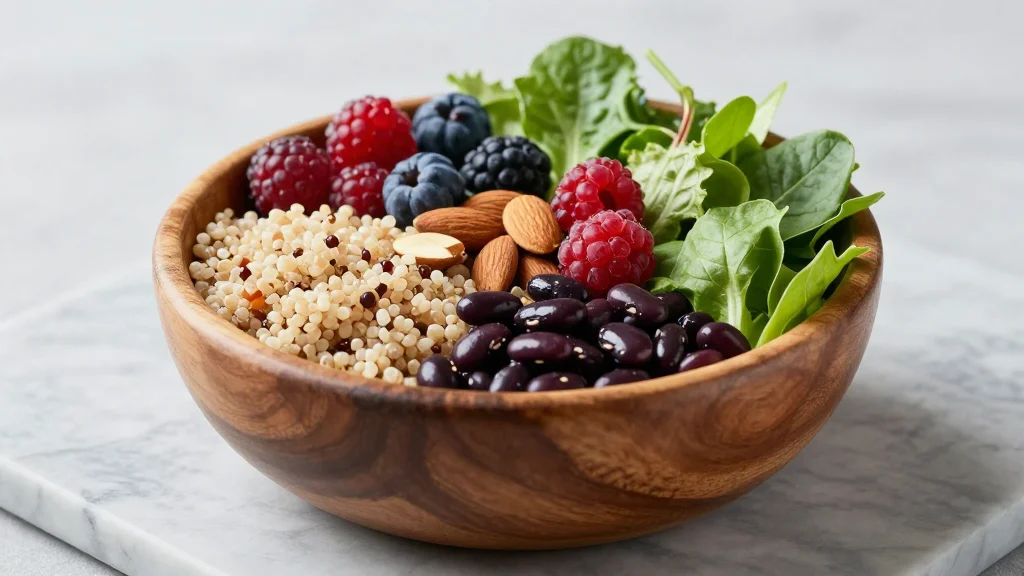
A Gastro Said Her Colon Looked “Pristine” After She Made This Change
Why It Matters
Elevating fiber intake directly strengthens the gut microbiome and reduces inflammation, offering a low‑cost strategy to lower colon‑related disease risk and improve cardiovascular outcomes for aging women.
Key Takeaways
- •Thurlow raised fiber to 25‑30 g/day, colon looked pristine.
- •US adults average only 10 g fiber daily, far below recommendations.
- •High fiber boosts SCFA production, lowering inflammation and cardiovascular risk.
- •Gradual fiber increase prevents bloating and supports microbiome adaptation.
- •Legumes, seeds, whole grains or supplements easily raise daily fiber.
Pulse Analysis
Recent media coverage of Cynthia Thurlow’s pristine colon highlights a broader shift toward recognizing dietary fiber as a cornerstone of preventive health. While most Americans consume roughly 10 grams of fiber daily—well under the 25‑30‑gram guideline—research published in 2025 involving more than 7,700 post‑menopausal women demonstrated that those with the highest fiber intake experienced significantly lower all‑cause and cardiovascular mortality. This correlation reinforces the role of fiber not just in bowel regularity but as a systemic protective factor, especially for women navigating hormonal transitions.
The physiological benefits stem from fiber’s fermentation by gut microbes, which generates short‑chain fatty acids (SCFAs) such as acetate, propionate, and butyrate. SCFAs act as signaling molecules that enhance gut‑barrier integrity, dampen chronic inflammation, and modulate the release of glucagon‑like peptide‑1 (GLP‑1), a hormone linked to appetite regulation and glucose homeostasis. As estrogen and progesterone decline during perimenopause, endogenous SCFA production wanes, making dietary fiber an essential external source to sustain these protective pathways. Consequently, a fiber‑rich diet can mitigate the heightened cardiovascular risk that accompanies menopause.
For practitioners and consumers alike, the practical takeaway is clear: increase fiber gradually to allow the microbiome to adapt, avoiding discomfort such as bloating or gas. Incorporating legumes, beans, lentils, chia or flax seeds, and whole grains can easily bridge the gap, while fiber supplements offer a convenient backup. Health systems should consider integrating fiber education into routine preventive visits, positioning it as a cost‑effective, evidence‑based intervention that supports both gut health and broader metabolic resilience.
A Gastro Said Her Colon Looked “Pristine” After She Made This Change
Comments
Want to join the conversation?
Loading comments...