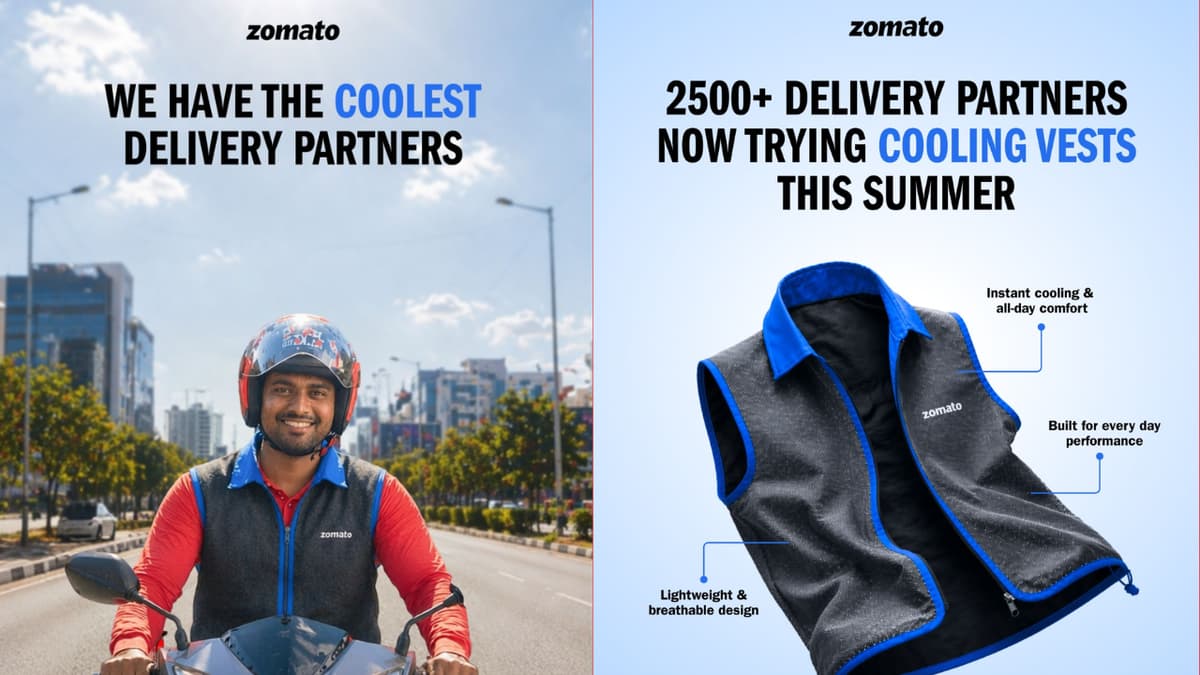
Amid Summer Heat, Zomato Introduces Cooling Vests for Delivery Partners
Companies Mentioned

Why It Matters
Heat stress threatens gig‑worker safety and productivity; Zomato’s vest program directly mitigates that risk while signaling a shift toward employee‑centric operational models in the fast‑food delivery sector.
Key Takeaways
- •Zomato pilots cooling vests for 2,500 partners in 14 cities
- •Vests use evaporative PVA tech, lasting up to four hours
- •Initiative partners Shell Foundation, Trane Spaces, and Intellecap
- •Part of broader welfare push including 450 Shelter Project rest points
- •Swiggy and Blinkit also expanding climate‑controlled amenities for gig workers
Pulse Analysis
India’s summer heat, regularly topping 40 °C, poses a serious health hazard for gig workers who spend hours outdoors. Zomato’s latest trial of evaporative cooling vests addresses this challenge by leveraging PVA‑based technology that absorbs sweat and releases coolness for up to four hours. The partnership with Shell Foundation, Trane Technologies’ SPACES programme, and Intellecap not only supplies the hardware but also embeds sustainability expertise, ensuring the vests are lightweight, anti‑microbial and durable enough for two seasons. By targeting 2,500 delivery partners in 14 cities, Zomato is testing scalability while gathering data on comfort, order‑completion rates, and partner retention.
The initiative fits into a broader competitive race to improve gig‑worker welfare across India’s food‑delivery market. Swiggy’s 900 climate‑controlled "Recharge Zones" and Blinkit’s fan‑equipped dark stores illustrate a sector‑wide acknowledgment that worker well‑being directly influences service reliability. Zomato’s Shelter Project, now over 450 rest points, already offers hydration, charging stations, and first‑aid kits, creating a holistic support network. By layering cooling gear onto this foundation, Zomato not only reduces heat‑related absenteeism but also differentiates its brand among a labor‑intensive workforce, potentially boosting partner loyalty and reducing churn.
Strategically, the vest program signals Zomato’s shift from pure cost‑efficiency toward operational sustainability that includes human capital. As regulators increasingly scrutinize gig‑economy labor practices, proactive welfare measures could pre‑empt policy mandates and enhance corporate reputation. If the pilot demonstrates measurable gains—higher order fulfillment, lower health‑related incidents—Zomato may roll the vests out nationwide, setting a new industry standard. Such a move could also attract ESG‑focused investors, positioning Zomato as a leader in responsible gig‑economy scaling.
Amid summer heat, Zomato introduces cooling vests for delivery partners
Comments
Want to join the conversation?
Loading comments...