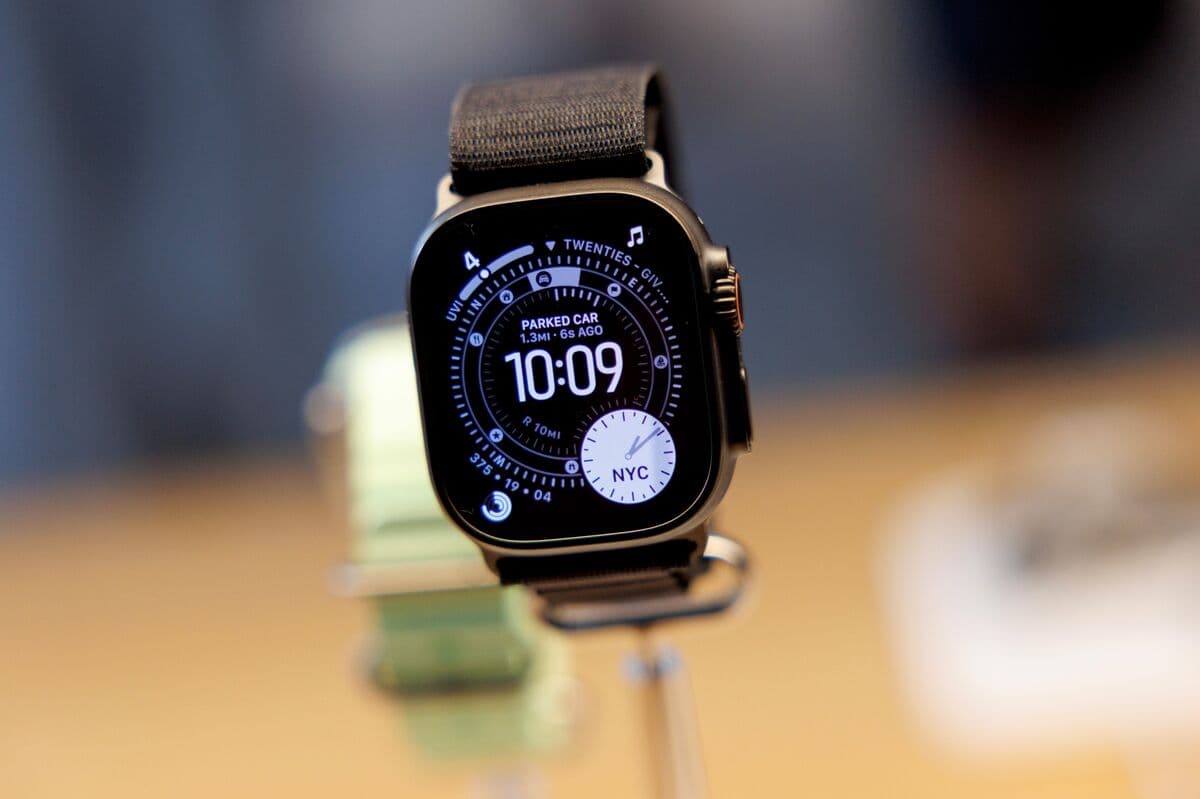
Apple’s Watch and Health Efforts Need Reboot to Rival New Wearables
Companies Mentioned
Why It Matters
Apple’s wearables are a multi‑billion‑dollar revenue stream; losing market share could dent overall services growth and weaken its health‑data moat. A refreshed Watch could re‑establish Apple as the de‑facto health platform for consumers and enterprises alike.
Key Takeaways
- •Apple Watch Ultra 3 arrives without breakthrough health sensors
- •Competitors offer continuous glucose and blood‑pressure monitoring
- •iOS 27 adds auto‑deleting Siri chats and AirPlay rivals
- •Apple’s health data ecosystem hinges on next‑gen wearables
Pulse Analysis
Apple’s flagship wearable is at a crossroads. While the Watch Ultra 3 brings a sturdier chassis and marginal battery improvements, it falls short of the sensor suite now standard on rivals like Fitbit Sense 3, Garmin Venu 4, and Whoop 4.0, which provide continuous glucose monitoring, blood‑pressure estimates, and advanced sleep staging. Consumers increasingly view wearables as medical‑grade tools, and the lack of these capabilities erodes Apple’s premium positioning, especially as health insurers and employers begin to subsidize data‑rich devices.
The broader iOS 27 rollout signals Apple’s attempt to reinforce its ecosystem. A new Siri chat app with auto‑deleting conversations addresses privacy concerns, while an overhauled AirPods control panel and default AirPlay‑compatible streaming broaden the user experience. However, these software tweaks cannot compensate for hardware stagnation in the Watch. Industry analysts argue that without a next‑generation health sensor platform—potentially integrating non‑invasive glucose or blood‑oxygen monitoring—Apple risks ceding the lucrative health‑data market to more specialized manufacturers.
Strategically, Apple must decide whether to double down on incremental upgrades or launch a radical redesign that redefines the Watch as a true health hub. A successful reboot could unlock new revenue streams from health‑service subscriptions, corporate wellness programs, and data licensing. Conversely, a prolonged lag could see the Watch’s share dip below 30 % of the premium wearables segment, weakening Apple’s leverage in negotiations with insurers and healthcare providers. The next product cycle will be a litmus test for Apple’s ability to maintain its dominance in the fast‑evolving wearables arena.
Apple’s Watch and Health Efforts Need Reboot to Rival New Wearables
Comments
Want to join the conversation?
Loading comments...