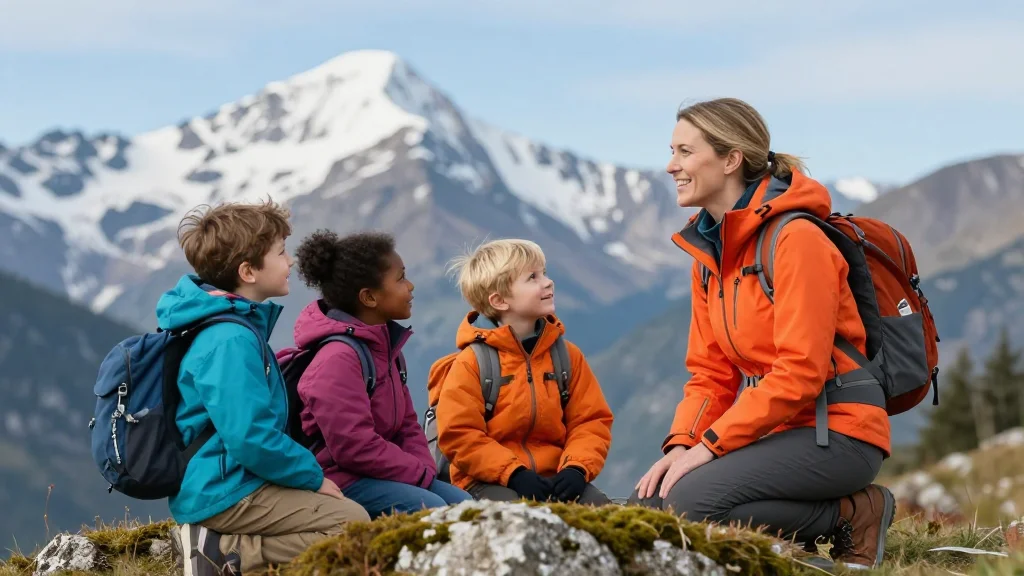
Can’t. Will. Did.: How One Teacher-Mountaineer Is Bringing Social-Emotional Learning Outdoors
Companies Mentioned
Why It Matters
Embedding SEL in experiential outdoor settings deepens skill retention and addresses equity gaps, helping schools meet state mandates while cultivating resilient, inclusive learners.
Key Takeaways
- •Teacher‑mountaineer links SEL to outdoor adventure experiences
- •“Can’t‑Will‑Did” framework translates perseverance into classroom language
- •Summit Kids series embeds CASEL competencies in nature‑based stories
- •Outdoor education funding cuts threaten equitable access in Washington
- •Adaptive climbing role models boost inclusion for diverse students
Pulse Analysis
Place‑based education is reshaping how districts deliver social‑emotional learning, moving beyond classroom posters to real‑world experiences that engage students’ bodies and minds. Washington’s adoption of CASEL‑aligned SEL standards has spurred pilots that integrate hikes, climbs, and camps into daily schedules, yet recent budget cuts have stripped high‑need schools of dedicated outdoor grants. This tension underscores a national conversation about funding models that can sustain equitable access to nature‑based curricula, especially for urban learners who rarely encounter wilderness.
Cross’s “Can’t‑Will‑Did” framework captures the non‑linear nature of growth, giving children concrete language for setbacks, effort, and achievement. By translating that cycle into a six‑book series, she provides educators with ready‑made, narrative‑driven lessons that align each CASEL competency with a specific mountain activity—from ice climbing for self‑management to glacier walks for teamwork. The books are designed for read‑alouds, counseling sessions, and outdoor programs, offering a scalable tool that bridges curriculum mandates with authentic, embodied learning.
The broader impact lies in redefining what it means to teach the whole child. When students experience the physical consequences of choices—carrying a pack, navigating a rope—they activate sensorimotor pathways that reinforce cognitive concepts. As schools grapple with budget constraints, partnerships with outdoor brands, community groups, and adaptive athletes like Cross become critical to delivering inclusive experiences. If these collaborations expand, the next generation of learners will carry both academic knowledge and the resilient mindset forged on the mountain, positioning them for success in an increasingly complex world.
Can’t. Will. Did.: How One Teacher-Mountaineer Is Bringing Social-Emotional Learning Outdoors
Comments
Want to join the conversation?
Loading comments...