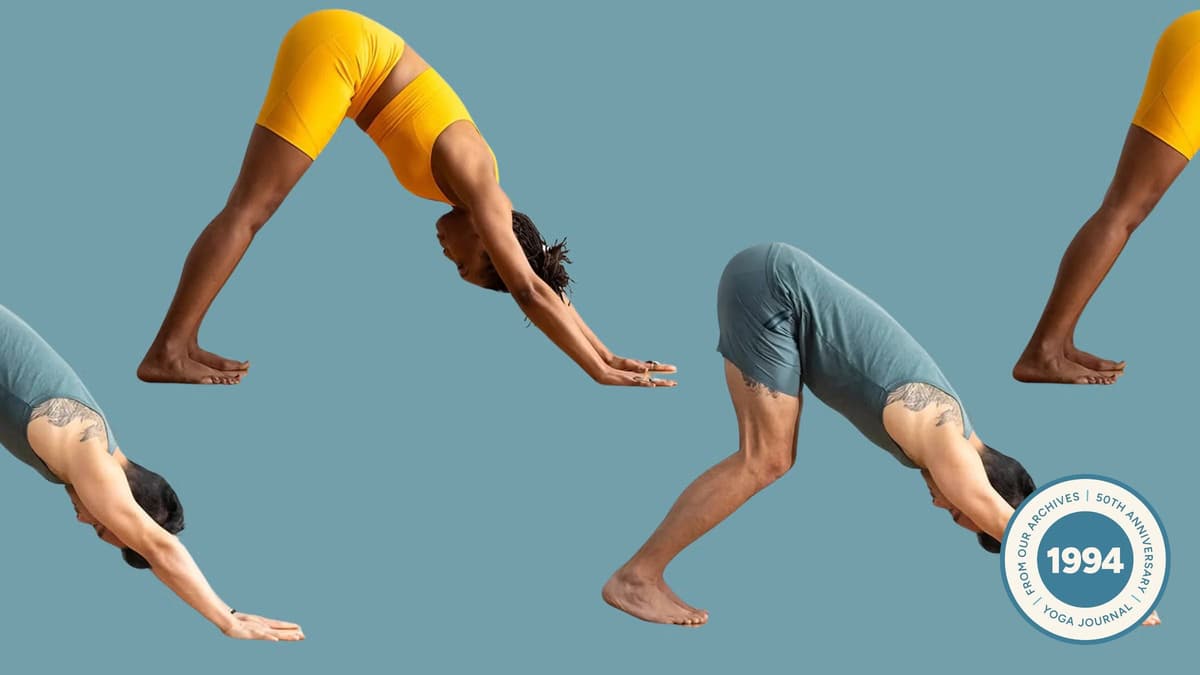
Downward-Facing Dog Might Be the Ultimate Yoga Pose. Here’s Why.
Why It Matters
Proper alignment in Downward‑Facing Dog enhances musculoskeletal health, reduces injury risk, and serves as a building block for complex yoga and athletic performance.
Key Takeaways
- •Downward Dog aligns force line from hands to sitting bones.
- •Breaks at wrists, elbows, shoulders, or spine reduce efficiency.
- •Half‑Dog variation eases beginners into proper alignment.
- •Consistent practice improves shoulder mobility and spinal stability.
- •Proper alignment supports injury prevention and functional movement.
Pulse Analysis
Downward‑Facing Dog has been a staple in yoga studios since the 1990s, yet its relevance extends far beyond a simple stretch. Biomechanically, the pose mirrors the quadrupedal push‑off that infants use to develop core stability, making it a natural primer for force transmission through the kinetic chain. By aligning the hands, elbows, shoulders, lumbar spine, and sitting bones, practitioners create a straight line of tension that encourages efficient energy flow, a principle echoed in modern functional training and physical therapy. This alignment not only deepens the stretch but also activates stabilizing muscles, fostering joint health and reducing the likelihood of overuse injuries.
Common alignment faults—sagging wrists, dropped shoulders, or an over‑arched lumbar curve—interrupt the force line, leading to localized fatigue and compensatory patterns. The article’s corrective cues, such as lifting the forearms, adjusting shoulder blade height, and using subtle lumbar adjustments, translate directly to coaching cues used in strength conditioning and rehabilitation. For beginners, the Half‑Dog variation offers a scaled entry point, allowing the nervous system to habituate to proper load distribution without overwhelming the upper body. These incremental progressions reflect evidence‑based motor learning strategies that prioritize proprioceptive feedback and gradual overload.
In the broader wellness market, the pose’s versatility fuels its popularity among yoga teachers, physiotherapists, and fitness influencers. Its ability to simultaneously improve flexibility, strength, and circulation makes it a low‑cost, high‑impact tool for corporate wellness programs and injury‑prevention workshops. As more practitioners recognize the pose’s functional benefits, we can expect a rise in targeted workshops and digital content that break down its anatomy, reinforcing Downward‑Facing Dog’s status as the ultimate foundational movement for both yoga and modern fitness ecosystems.
Downward-Facing Dog Might Be the Ultimate Yoga Pose. Here’s Why.
Comments
Want to join the conversation?
Loading comments...