Google Health’s AI Coach Falls Short of Replacing Personal Trainers

Companies Mentioned
Why It Matters
The assessment of Google Health’s AI Coach highlights a pivotal moment for the wellness sector, where the promise of data‑rich personalization must contend with the human element of motivation and trust. As major tech firms pour resources into AI‑enabled health platforms, consumer acceptance will hinge on whether these tools can deliver clear, actionable advice without overwhelming users. A failure to meet that bar could slow the shift toward subscription‑based digital fitness and preserve space for hybrid models that blend AI efficiency with human coaching. Moreover, the review signals to investors and developers that premium pricing ($15 per month) must be justified by tangible performance gains. If AI coaches remain perceived as verbose or generic, the market may see a resurgence of boutique human coaching services that leverage technology as a supplement rather than a replacement.
Key Takeaways
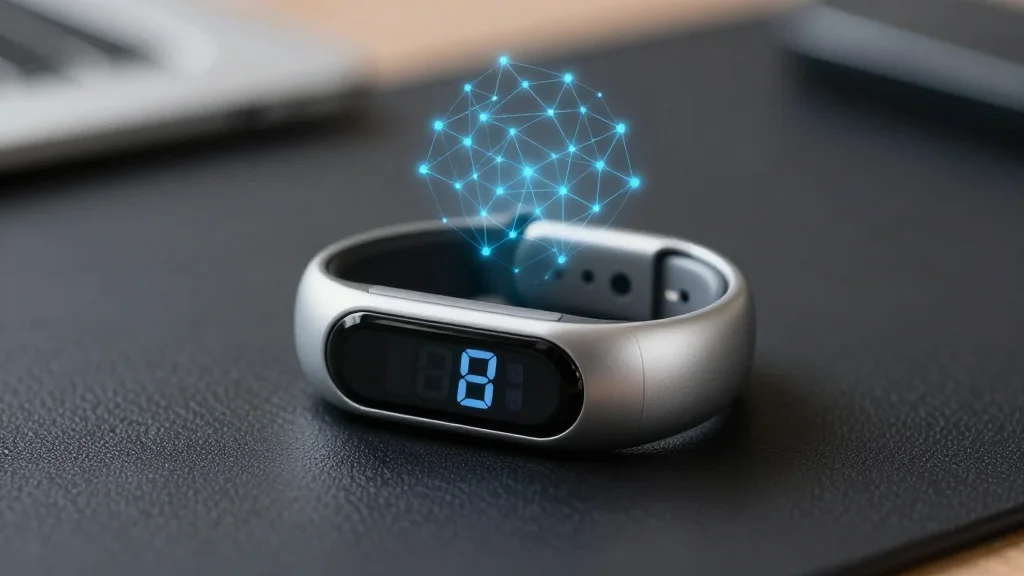
- •Google Health replaces Fitbit app with AI Coach and $200 Fitbit Air band.
- •Premium subscription costs $15 per month, unlocking video workouts and AI guidance.
- •Reviewer describes the AI as overly verbose and unable to match a real trainer’s nuance.
- •Readiness scores and automatic workout adjustments work in theory but lack human adaptability.
- •Google joins Whoop, Oura, and Apple in a crowded AI‑fitness market, facing pressure to refine user experience.
Pulse Analysis
Google’s foray into AI‑driven wellness reflects a strategic bet that data aggregation can be monetized through subscription services. Historically, fitness apps succeeded by offering simple tracking and community features; the next frontier is intelligent coaching. Google’s Gemini‑powered Coach attempts to leapfrog this by ingesting a wide array of signals—heart rate, sleep, weather—and generating daily plans. Yet the reviewer’s experience suggests the technology is still wrestling with the paradox of personalization: the more data it consumes, the more likely it is to produce generic, information‑heavy output that users struggle to act upon.
From a competitive standpoint, Google’s hardware‑software bundle mirrors Apple’s ecosystem, but Apple’s advantage lies in a tightly curated user experience and a brand reputation for sleek design. Whoop and Oura have carved niches by focusing on elite athletes and offering deep analytics, often paired with human‑led insights. Google’s challenge will be to differentiate its AI Coach beyond sheer data volume, perhaps by incorporating adaptive learning that shortens feedback loops and mimics the conversational brevity of a human trainer.
Looking ahead, the success of Google Health will depend on iterative improvements that balance thoroughness with usability. If Google can trim the “Gemini waffle‑dump” and deliver concise, context‑aware recommendations, the $15 monthly fee could become a compelling value proposition. Conversely, failure to address these usability concerns may reinforce the market’s skepticism toward fully automated coaching, preserving demand for hybrid models that blend AI efficiency with human empathy.
Google Health’s AI Coach falls short of replacing personal trainers
Comments
Want to join the conversation?
Loading comments...