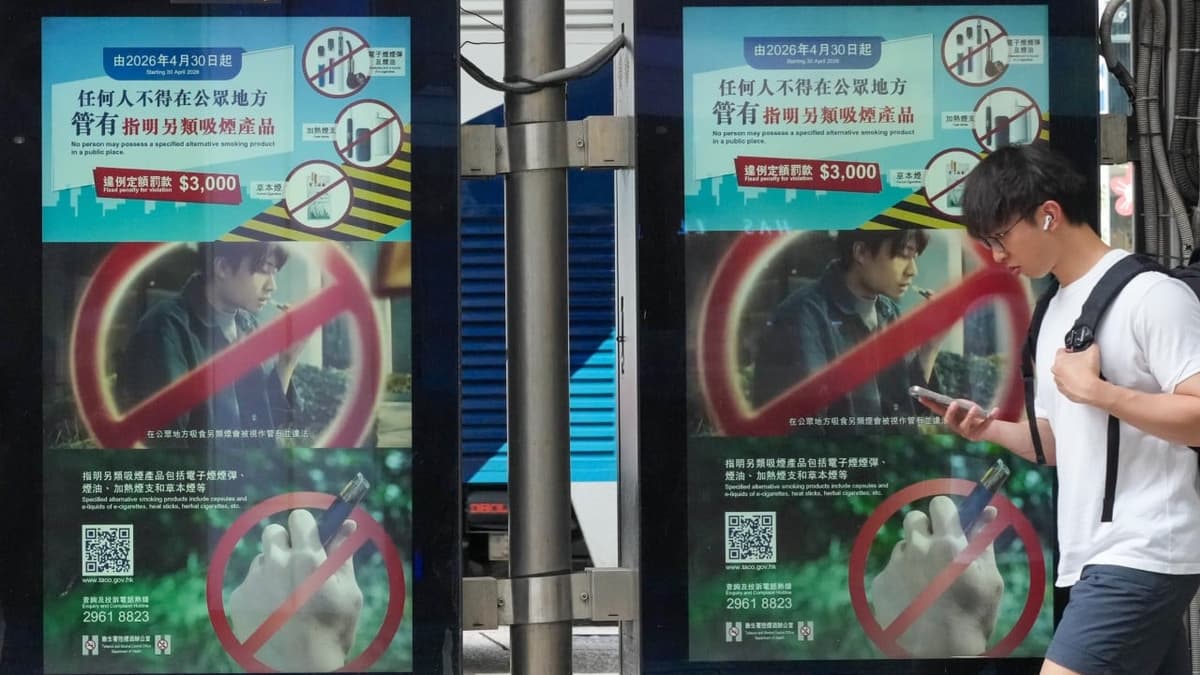
Hong Kong’s New Vaping Ban Is a Healthy Step Forward
Why It Matters
The crackdown signals a tightening regulatory environment for nicotine‑delivery products in Asia, potentially reshaping market dynamics and public‑health outcomes. It also underscores growing scientific concerns that could drive stricter global vaping policies.
Key Takeaways
- •Hong Kong fines up to HK$50,000 for public vaping violations.
- •Penalties apply to possession of >5 vape pods or 100 heat sticks.
- •Researchers warn vaping may cause DNA damage and cancer.
- •Youth vapers are 3‑4× more likely to start smoking cigarettes.
- •Full ban on vaping products under consideration by authorities.
Pulse Analysis
Hong Kong’s latest public vaping ban marks a decisive shift in the city’s nicotine‑product strategy. By aligning penalties for vaping with those for traditional tobacco—HK$3,000 for minor infractions and up to HK$50,000 plus six months’ detention for larger caches—the government aims to deter visible use in busy districts and reinforce a 2022 sales prohibition. Enforcement teams will issue tickets without warning, signaling a zero‑tolerance stance that could serve as a model for other densely populated Asian economies grappling with rising e‑cigarette popularity.
The health rationale behind the crackdown is bolstered by recent research from the University of New South Wales, which linked nicotine‑based e‑cigarettes to DNA damage, inflammation and a heightened risk of lung and oral cancers. While definitive epidemiological proof remains pending, the early warning signs have prompted officials to prioritize youth protection; studies show young vapers are three to four times more likely to transition to combustible cigarettes. This preventive focus reflects a broader public‑health narrative that views vaping not merely as a cessation tool but as a potential gateway for a new generation of smokers.
For the vaping industry, Hong Kong’s enforcement raises both compliance challenges and market uncertainty. Companies may face supply chain disruptions as authorities consider a full ban, while illicit trade could surge if demand persists underground. Investors watching the Asia‑Pacific region will likely reassess exposure to e‑cigarette manufacturers, weighing regulatory risk against growth prospects in markets with more permissive frameworks. The Hong Kong case underscores how emerging scientific evidence can quickly translate into policy, reshaping the competitive landscape for nicotine‑delivery products worldwide.
Hong Kong’s new vaping ban is a healthy step forward
Comments
Want to join the conversation?
Loading comments...