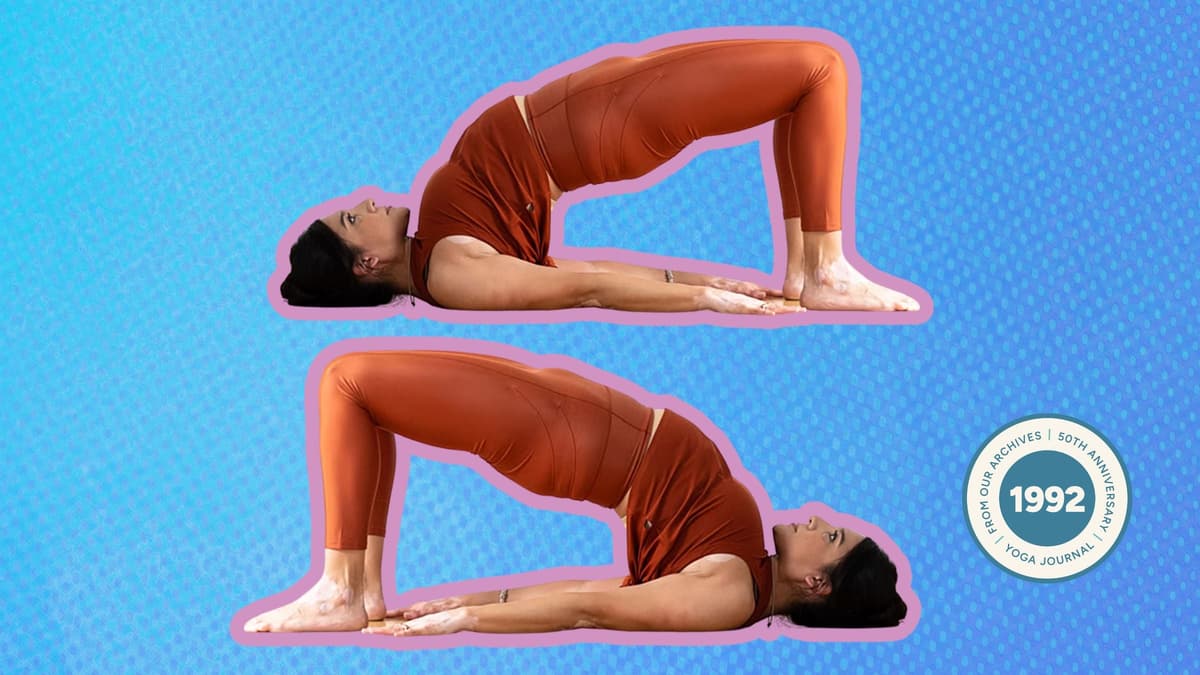
How to Use Props in Bridge Pose to Improve Your Alignment
Why It Matters
Proper prop use transforms Bridge Pose into a safer, more therapeutic practice, reducing injury risk and deepening the mind‑body connection—key for studios and teachers aiming to retain clients.
Key Takeaways
- •Use straps to keep knees over heels in beginner Bridge.
- •Wall block under sacrum creates stable, low‑impact lift.
- •Bench support allows restorative Bridge for longer holds.
- •Focus on joint space, not muscle stretch, to avoid injury.
- •Pratyahara mindset shifts awareness from outer sensations to inner alignment.
Pulse Analysis
Props have become a cornerstone of modern yoga, offering practitioners a tangible way to honor the body’s structural limits while still pursuing depth. In Bridge Pose, the strategic use of straps, blocks, benches, and even sandbags creates a reliable foundation that isolates the hips, shoulders, and spine. This mechanical support frees the practitioner from over‑reliance on superficial muscle tension, allowing the subtle joint receptors to guide alignment. By prioritizing joint space over muscle stretch, yogis achieve a more balanced lift, reducing the likelihood of knee or lower‑back strain.
The article breaks down four progressive Bridge variations, each designed to meet a specific skill level. Beginners start with a strap around the ankles to keep the knees aligned over the heels, preventing forward knee drift. The wall‑supported version places a block under the sacrum, offering a low‑impact lift that is ideal for students with back concerns. A restorative bench setup enables prolonged holds, encouraging deep relaxation and joint opening. The advanced full bridge integrates hand‑to‑rib‑cage support and toe balance, demanding precise joint awareness and core engagement. Across all variations, the consistent cue is to monitor the front and back of the hip and shoulder joints, creating space where needed.
For yoga studios and teacher‑training programs, mastering prop‑based Bridge techniques translates into a marketable differentiator. Clients increasingly seek evidence‑based practices that mitigate injury while delivering measurable benefits such as improved spinal flexibility and pelvic stability. Incorporating these prop‑driven cues into class curricula can boost client retention, attract health‑focused demographics, and position studios at the forefront of the wellness industry’s shift toward mindful, anatomy‑informed yoga.
How to Use Props in Bridge Pose to Improve Your Alignment
Comments
Want to join the conversation?
Loading comments...