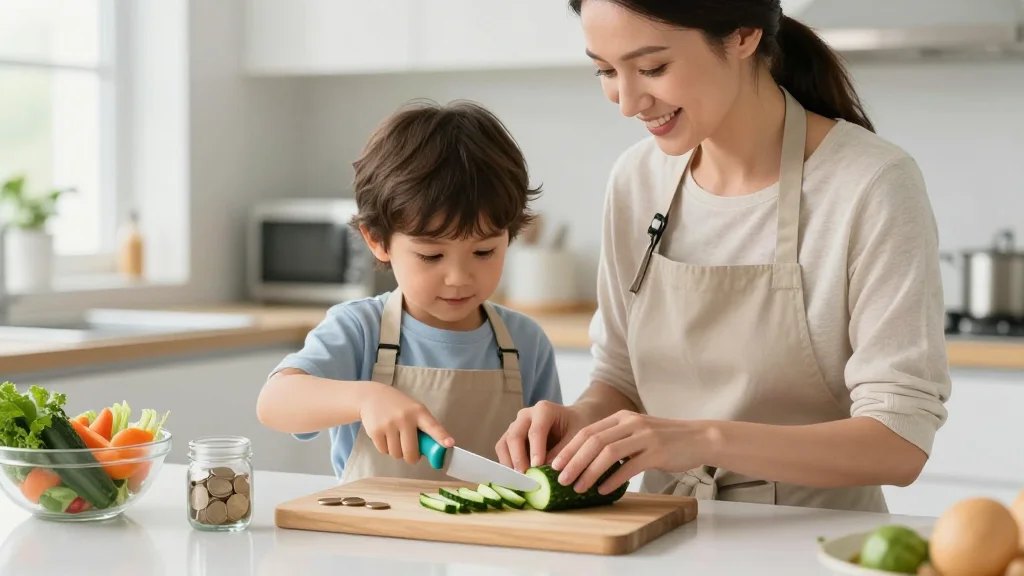
My 4-Year-Old Was a Picky Eater. Allowing Him to Cook Dinner Changed That.
Why It Matters
Involving toddlers in food preparation builds confidence, reduces picky‑eating, and strengthens parent‑child connections—key factors for healthier lifelong eating habits. The practice also signals a growing market for child‑friendly kitchen tools and Montessori‑style parenting resources.
Key Takeaways
- •Child cooks simple tasks, like cucumber shapes, boosting willingness to eat
- •Hands‑on cooking turns mealtime mess into focused learning experience
- •Parental supervision with age‑appropriate tools ensures safety while fostering independence
- •Shared kitchen activities strengthen parent‑child bond and reduce picky‑eating habits
Pulse Analysis
Parents are increasingly turning to Montessori‑inspired strategies that embed learning in everyday chores, and the kitchen is emerging as a prime classroom. When a toddler participates in food prep, the sensory experience—touching textures, smelling aromas, and seeing colors—creates a direct link between effort and consumption. This hands‑on exposure counters the typical aversion that develops when children are passive observers, turning meals from a battlefield into a collaborative project. Industry analysts note a surge in demand for child‑sized knives, silicone safety guards, and low‑heat appliances designed for young chefs.
Implementing kitchen involvement requires clear safety protocols and incremental skill building. Start with non‑sharp tools such as cookie cutters or plastic knives to shape vegetables, then progress to supervised chopping using child‑proof knives. Establish a designated stool or step‑ladder so the child can reach the counter safely, and assign simple responsibilities like washing produce or measuring spices. While mess is inevitable, setting a cleanup routine reinforces responsibility and turns the post‑cook phase into another learning moment. Parents report that the structured chaos not only reduces mealtime battles but also cultivates patience and fine‑motor development.
The broader implications extend beyond the dinner table. Early culinary engagement fosters a lifelong appreciation for nutrition, potentially lowering future healthcare costs associated with poor diets. It also fuels a niche market for educational cooking kits and subscription boxes tailored to preschoolers. As more families adopt this approach, retailers and content creators are poised to deliver resources that blend safety, fun, and nutrition, reinforcing the idea that a spoonful of participation can indeed make the medicine go down.
My 4-year-old was a picky eater. Allowing him to cook dinner changed that.
Comments
Want to join the conversation?
Loading comments...