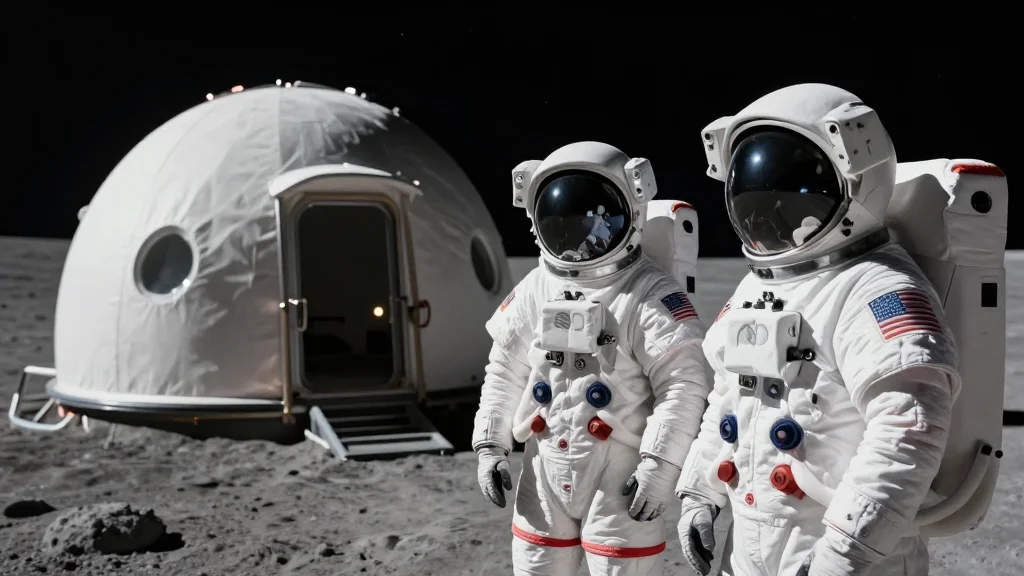
Simulation Could Prevent a Psychological Catastrophe on the Moon
Companies Mentioned

Why It Matters
Understanding crew psychology helps Artemis planners prevent morale‑driven failures, safeguarding mission success and costly lunar infrastructure.
Key Takeaways
- •ABM predicts crew morale impacts mission resource stability.
- •Larger lunar crews show higher success odds in simulations.
- •Conflict risk rises sharply after extended isolation periods.
- •Model integrates Antarctic analog data for realistic stress factors.
- •Findings guide Artemis planners on crew composition and support systems.
Pulse Analysis
The race to establish a permanent presence on the Moon has shifted from pure engineering to a holistic view that includes human psychology. NASA’s Artemis program, backed by commercial partners such as SpaceX and Blue Origin, now faces the reality that months of isolation, confinement, and harsh terrain can erode morale and decision‑making. Traditional selection processes identify resilient individuals, but they cannot anticipate the emergent dynamics of a tightly knit crew under stress. This gap has prompted researchers to turn to computational social science for predictive insight.
The George Mason University team introduced an agent‑based model that treats each astronaut as a virtual agent with personality traits, skill sets, and health status. By running tens of thousands of iterations, the model reproduces feedback loops where minor disagreements amplify into resource‑shortage scenarios, mirroring findings from the 100‑day Antarctic Lambert Glacier expedition. Such analog missions provide a rare data set on isolation‑induced stress, allowing the simulation to calibrate emotional fatigue, conflict frequency, and recovery rates. The result is a sandbox where planners can test crew size, task allocation, and support protocols before a single launch.
Early results indicate that larger crews buffer interpersonal volatility, but prolonged missions still generate a tipping point where morale collapses and critical systems falter. For Artemis, this insight translates into concrete recommendations: incorporate redundancy in crew roles, schedule regular psychological debriefs, and embed autonomous conflict‑resolution tools within habitat software. Commercial lunar developers can also leverage the model to design habitats that promote social cohesion, such as shared communal spaces and adjustable lighting that mimics Earth cycles. As humanity prepares for Mars, the ability to simulate and mitigate psychological failure may become as vital as propulsion technology.
Simulation could prevent a psychological catastrophe on the Moon
Comments
Want to join the conversation?
Loading comments...