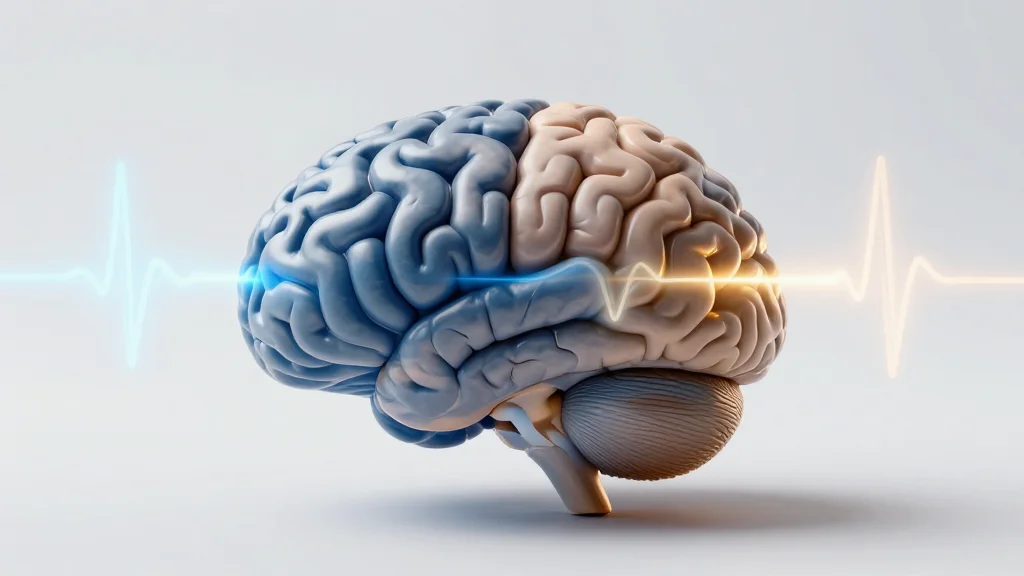
Study Finds Brain‑Wave Markers on Opposite Hemispheres Predict Anxiety and Depression in Teens

Why It Matters
Early identification of mental‑health risk factors is a cornerstone of preventive wellness. By providing a biologically grounded, age‑specific marker, the study equips clinicians, educators, and parents with a tool to intervene before disorders become entrenched, potentially lowering the societal burden of anxiety and depression. Moreover, the lateralized nature of the findings aligns with longstanding theories of emotional processing, bridging basic neuroscience with applied mental‑health practice. The ability to differentiate anxiety from depression at the neural level also promises more personalized treatment pathways. Rather than a one‑size‑fits‑all approach, interventions can be directed at the right‑hemisphere circuitry for anxiety or the left‑hemisphere circuitry for depression, enhancing efficacy and reducing unnecessary exposure to broad‑spectrum therapies.
Key Takeaways
- •Seven‑year longitudinal study of 300 children tracked from age 7 to 13.
- •EEG markers at age 9 predict anxiety (right‑hemisphere) or depression (left‑hemisphere) by age 13.
- •Alpha and beta‑1 network patterns serve as the predictive signals.
- •Findings validated on the independent Healthy Brain Network dataset.
- •Potential for early, non‑invasive interventions such as neurofeedback and TMS.
Pulse Analysis
The study marks a pivotal moment for the wellness industry’s mental‑health segment, where objective neurobiological data can finally complement subjective symptom checklists. Historically, wellness programs have relied on self‑report scales, which are vulnerable to bias and under‑reporting, especially among adolescents. Introducing EEG‑based risk stratification could catalyze a new class of data‑driven wellness products, from wearable EEG headbands that monitor lateralized activity to AI‑powered platforms that flag at‑risk youths for early counseling.
From a market perspective, the findings could accelerate investment in neurofeedback and brain‑stimulation technologies tailored to specific hemispheric targets. Companies that can integrate these biomarkers into scalable, user‑friendly solutions stand to capture a growing demand for preventive mental‑health services, especially as schools and insurers seek cost‑effective ways to curb rising treatment costs. However, regulatory scrutiny will intensify; any commercial device claiming diagnostic capability must navigate FDA pathways and demonstrate clinical validity across diverse populations.
In the longer term, the research may reshape how we conceptualize mental‑health wellness. By anchoring anxiety and depression to distinct neural circuits, it encourages a shift from symptom‑based categorization to circuit‑based personalization. This paradigm could influence everything from insurance reimbursement models to the design of corporate wellness programs, ultimately fostering a more proactive, scientifically grounded approach to mental‑health prevention.
Study Finds Brain‑Wave Markers on Opposite Hemispheres Predict Anxiety and Depression in Teens
Comments
Want to join the conversation?
Loading comments...