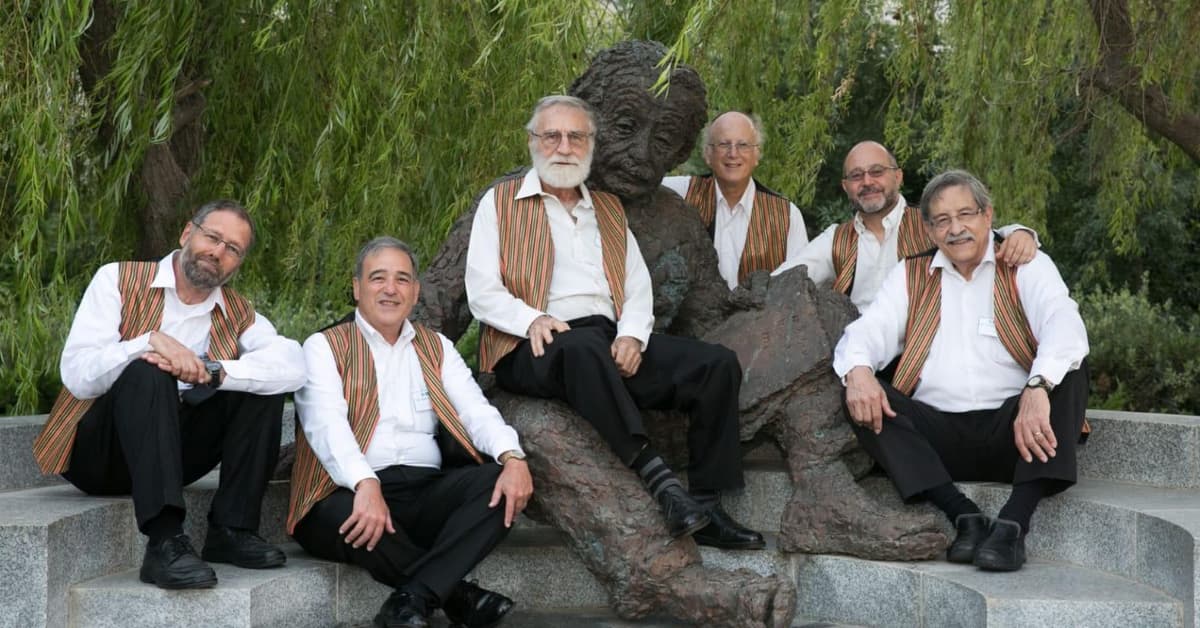
What Every Man Could Learn From a Barbershop Quartet
Companies Mentioned
Simon & Schuster

William Morrow
Why It Matters
By demonstrating how coordinated, low‑ego collaboration boosts emotional well‑being, barbershop offers a replicable blueprint for modern workplaces seeking stronger team cohesion and reduced burnout.
Key Takeaways
- •Barbershop provides a structured venue for male vulnerability and shared activity
- •Group singing forces participants to expose emotions, fostering authentic intimacy
- •The quartet’s interdependence model mirrors healthy collaborative relationships
- •Barbershop Harmony Society’s code bans politics, keeping focus on harmony
Pulse Analysis
The resurgence of barbershop harmony reflects a deeper cultural need for male intimacy that goes beyond casual conversation. Historically, men waiting for a haircut turned idle moments into four‑part singing, creating a socially acceptable outlet for emotional expression. Today, that tradition offers a template for how men can bond through activity rather than words, addressing a gap identified by scholars like Deborah Tannen who note that male connection often thrives on shared tasks. By framing vulnerability as a collective performance, barbershop sidesteps the stigma that typically surrounds men’s emotional health.
From a psychological standpoint, the quartet operates as a live laboratory of sublimation and flow. Participants must align pitch, timing, and dynamics, exposing personal tension in a controlled, supportive environment. This exposure triggers the brain’s reward circuitry, producing the “peak state” athletes describe and the “flow” psychologists have studied for decades. The experience reinforces interdependence: each voice is essential, and the group’s overall sound depends on the weakest link, mirroring the dynamics of high‑performing teams where individual contributions are amplified by collective effort.
Business leaders can translate these lessons into actionable strategies for team building and corporate culture. Structured, non‑task‑driven gatherings—whether musical, athletic, or creative—create safe spaces for employees to reveal authentic selves without the pressure of performance metrics. The Barbershop Harmony Society’s explicit code prohibiting politics and personal gain underscores the importance of neutral, purpose‑driven collaboration, a principle that can reduce workplace friction and boost morale. Integrating such rituals into regular schedules can improve communication, lower burnout, and foster a resilient, interdependent workforce ready to tackle complex challenges.
What Every Man Could Learn from a Barbershop Quartet
Comments
Want to join the conversation?
Loading comments...