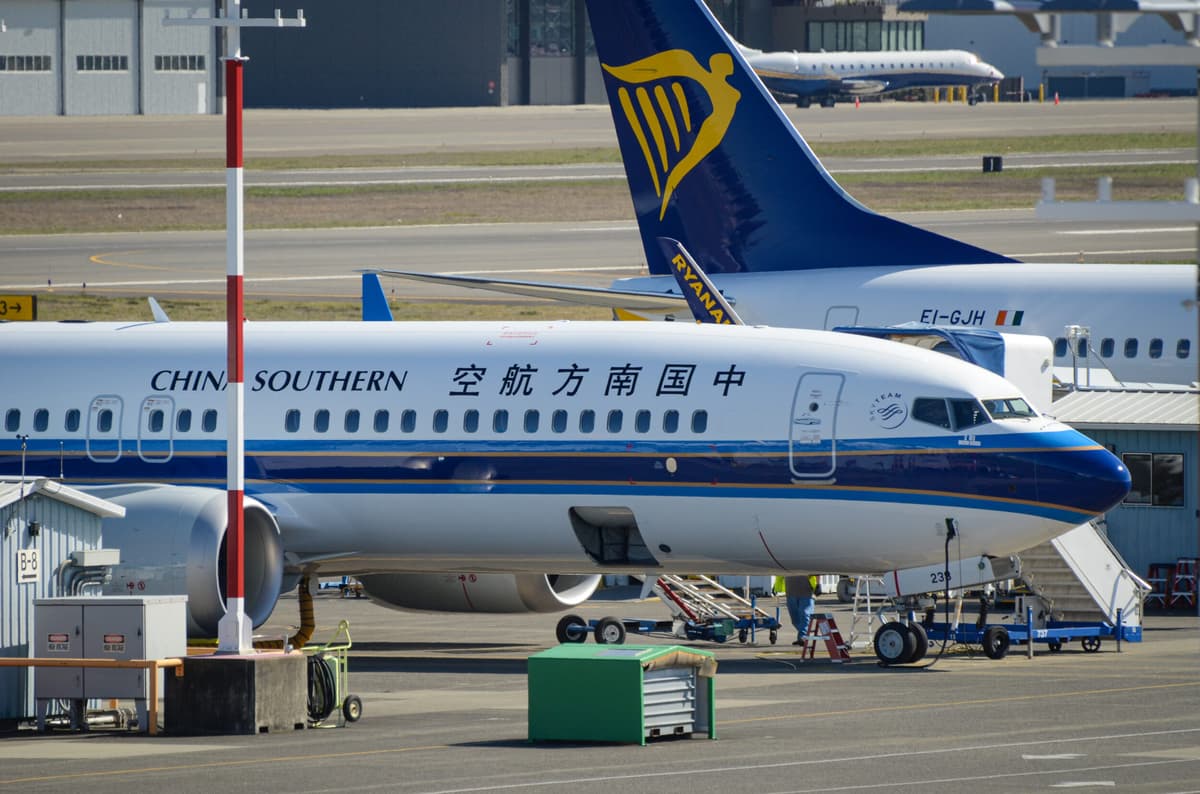
Boeing Ends a Nearly Decade-Long Sales Drought to China
Key Takeaways
- •Boeing secures initial 200‑aircraft commitment, possible total 750
- •Shares dropped 9.4% amid contract‑detail uncertainty
- •GE Aerospace to supply engines for all Chinese deliveries
- •China previously missed “Phase One” aircraft purchase commitments
- •Deal highlights aerospace sector’s role in U.S.-China competition
Pulse Analysis
The Chinese market has long been a prize for Western aerospace manufacturers, yet Boeing has not logged a new sale there since 2014. The 2020 “Phase One” trade agreement, signed at the White House, promised China would purchase up to 300 commercial jets, a pledge that never materialized. By finally securing an initial order for 200 aircraft, Boeing signals that diplomatic overtures and market incentives are aligning, but the lack of disclosed model specifics—whether narrow‑body 737s or wide‑body 777s—keeps analysts guessing about the deal’s profitability and production impact.
Financial markets reacted sharply. Boeing’s stock fell over 9% despite President Trump’s comments that the total could reach 750 jets, suggesting investors are more concerned with contract certainty than headline numbers. The involvement of GE Aerospace as the engine supplier adds another layer of exposure; GE’s earnings will be tied to the same delivery schedule and any potential delays. For Boeing, the deal could lift its commercial backlog and improve cash flow, but the uncertainty around firm order status may affect revenue recognition and future guidance, prompting a cautious outlook from Wall Street.
Beyond balance sheets, the agreement is a barometer of U.S.-China strategic competition. Aviation is a high‑technology sector where supply chain security and national prestige intersect. If the deal proceeds smoothly, it could pave the way for deeper commercial ties and signal a thaw in trade tensions. Conversely, any hiccup—whether regulatory, political, or logistical—could reinforce Beijing’s push for domestic aircraft development and further fragment the global aerospace market. Stakeholders will watch closely for contract finalization, delivery timelines, and any policy shifts that could reshape the competitive landscape.
Boeing ends a nearly decade-long sales drought to China
Comments
Want to join the conversation?