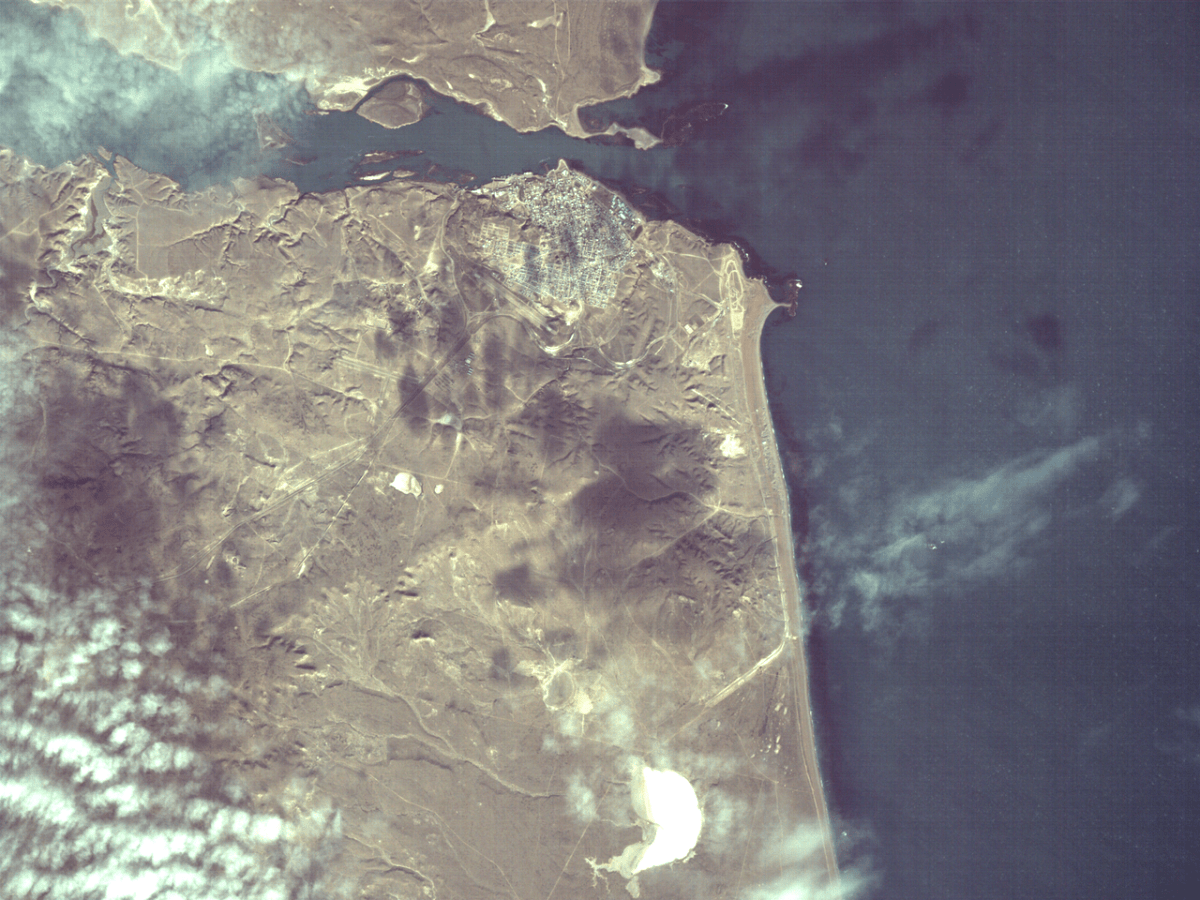
A Satellite Just Learned to Find Things on Its Own — Here’s What that Means
Companies Mentioned

Why It Matters
Onboard AI cuts data latency and operational costs, turning satellites from passive sensors into active, decision‑making platforms. The breakthrough accelerates the commercial space‑AI market and opens new revenue streams for data‑as‑a‑service providers.
Key Takeaways
- •Loft Orbital's Yam‑9 runs Gemma 3 VLM onboard for autonomous detection.
- •Onboard AI reduces raw data downlink, speeding analyst workflows.
- •Success paves way for 50‑100 satellite constellations with real‑time monitoring.
- •Competitors like Planet Labs and Kepler are also testing space‑based GPUs.
- •Vision‑language models could become digital assistants for lunar or Martian missions.
Pulse Analysis
The integration of a vision‑language model (VLM) into an Earth‑observation satellite marks a turning point for space‑based analytics. Traditional workflows rely on bulk data transmission to ground stations, where analysts sift through terabytes of imagery. By embedding Gemma 3—a model designed for edge environments—directly on the spacecraft, Loft Orbital eliminates much of that latency, allowing the satellite to interpret visual data in situ. This shift not only streamlines operations but also reduces bandwidth costs, a critical factor as constellations grow larger and demand more frequent observations.
Technically, the achievement hinges on marrying advanced AI with rugged, low‑power hardware. The Nvidia Jetson Orin AGX GPU provides the necessary compute horsepower while staying within the strict power envelope of orbital platforms. NASA JPL’s NAVI‑Orbital software stripped down libraries and memory footprints to fit the satellite’s constraints, demonstrating that sophisticated models can be trimmed for space without sacrificing performance. For commercial operators, this opens a path to offer "intelligent" data services—customers receive pre‑filtered, context‑rich insights rather than raw pixels, enhancing the value proposition of satellite‑as‑a‑service business models.
Looking ahead, the success of Yam‑9 is likely to catalyze broader adoption across the industry. Companies like Planet Labs and Kepler Communications are already experimenting with onboard GPUs, hinting at a future where fleets of AI‑enabled satellites provide continuous, real‑time monitoring of borders, infrastructure, and environmental changes. Beyond Earth, the same technology could serve as an interactive digital assistant for astronauts, interpreting visual cues on lunar or Martian surfaces without the need for cumbersome input devices. As the economics of space compute improve, VLMs may become a standard payload, reshaping both commercial and scientific missions.
A satellite just learned to find things on its own — here’s what that means
Comments
Want to join the conversation?
Loading comments...