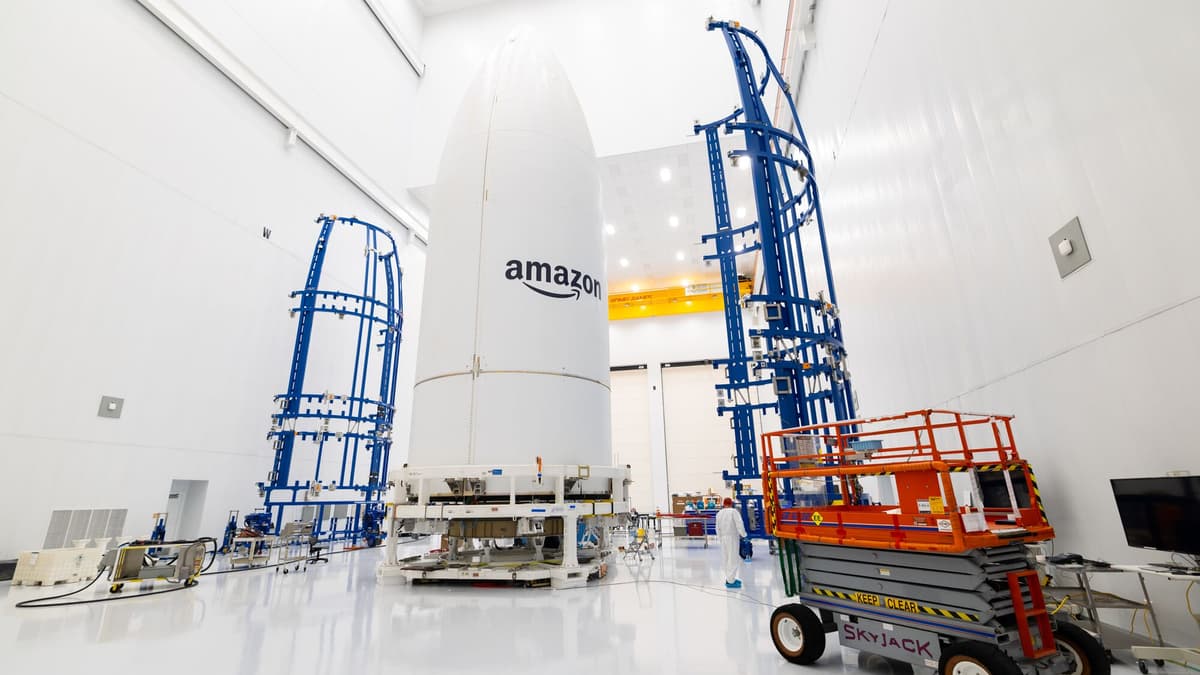
Amazon Leo Gets a Satellite Deployment Extension
Companies Mentioned
Why It Matters
The extension strengthens competition in the satellite broadband market and accelerates connectivity for underserved regions, pressuring incumbents to improve service and pricing.
Key Takeaways
- •FCC grants Amazon Leo 24‑month deployment extension
- •Interim milestone now July 30 2028; full deployment July 30 2029
- •Over 300 satellites launched; 700 targeted by mid‑2026
- •New Glenn failure impacts <25% of planned launches
- •Multiple partners (ULA, Arianespace) secure >100 launches
Pulse Analysis
Amazon’s Leo constellation is positioned as the most direct challenger to SpaceX’s Starlink, aiming to deliver broadband connectivity from a fleet of 3,236 low‑Earth‑orbit satellites. The recent FCC order granting a 24‑month extension pushes the interim deployment target to July 30 2028 while keeping the full‑scale rollout deadline at July 30 2029. Regulators highlighted the public‑interest benefit of a second large‑scale satellite broadband system, underscoring the strategic importance of diversifying the market and expanding service options for consumers and enterprises alike. The extension also aligns with Amazon’s broader cloud‑services strategy, leveraging satellite connectivity to enhance AWS edge offerings.
Amazon Leo has already placed more than 300 satellites into orbit and plans to reach roughly 700 by the end of July 2026. The programme’s launch cadence was temporarily slowed by adverse weather, technical setbacks, and the recent explosion of Blue Origin’s New Glenn heavy‑lift vehicle, which was slated to carry 48 Leo satellites. Nevertheless, the constellation relies on a diversified launch portfolio that includes United Launch Alliance’s Atlas V, Arianespace’s Ariane 6, and additional ULA missions, collectively securing over 100 launch slots and mitigating the impact of any single‑vehicle failure.
The extension gives Amazon Leo additional time to refine its technology, finalize pricing, and target underserved rural and remote markets where terrestrial broadband remains scarce. By entering service in mid‑2026, Leo will intensify price competition, potentially driving down subscription costs and spurring innovation among satellite operators. Moreover, the FCC’s endorsement signals a broader policy shift toward encouraging multiple high‑capacity constellations, which could attract further investment and accelerate the rollout of global high‑speed internet connectivity.
Amazon Leo gets a satellite deployment extension
Comments
Want to join the conversation?
Loading comments...