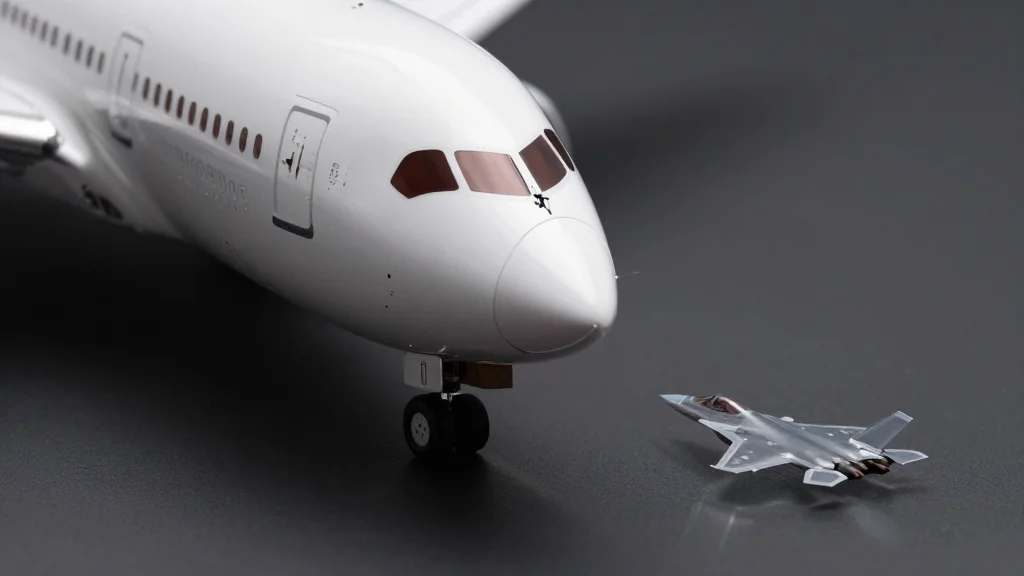
Boeing Anticipates Surge in China Orders as US‑China Talks Heat Up

Companies Mentioned

Why It Matters
The potential increase in Boeing sales to China signals a re‑energized commercial‑aviation link between the United States and its largest competitor, affecting global aircraft supply chains and airline fleet strategies. At the same time, the accelerated U.S. defense investment in the F‑47 underscores how military competition is reshaping aerospace priorities, with implications for technology sharing, export controls, and the balance of power in the Indo‑Pacific. Together, these dynamics illustrate how diplomatic overtures can have immediate commercial consequences while also feeding into broader strategic calculations. A sustained rise in Chinese orders would bolster Boeing’s earnings, support U.S. jobs, and reinforce the company’s position against rivals such as Airbus. Conversely, heightened defense spending could strain Boeing’s resources and shift focus toward high‑cost military projects, potentially impacting its ability to meet commercial delivery timelines. The interplay between commercial growth and defense imperatives will shape the aerospace sector’s trajectory over the next decade.
Key Takeaways
- •Boeing expects larger Chinese aircraft orders after President Trump's summit remarks.
- •Pentagon requests $5.03 billion for FY 2027 to speed up the Boeing‑led F‑47 fighter program.
- •China’s J‑36 and J‑50 sixth‑generation fighter prototypes have accelerated U.S. defense funding by 65 percent.
- •Analysts estimate a 10 percent lift in Chinese orders could add roughly $3 billion to Boeing’s 2026 revenue.
- •Upcoming Shanghai Airshow will be a key venue for Boeing to showcase new models to Chinese carriers.
Pulse Analysis
Boeing’s optimism reflects a broader trend where commercial aviation is increasingly used as a diplomatic lever. The company’s ability to convert political goodwill into firm orders depends on navigating a complex web of export controls, technology‑transfer concerns, and the lingering mistrust that has characterized U.S.-China trade relations for years. While Trump’s public endorsement of Boeing sales may open doors, the real test will be the depth of the contracts and the speed of regulatory approvals.
The parallel surge in defense spending highlights a strategic calculus that goes beyond commercial profit. By anchoring the F‑47 program to Boeing, the Pentagon ensures that the firm’s advanced manufacturing capabilities are leveraged for national security, but it also risks diverting engineering talent and capital away from civilian projects. This dual‑use pressure could lead to longer development cycles for both fighter jets and commercial aircraft, especially if supply‑chain bottlenecks arise from heightened demand for high‑performance composites and avionics.
Looking ahead, the outcome of President Xi’s upcoming U.S. visit will be a litmus test for the resilience of the aerospace relationship. If the visit yields concrete policy signals—such as eased export‑control restrictions or joint research agreements—Boeing could lock in a wave of orders that would offset any short‑term volatility in defense budgets. Conversely, a hardening of positions could stall the anticipated sales surge, forcing Boeing to lean more heavily on other growth markets like Southeast Asia and the Middle East. In either scenario, the interplay between diplomatic gestures and aerospace economics will remain a defining feature of the industry’s evolution.
Boeing anticipates surge in China orders as US‑China talks heat up
Comments
Want to join the conversation?
Loading comments...