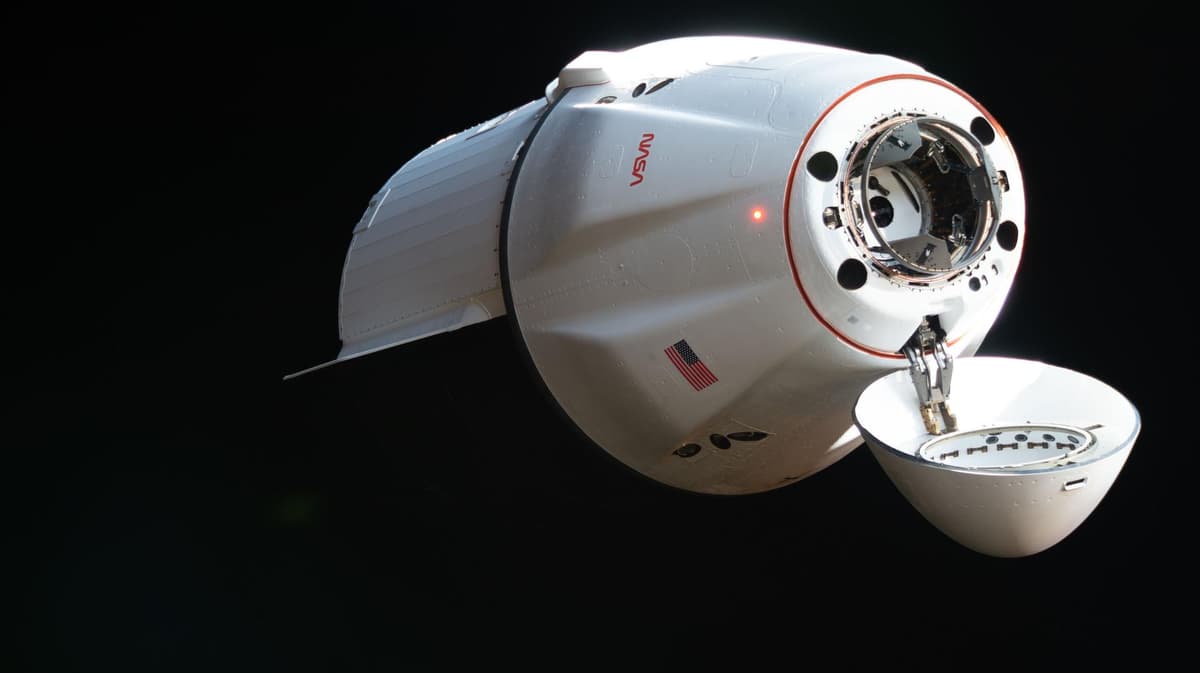
NASA to Cover 34th SpaceX Resupply Mission Space Station Departure
Companies Mentioned
Why It Matters
The return of high‑value experiments accelerates biomedical and materials breakthroughs, while the successful CRS partnership underscores the growing role of commercial providers in sustaining low‑Earth‑orbit operations.
Key Takeaways
- •Dragon undocks June 16, splashes down California June 17.
- •Carries ~6,500 lb of supplies, experiments for Expedition 74.
- •Returns bioprinted organ tissue and DNA‑inspired materials for cancer research.
- •Includes hardware like ocular imaging device and air‑filtering absorbent bed.
- •34th CRS flight reinforces NASA‑SpaceX collaboration for Artemis and Mars plans.
Pulse Analysis
The 34th Commercial Resupply Services (CRS) flight marks another milestone in NASA’s long‑term partnership with SpaceX. Launched on May 15 from Cape Canaveral’s SLC‑40 aboard a Falcon 9, the Dragon cargo capsule docked with the International Space Station on May 17, delivering roughly 6,500 pounds of food, spare parts and crew provisions for Expedition 74. After a two‑week on‑orbit stint, the vehicle will fire its thrusters at 12:05 p.m. EDT on June 16, separate from the Harmony module’s forward port, and begin its controlled descent toward a Pacific splash‑down near California on June 17.
The returning payload is a microcosm of the ISS’s research agenda, blending life‑science, materials and engineering experiments that have direct Earth applications. Among the cargo are bioprinted organ and cartilage samples that could shorten transplant waiting lists, and DNA‑inspired polymers being evaluated for next‑generation cancer therapeutics. Hardware such as an ocular imaging system and an absorbent‑bed air‑filter demonstrates incremental improvements to crew health monitoring and cabin environment control. By delivering these results back to terrestrial labs, the mission accelerates the translation of space‑borne discoveries into commercial products and medical treatments.
Beyond the immediate scientific return, the successful execution of CRS‑34 reinforces the commercial low‑Earth‑orbit (LEO) model that underpins NASA’s Artemis lunar gateway and future Mars ambitions. Reliable cargo deliveries keep the ISS operational, providing a testbed for technologies that will be scaled to deeper‑space habitats. The partnership also showcases how private launch capability can reduce costs and increase launch cadence, a critical factor as the agency expands its exploration portfolio. As the ISS approaches its planned retirement, each CRS mission adds valuable data for the next generation of orbital platforms.
NASA to Cover 34th SpaceX Resupply Mission Space Station Departure
Comments
Want to join the conversation?
Loading comments...