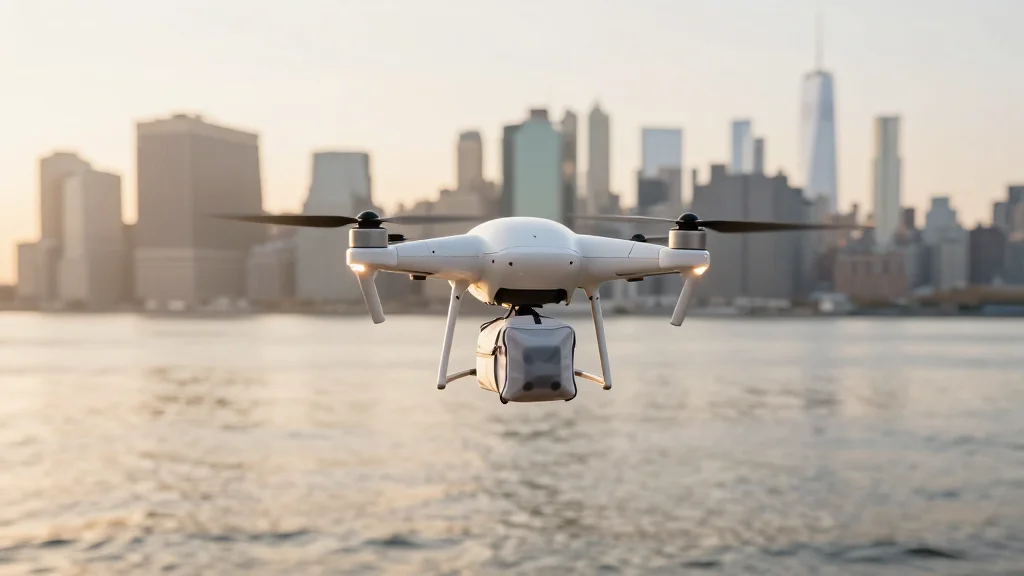
Skyports Launches Daily Drone Delivery Across NYC’s East River for Medical Supplies

Companies Mentioned
Why It Matters
Urban drone delivery promises to reshape last‑mile logistics by bypassing road congestion, cutting delivery times, and potentially lowering carbon footprints. New York City’s dense environment and complex airspace make it a litmus test for whether cargo UAVs can operate safely and profitably at scale. A successful pilot could accelerate regulatory frameworks, encourage investment in quieter, more efficient drones, and spur competition among logistics providers seeking to serve hospitals, pharmacies and other critical infrastructure. Beyond health‑care, the corridor could serve as a proving ground for broader commercial applications—such as time‑sensitive parts for manufacturers or emergency supplies during disasters. The data gathered on flight frequency, cost per pound, and community response will be valuable for cities worldwide that are evaluating similar programs, potentially catalyzing a wave of urban drone corridors that complement, rather than replace, existing delivery networks.
Key Takeaways
- •Skyports began daily weekday drone flights across the East River in early May 2026.
- •Flights carry light medical paperwork for an unnamed NYC health‑care system, with plans to add light pharmaceuticals.
- •Port Authority’s Stephan Pezdek questions whether 1‑2 flights per hour will deliver cost and speed benefits.
- •Drones operate at 60‑100 dB noise levels and require a certified FAA pilot and weekly NYPD permit.
- •Pilot’s performance data will be released later this year to guide future urban drone corridors.
Pulse Analysis
The East River drone corridor is a microcosm of the broader tension between innovative logistics and entrenched regulatory frameworks. While the payloads are modest, the program forces regulators to confront real‑world operational issues—pilot certification, noise mitigation, and community consent—that have long been theoretical. If the pilot demonstrates that a 1‑2‑flights‑per‑hour cadence can consistently beat ground‑based couriers on speed and cost, it will give policymakers concrete data to justify more permissive UAV rules, potentially unlocking autonomous operations that could further reduce labor costs.
Historically, cargo UAVs have thrived in low‑density environments where airspace is less contested. New York’s three international airports, multiple heliports, and 9,000 helicopter flights recorded in May 2023 create a high‑risk backdrop. Skyports’ ability to navigate this complexity without incident will be a benchmark for future urban deployments. Moreover, the partnership between a public authority and a private drone operator signals a shift toward public‑private models that share risk and reward, a structure that could attract additional capital to the sector.
Looking ahead, the pilot’s success could trigger a cascade of similar projects in other megacities, each adapting the New York template to local air‑traffic conditions and community expectations. The key will be scaling the technology while keeping noise, safety, and cost under control. As the data emerges, investors will likely reassess the valuation of urban drone startups, and incumbents such as Zipline and Wing may accelerate their own city‑focused initiatives to capture market share.
Skyports Launches Daily Drone Delivery Across NYC’s East River for Medical Supplies
Comments
Want to join the conversation?
Loading comments...