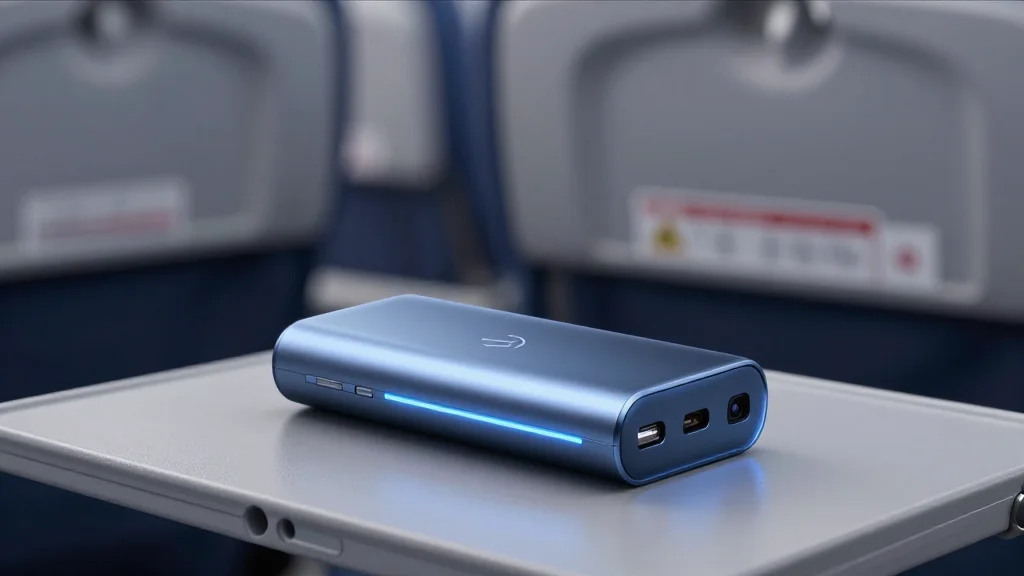
Southwest Limits Passengers to One Power Bank per Flight Amid Safety Concerns

Companies Mentioned
Why It Matters
Limiting power banks addresses a tangible safety hazard that has already caused aircraft evacuations and costly delays. By proactively tightening rules, Southwest sets a precedent that could pressure other U.S. carriers to adopt similar restrictions, potentially reshaping cabin‑policy standards across the industry. Beyond immediate safety, the policy underscores how airlines are balancing operational risk management with customer experience in an era of heightened regulatory scrutiny and volatile fuel costs. If the rule proves effective, it may encourage broader regulatory action from the FAA or the Department of Transportation, leading to a more uniform national framework for lithium‑battery transport.
Key Takeaways
- •Southwest caps portable chargers to one per passenger starting April 20, 2026
- •Power banks cannot be charged in‑seat or stored in overhead bins
- •FAA logged 97 lithium‑battery incidents in 2025 and 14 accidents this year
- •Policy follows high‑profile fires on an Airbus in Busan and an Air China flight
- •Southwest operates over 4,000 daily flights, affecting ~150 million passengers annually
Pulse Analysis
Southwest’s power‑bank restriction is a strategic response to a niche yet high‑impact safety risk. Historically, airlines have treated lithium‑battery incidents as low‑frequency events, relying on passenger education rather than hard limits. The recent uptick in documented fires, however, has shifted the risk calculus. By imposing a quantitative cap, Southwest not only reduces the probability of a battery‑induced fire but also creates a clear, enforceable standard that can be audited by regulators.
From a competitive standpoint, the move may initially irritate tech‑savvy travelers accustomed to multiple chargers for phones, tablets, and laptops. Yet the airline’s brand, built on low‑fare simplicity, could benefit from the perception of heightened safety. In a market where carriers are already adding fees for baggage and fuel surcharges, a safety‑focused policy can differentiate Southwest without directly impacting its bottom line. Moreover, the decision could preempt stricter FAA mandates, allowing the airline to shape the narrative rather than react to external directives.
Looking ahead, the policy could catalyze industry‑wide innovation in battery safety. Manufacturers may accelerate the rollout of fire‑resistant battery chemistries, while airports could expand charging stations to accommodate passengers’ needs without compromising aircraft safety. If other airlines follow suit, the cumulative effect could lower insurance premiums and reduce the operational disruptions caused by battery fires, ultimately delivering cost savings that offset the inconvenience to passengers.
Southwest Limits Passengers to One Power Bank per Flight Amid Safety Concerns
Comments
Want to join the conversation?
Loading comments...