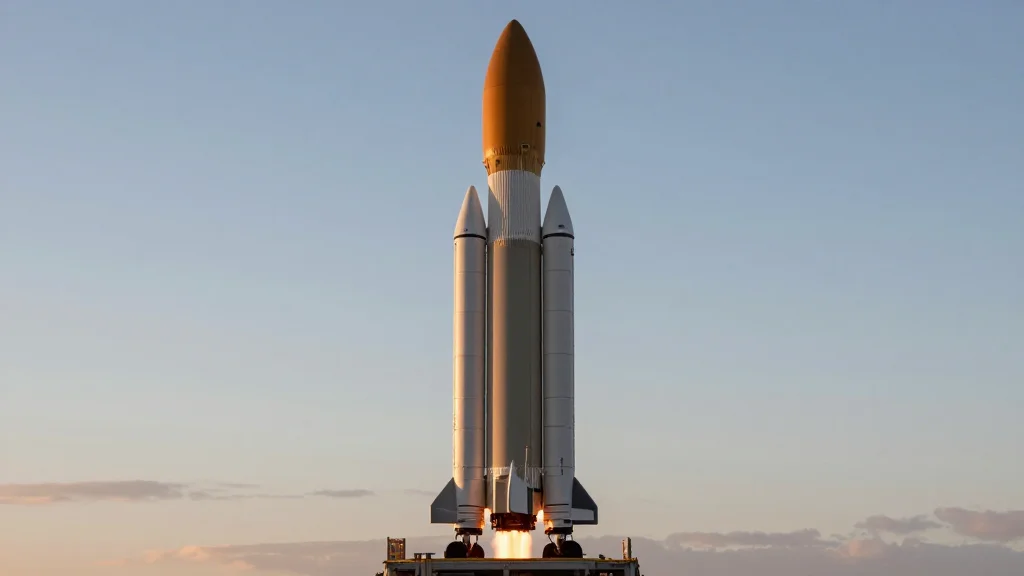
SpaceX Falcon Heavy Lifts ViaSat-3 Broadband Satellite, Underscoring Reusable Heavy‑lift Edge

Companies Mentioned

Why It Matters
The Falcon Heavy launch demonstrates that reusable heavy‑lift rockets can now reliably deliver multi‑gigaton class geostationary satellites, a capability once reserved for expendable launchers. This reduces launch costs, shortens lead times, and expands the business case for high‑throughput broadband services that can reach underserved regions across Asia and the Pacific. Moreover, the mission’s timing—amid ULA’s Vulcan setbacks and Blue Origin’s New Glenn challenges—highlights SpaceX’s growing monopoly over both low‑Earth‑orbit and geostationary markets, reshaping competitive dynamics and influencing future government procurement decisions. Additionally, the launch feeds directly into investor narratives surrounding SpaceX’s upcoming IPO. Successful high‑profile missions like ViaSat‑3 provide tangible proof points for the company’s valuation arguments, potentially unlocking trillions of dollars of capital for further expansion into AI‑driven space data centers, lunar logistics, and Mars‑bound infrastructure.
Key Takeaways
- •Falcon Heavy’s 12th flight placed ViaSat‑3 into a preliminary geosynchronous orbit
- •Side boosters landed simultaneously on Landing Zones 2 and 40, confirming reusable‑heavy‑lift reliability
- •ViaSat‑3 carries 25 kW solar power and 1 TB/s data capacity, the largest commercial satellite antenna ever launched
- •ULA’s Vulcan rocket remains grounded after a $71 million GEM 63XL charge; Blue Origin’s New Glenn lost its payload on its third flight
- •SpaceX’s upcoming IPO could value the company at $1.75 trillion, bolstered by missions like this
- •
Pulse Analysis
SpaceX’s Falcon Heavy launch is more than a technical triumph; it is a strategic inflection point for the commercial space ecosystem. By repeatedly demonstrating dual‑booster recovery, SpaceX has turned what was once a novelty into an operational norm, driving launch price elasticity to levels that were unimaginable a decade ago. This cost compression is a catalyst for new business models, from high‑throughput geostationary broadband to on‑orbit servicing and even space‑based data centers, as lower entry barriers invite a broader set of players.
The competitive fallout is stark. United Launch Alliance, once the stalwart of U.S. heavy‑lift capability, now faces a credibility gap that could translate into lost defense contracts and a shrinking market share in the lucrative GEO segment. Blue Origin’s New Glenn, while promising, has yet to prove reliability, leaving SpaceX as the default partner for both government and commercial customers seeking assured delivery. This concentration of launch capability raises regulatory and strategic questions about supply‑chain resilience, especially as the Pentagon’s budget earmarks billions for next‑generation satellite constellations.
Finally, the launch dovetails with the financial narrative surrounding SpaceX’s pending IPO. Investors are weighing tangible performance—like the ViaSat‑3 mission—against ambitious, longer‑term bets on AI‑enabled orbital infrastructure. The market’s response will likely set the tone for capital allocation across the aerospace sector, influencing everything from satellite manufacturing pipelines to the pace of lunar and Martian development programs. If SpaceX can sustain its launch cadence while delivering on its broader vision, the company may not only dominate the launch market but also become the linchpin of a new, vertically integrated space economy.
SpaceX Falcon Heavy lifts ViaSat-3 broadband satellite, underscoring reusable heavy‑lift edge
Comments
Want to join the conversation?
Loading comments...