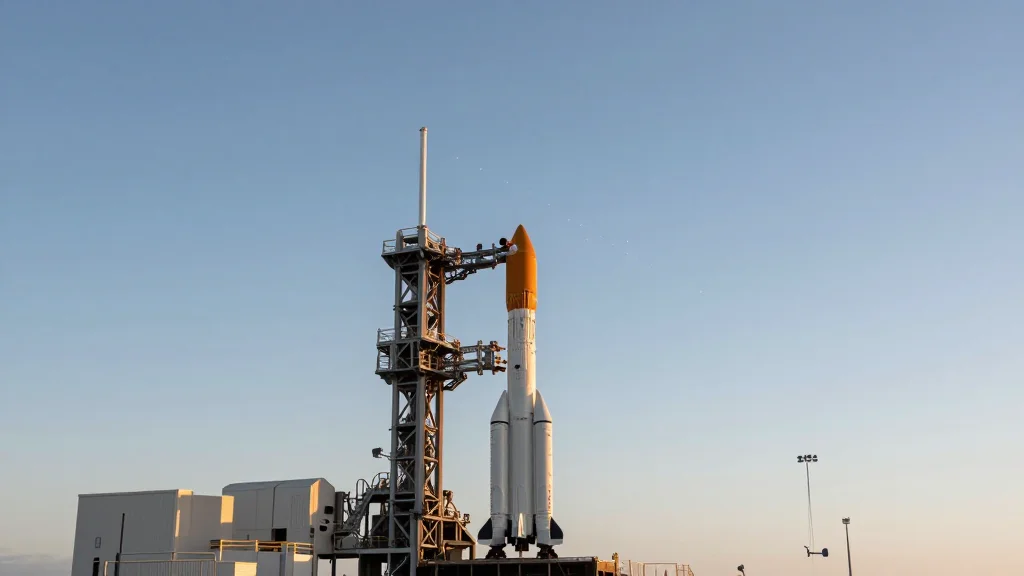
SpaceX Launches 29 Starlink V2 Mini Satellites on Falcon 9 From Cape Canaveral

Companies Mentioned
Why It Matters
The addition of 29 V2 Mini satellites pushes SpaceX’s Starlink constellation past the 10,000‑satellite threshold, a scale that enables higher network capacity and lower latency for users worldwide. This expansion strengthens SpaceX’s competitive edge against other megaconstellation projects, potentially shaping the future of global internet access and influencing policy discussions around spectrum allocation and orbital debris management. Moreover, the continued success of booster reuse—evidenced by the 614th landing—demonstrates a sustainable launch economics model that could lower entry barriers for future commercial and governmental satellite deployments. As broadband demand grows in remote and emerging markets, SpaceX’s ability to rapidly field new satellites may accelerate digital inclusion and create new revenue streams across sectors such as telemedicine, education, and IoT connectivity.
Key Takeaways
- •29 Starlink V2 Mini satellites launched, bringing the constellation to >10,000 units
- •Falcon 9 booster B1078 completed its 28th flight and landed on ‘A Shortfall of Gravitas’ for the 151st time
- •Launch marked SpaceX’s 60th orbital flight of 2026 (59 Falcon 9, 1 Falcon Heavy)
- •Deployment occurred at T+61 minutes 26 seconds after liftoff at 7:48 a.m. EDT
- •Mission succeeded despite an 85% favorable weather forecast and potential cumulus cloud rule concerns
Pulse Analysis
SpaceX’s relentless launch cadence is more than a showcase of engineering prowess; it is a strategic maneuver to lock in market dominance in the nascent space‑based broadband arena. By fielding the V2 Mini variant, the company is not only expanding capacity but also testing a modular architecture that can be scaled quickly and cost‑effectively. This approach contrasts with competitors like Amazon, which have faced delays and higher launch costs due to less mature reuse capabilities.
The economics of booster reuse have reached a tipping point where each successful landing translates directly into lower marginal launch costs. With 614 booster recoveries, SpaceX can price its launch services competitively, attracting a broader customer base beyond its own satellite fleet. This pricing power could force rivals to either accelerate their own reuse programs or seek alternative launch providers, reshaping the launch services market.
Looking forward, the real test will be the performance of the V2 Mini satellites in orbit. If they deliver the promised throughput gains, SpaceX could command premium pricing for high‑bandwidth services, especially in underserved regions where terrestrial infrastructure is lacking. Conversely, any technical setbacks could open a window for competitors to capture market share. The next few months, therefore, will be critical in determining whether SpaceX’s current momentum translates into long‑term dominance or whether the competitive landscape will re‑balance as other players mature their constellations.
SpaceX launches 29 Starlink V2 Mini satellites on Falcon 9 from Cape Canaveral
Comments
Want to join the conversation?
Loading comments...