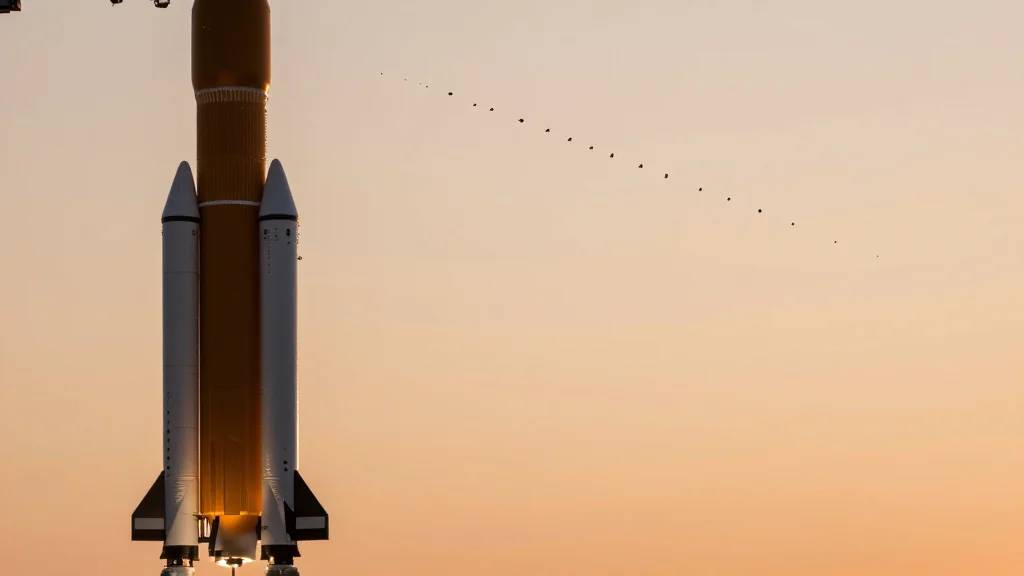
SpaceX’s 50th Falcon 9 Launch of 2026 Deploys 25 Starlink V2 Mini Satellites

Companies Mentioned
Why It Matters
SpaceX’s ability to launch 50 Falcon 9 rockets in a single year demonstrates a level of operational scalability that could redefine the economics of satellite broadband. By repeatedly reusing boosters like B1088, the company drives down per‑satellite launch costs, making high‑speed internet more affordable for remote users and expanding its market share against emerging competitors. The deployment of V2 Mini satellites also signals a technological upgrade that promises higher data rates and lower latency, essential for applications ranging from telemedicine to remote education. As the constellation densifies, the service’s reliability improves, potentially accelerating global digital inclusion and influencing policy decisions around broadband access in underserved regions.
Key Takeaways
- •SpaceX’s 50th Falcon 9 launch of 2026 carried 25 Starlink V2 Mini satellites.
- •Booster B1088 completed its 15th flight and achieved the 193rd landing on the drone ship Of Course I Still Love You.
- •The mission marked the 603rd successful booster landing in SpaceX’s history.
- •V2 Mini satellites offer higher throughput, expanding Starlink’s broadband reach.
- •The launch cadence positions SpaceX ahead of rivals OneWeb and Project Kuiper in constellation growth.
Pulse Analysis
SpaceX’s launch cadence is not merely a bragging right; it reshapes the economics of space‑based internet. By achieving 50 Falcon 9 flights in a year, the company spreads fixed costs—such as launch‑pad operations, range fees, and ground‑segment infrastructure—over a larger number of payloads, driving down the average cost per satellite. This cost advantage translates into lower subscription prices for end‑users, a critical factor in markets where price sensitivity is high.
Historically, satellite constellations have been limited by launch capacity and high per‑launch costs. The reusable booster model, now in its double‑digit flight numbers, breaks that barrier. Competitors like OneWeb, which relies on a mix of new and refurbished launch vehicles, face higher marginal costs, potentially slowing their rollout schedules. Amazon’s Project Kuiper, still awaiting its first launch, will need to match SpaceX’s cadence to remain viable.
Looking forward, the real test will be how SpaceX manages orbital congestion. The rapid insertion of V2 Mini units increases the risk of collision and amplifies the need for robust traffic‑management systems. If SpaceX can maintain its launch tempo while adhering to emerging debris‑mitigation standards, it will cement its dominance in the broadband‑satellite market. Conversely, any regulatory setbacks or technical failures could expose the fragility of a model that leans heavily on high‑frequency launches.
SpaceX’s 50th Falcon 9 Launch of 2026 Deploys 25 Starlink V2 Mini Satellites
Comments
Want to join the conversation?
Loading comments...