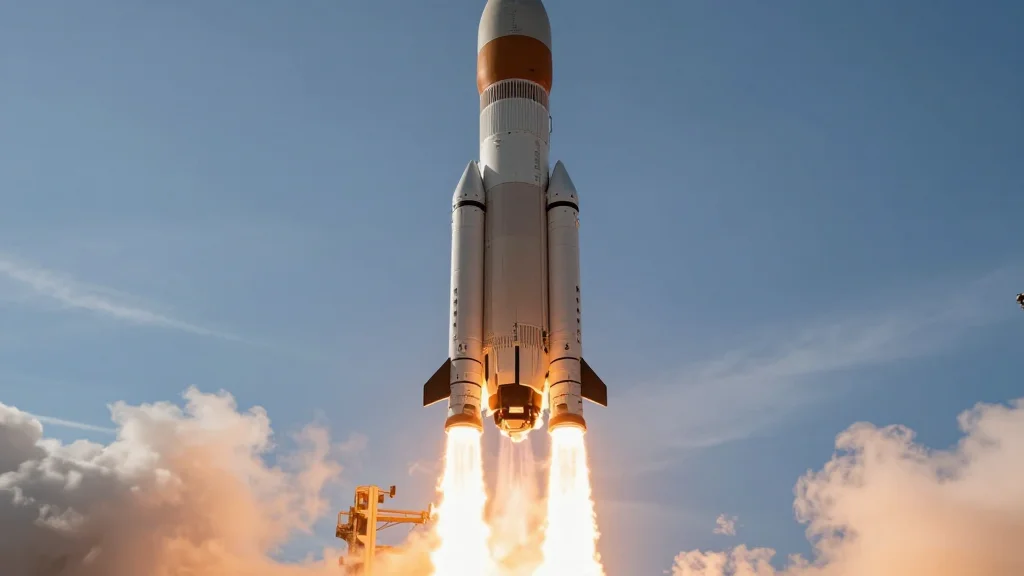
ULA Atlas V Lifts 29 Amazon Kuiper Satellites, Sets Record 23‑day Turnaround

Companies Mentioned

Why It Matters
The launch demonstrates that legacy launch providers like United Launch Alliance can adapt to the high‑tempo launch cadence demanded by mega‑constellations, challenging the perception that only newer, reusable rockets can meet such schedules. By shaving days off the pad turnaround, ULA improves its competitiveness against SpaceX, which has leveraged rapid re‑flight of its Falcon 9 boosters to dominate commercial satellite launches. For Amazon, each successful Kuiper deployment narrows the gap with rival constellations such as SpaceX’s Starlink and OneWeb, bringing the promise of low‑cost, high‑speed internet to underserved regions. The accelerated launch cadence also reduces the financial exposure of the multi‑year, multi‑billion‑dollar Kuiper program, allowing Amazon to generate revenue sooner and justify continued investment.
Key Takeaways
- •ULA Atlas V launched 29 Amazon Kuiper satellites on April 28, 2026 at 8:52 p.m. EDT.
- •Pad turnaround time set a new record: 23 days, 19 hours, 6 minutes, beating the previous 26‑day record.
- •Launch brings Kuiper’s on‑orbit total to 270 satellites, part of a planned 3,200‑satellite network.
- •Weather forecast indicated an 80‑85 % chance of favorable conditions; launch proceeded despite a recent SpaceX Falcon Heavy scrub.
- •ULA employed a two‑shift launch‑pad flow, compressing tasks normally spread over two days.
Pulse Analysis
United Launch Alliance’s ability to compress its launch‑pad flow signals a strategic shift in the commercial launch market. Historically, ULA has relied on a methodical, high‑reliability approach that emphasized schedule robustness over speed. By introducing a two‑shift model that halves the typical pre‑launch timeline, ULA is directly addressing the demand for rapid cadence driven by mega‑constellation builders. This operational tweak could translate into more competitive pricing and higher launch frequency, eroding SpaceX’s cost advantage that stems largely from reusability and fast turnaround.
Amazon’s Kuiper program is at a critical inflection point. With 270 satellites now in orbit, the network is moving from a demonstration phase to a service‑ready architecture. However, the path to 3,200 satellites requires sustained launch capacity across multiple providers. ULA’s record turnaround not only secures a reliable slot for Amazon but also diversifies risk—if SpaceX experiences weather‑related delays or technical setbacks, Amazon can fall back on ULA’s proven Atlas V. This redundancy is essential for meeting the aggressive broadband rollout timeline Amazon has promised to investors and regulators.
Looking ahead, the real test will be whether ULA can replicate this compressed schedule at scale. If the two‑shift model proves repeatable without compromising safety, it could become a new industry benchmark, prompting other legacy providers to revisit their own launch‑pad processes. For the broader aerospace sector, the shift underscores a market where speed, cost, and reliability are converging, and where the ability to launch on demand may become as valuable as the payload capacity itself.
ULA Atlas V lifts 29 Amazon Kuiper satellites, sets record 23‑day turnaround
Comments
Want to join the conversation?
Loading comments...