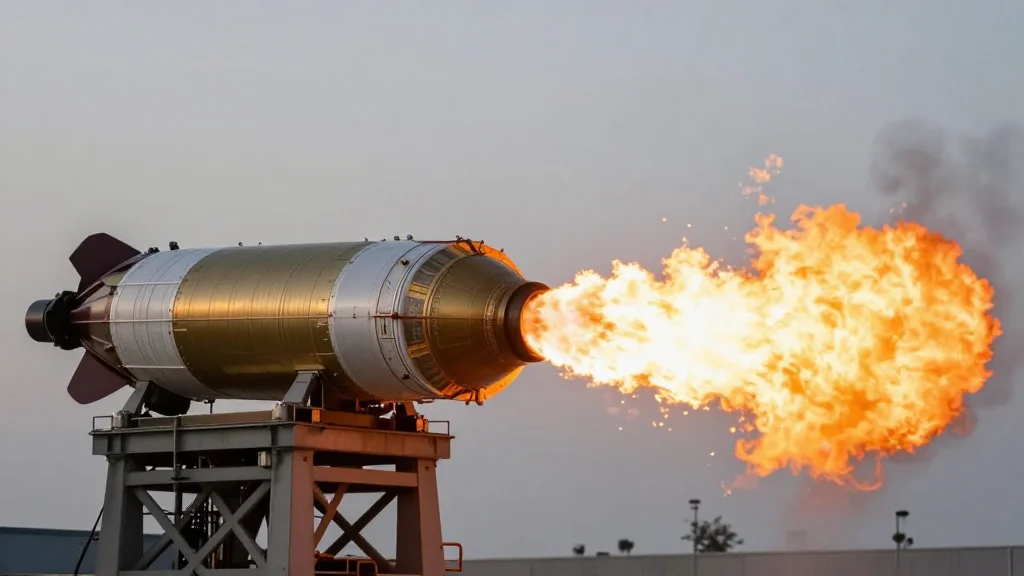
ULA Completes Static Fire of GEM‑63XL Booster, Clearing Path for Vulcan Return to Flight

Companies Mentioned

Why It Matters
The GEM‑63XL static‑fire test provides critical validation for the solid‑rocket component of Vulcan, the United States’ primary heavy‑lift vehicle slated to replace both Atlas V and Delta IV. By confirming that new nozzle designs and propellant formulations perform as expected, ULA reduces technical risk ahead of its return‑to‑flight, a launch that will signal the readiness of a domestically sourced, high‑capacity launch system. This is especially important as NASA’s lunar‑base architecture and the commercial lunar‑payload market demand reliable, high‑mass lift capability that is not dependent on foreign launch providers. A successful return to flight also strengthens ULA’s competitive position against private rivals that are racing to certify reusable heavy‑lift rockets. If Vulcan can demonstrate consistent performance with the upgraded solid boosters, it could capture a larger share of the growing government and commercial launch backlog, ensuring U.S. strategic autonomy in space access.
Key Takeaways
- •April 15 2026: Northrop Grumman completes static fire of GEM‑63XL solid booster for ULA’s Vulcan.
- •Test validates new nozzle design and advanced propellant technology across ULA’s solid‑motor portfolio.
- •February 12 2026 USSF‑87 launch experienced a nozzle failure on one SRB, causing asymmetric thrust and roll.
- •ULA expects Vulcan to return to flight by the end of 2026, with Amazon likely as the first commercial customer.
- •New Amazon‑branded Vertical Integration Facility (VIF‑A) adds a dedicated lane for commercial Vulcan launches.
Pulse Analysis
ULA’s static‑fire milestone is more than a technical checkpoint; it is a strategic lever in the broader U.S. launch ecosystem. The GEM‑63XL booster, with its upgraded nozzle and propellant, promises higher specific impulse and better thrust vector control, addressing the exact failure mode that plagued the USSF‑87 mission. By closing that loop, ULA not only mitigates a known risk but also creates a performance envelope that can support heavier payloads to geosynchronous orbit and beyond, a capability that has been a competitive advantage for SpaceX’s Falcon Heavy and is now essential for Artemis‑related missions.
The timing aligns with a surge in demand from NASA’s lunar‑base roadmap, which calls for a steady cadence of heavy‑lift launches to deliver habitat modules, landers and logistics. Simultaneously, the commercial sector—led by Amazon’s Project Kuiper and other satellite constellations—needs reliable, high‑throughput launch services. Vulcan’s return could shift market dynamics, offering a U.S.‑built alternative to the increasingly dominant reusable launchers. If ULA can demonstrate a rapid turnaround using the new VIF‑A, it may erode the lead that private firms have built on launch cadence.
However, the path forward is not without challenges. The investigation into the February nozzle failure must yield actionable fixes, and the company must prove that the upgraded solid motor can survive multiple flight cycles without compromising safety. Moreover, the broader industry is watching how ULA balances the cost of solid‑motor upgrades against the price pressures from reusable competitors. Success will hinge on ULA’s ability to translate this static‑fire data into a repeatable, cost‑effective launch cadence that satisfies both government and commercial customers.
ULA completes static fire of GEM‑63XL booster, clearing path for Vulcan return to flight
Comments
Want to join the conversation?
Loading comments...