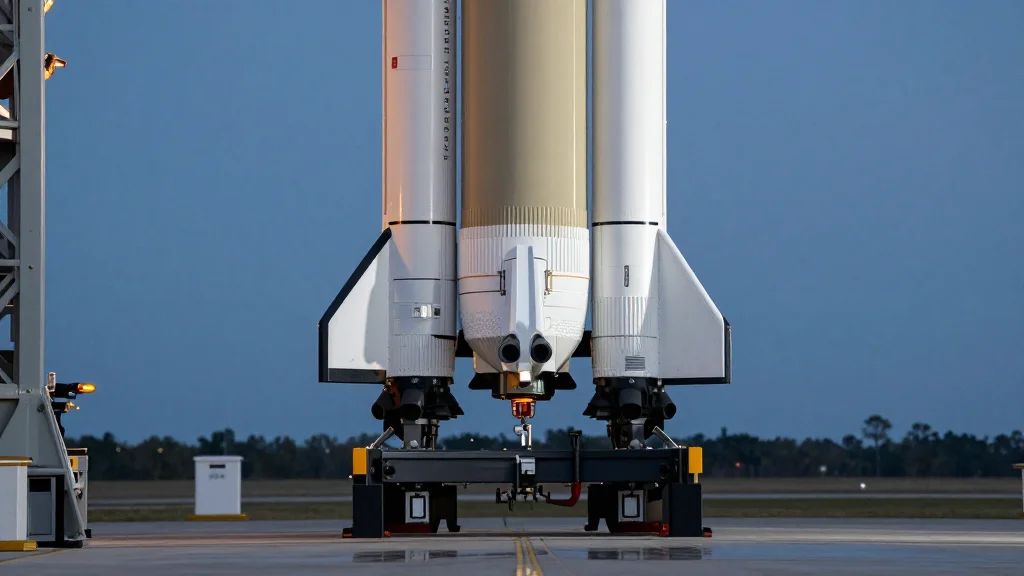
ULA’s Atlas V 551 Set for Amazon LEO‑6 Launch Monday Night From Cape Canaveral

Companies Mentioned

Why It Matters
The Atlas V 551 launch represents a critical juncture for both United Launch Alliance and Amazon’s broadband ambitions. For ULA, the mission reinforces the Atlas V’s relevance as the company phases in its Vulcan Centaur, ensuring a revenue stream and operational experience that can be transferred to the next‑generation vehicle. For Amazon, each successful launch brings the LEO constellation closer to the scale needed to deliver competitive internet service globally, directly challenging incumbents and expanding digital inclusion. The partnership also illustrates how large‑scale commercial agreements can shape launch market dynamics, influencing capacity allocation, pricing, and the strategic choices of other satellite operators. Furthermore, the mission underscores the importance of range safety and regulatory compliance in an increasingly crowded launch environment. As more entities vie for launch windows from Florida’s spaceports, the ability to secure timely approvals becomes a competitive advantage. The success or delay of this flight will provide a real‑time case study of how launch providers and satellite operators navigate these constraints while pursuing aggressive deployment timelines.
Key Takeaways
- •Atlas V 551 launch targeted for Monday, April 27, 8:52‑9:21 p.m. EDT from SLC‑41, Cape Canaveral
- •Mission carries the next batch of Amazon LEO broadband satellites, part of a >3,000‑satellite constellation
- •Sixth ULA launch for Amazon under the largest commercial launch agreement, covering eight Atlas V and 38 Vulcan launches
- •Rocket configuration includes five solid rocket boosters and a medium‑length payload fairing
- •Launch pending final range approval; success will bolster ULA’s Atlas V relevance and Amazon’s broadband rollout
Pulse Analysis
United Launch Alliance’s decision to continue flying the Atlas V for high‑value payloads like Amazon’s LEO satellites reflects a pragmatic approach to revenue diversification during the Vulcan transition. While the industry narrative often frames the Atlas V as a legacy system destined for retirement, its proven reliability and payload capacity keep it attractive for customers with stringent performance requirements. Amazon’s mixed‑fleet strategy—locking in both Atlas V and Vulcan slots—mitigates risk and ensures continuity, a tactic likely to be emulated by other large satellite operators seeking to avoid single‑point failures.
From a market perspective, the launch highlights the growing importance of satellite broadband as a strategic asset for both commercial and defense stakeholders. The ability to deliver internet to remote or contested regions can influence geopolitical dynamics, especially as nations invest in resilient communications infrastructure. Amazon’s aggressive deployment schedule, backed by a sizable launch contract, signals confidence in the commercial viability of LEO broadband, potentially accelerating investment in competing constellations and prompting regulators to streamline launch approvals.
Looking ahead, the success of this mission will set the tone for ULA’s upcoming Vulcan Centaur cadence. If the Atlas V continues to meet launch windows without delay, ULA can leverage that reliability record to attract additional customers to Vulcan, positioning the new vehicle as the workhorse for the next decade. Conversely, any setbacks could amplify pressure on ULA to accelerate Vulcan’s operational readiness, reshaping the competitive landscape against SpaceX’s dominant launch cadence. The interplay between legacy and next‑generation launch systems will be a defining storyline for the aerospace sector throughout 2026 and beyond.
ULA’s Atlas V 551 Set for Amazon LEO‑6 Launch Monday Night from Cape Canaveral
Comments
Want to join the conversation?
Loading comments...