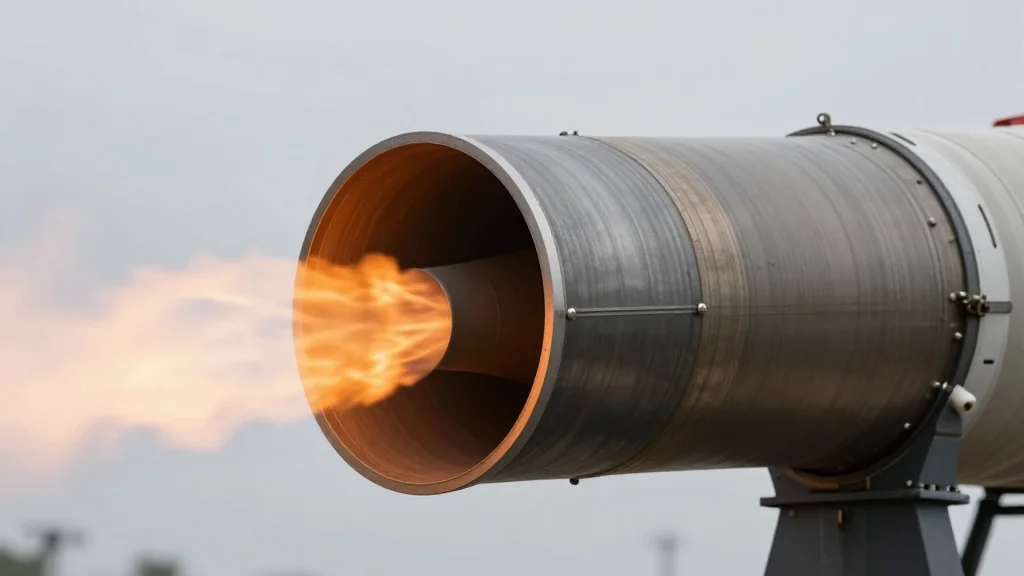
ULA’s Northrop Grumman‑Led Static Fire Test Advances Vulcan SRB Fixes

Companies Mentioned
Why It Matters
The static fire test is pivotal for ULA’s Vulcan program, which underpins U.S. heavy‑lift launch capability for both national security and deep‑space missions. Resolving the SRB nozzle anomaly restores confidence in the vehicle’s reliability, a prerequisite for NASA’s Artemis lunar gateway and commercial lunar payload services. Moreover, the test showcases ULA’s partnership with Northrop Grumman, reinforcing a domestic supply chain that reduces dependence on foreign rocket components. A successful return‑to‑flight will also solidify ULA’s role as the launch provider of choice for high‑value customers like Amazon and the U.S. Space Force. By demonstrating rapid problem‑solving and technology upgrades, ULA can capture a larger share of the burgeoning launch market, which is projected to exceed $30 billion annually by 2030.
Key Takeaways
- •April 15: Northrop Grumman completed a static fire of the GEM‑63XL SRB, validating new nozzle designs and propellant technology.
- •The test addresses the asymmetric thrust incident on Vulcan’s USSF‑87 launch on Feb. 12, 2026.
- •Gary Wentz, ULA VP, said the BE‑4 engines compensated for the roll, keeping the mission within safety limits.
- •ULA expects Vulcan to return to flight by the end of 2026, with Amazon likely as the next customer.
- •The first Vulcan booster was hoisted into the new VIF‑A facility, expanding ULA’s integration capacity.
Pulse Analysis
ULA’s decision to fast‑track a static fire of the GEM‑63XL reflects a broader industry shift toward modular, upgradable launch systems. Historically, solid‑rocket boosters have been treated as static, legacy components, but ULA’s emphasis on nozzle redesign and advanced propellants signals a willingness to treat them as iterative platforms. This approach could yield performance gains—higher specific impulse and reduced mass penalties—that narrow the gap between solid and liquid propulsion efficiencies.
From a market perspective, the successful test mitigates a risk that could have opened a window for competitors like SpaceX or Blue Origin to capture Vulcan’s high‑value payloads. By demonstrating that the anomaly is understood and fixable, ULA reassures both government and commercial customers that schedule disruptions will be minimal. The timing aligns with NASA’s lunar gateway schedule and Amazon’s growing launch cadence, both of which demand reliable heavy‑lift access.
Looking forward, the integration of the new SRB technology into the Vulcan stack could set a precedent for future ULA vehicles, including the proposed next‑generation heavy‑lift concepts that may incorporate hybrid propulsion. If the upgraded SRB delivers measurable performance improvements, ULA could leverage that data to negotiate more favorable contracts, especially as the U.S. government pushes for domestic, resilient launch capabilities. The static fire thus serves not only as a technical fix but also as a strategic signal that ULA remains at the forefront of American launch innovation.
ULA’s Northrop Grumman‑Led Static Fire Test Advances Vulcan SRB Fixes
Comments
Want to join the conversation?
Loading comments...