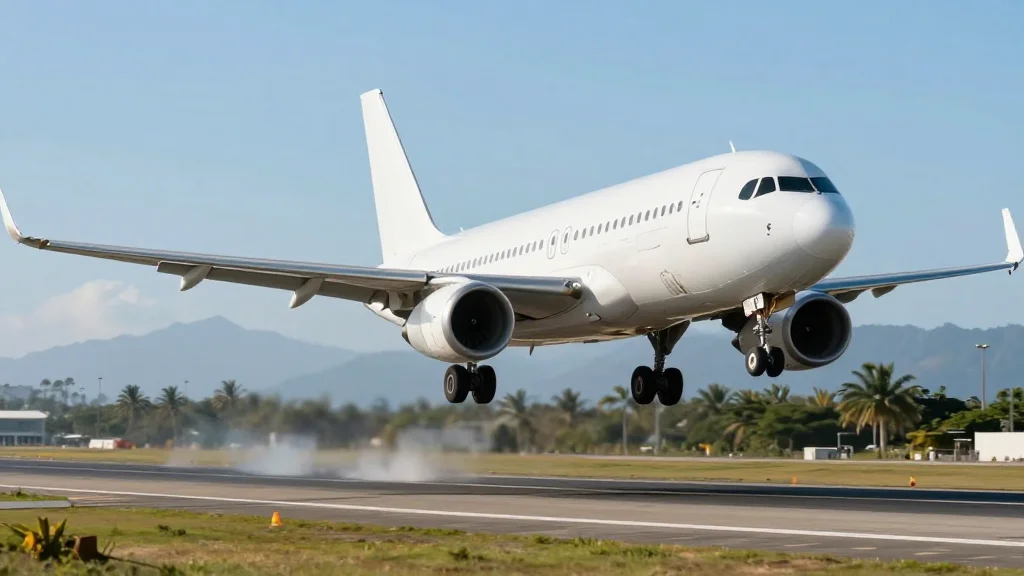
U.S. Commercial Flight Returns to Venezuela After Seven‑Year Gap

Why It Matters
The resumption of direct U.S. commercial flights to Venezuela carries weight beyond the airline industry. It signals a tentative diplomatic rapprochement after years of strained relations, providing a channel for dialogue and people‑to‑people contact that can soften political rhetoric. Economically, the route re‑opens a market that once generated significant tourism revenue and cargo traffic, offering a lifeline to Venezuelan businesses that rely on imported goods and foreign visitors. For the broader aerospace sector, the development illustrates how geopolitical shifts can quickly translate into operational opportunities, prompting airlines, airports, and ancillary service providers to reassess route strategies in the region. In the longer term, sustained air connectivity could encourage foreign investment, support the revival of Venezuela's struggling tourism sector, and contribute to regional stability by fostering economic interdependence. The flight's success will likely be watched closely by other carriers weighing the risk‑reward balance of entering markets with complex political environments.
Key Takeaways
- •U.S. commercial flight lands in Venezuela, ending a seven‑year suspension of direct service.
- •First direct U.S.–Venezuela flight since 2019, marking a diplomatic shift.
- •Airline and route details were not disclosed; the flight carried passengers after a decade‑long gap.
- •Resumption expected to boost tourism, cargo, and ancillary aviation services in both countries.
- •Future milestones include establishing a regular schedule and possible expansion of frequencies.
Pulse Analysis
The re‑opening of a U.S. commercial route to Venezuela is a textbook case of how aviation can act as a barometer for geopolitical change. Historically, airlines have been among the first to test the waters when governments signal a willingness to engage, because flight schedules are both visible and revenue‑driven. In this instance, the seven‑year gap was a product of sanctions, mutual distrust, and economic collapse on the Venezuelan side. The decision to launch a flight now suggests that Washington sees value in a pragmatic, low‑stakes engagement that can coexist with broader policy disagreements.
From a market perspective, the route is likely to start modestly. Demand forecasts will be tempered by Venezuela's ongoing economic crisis, but the mere presence of a U.S. carrier can catalyze ancillary demand—cargo shipments, business travel, and diaspora visits. Airlines with flexible fleet strategies may view the route as a test case for a broader South‑American expansion, especially as other markets in the region (e.g., Colombia, Peru) show robust growth. The success of this flight could also prompt competitors to file for traffic rights, intensifying competition and potentially driving down fares, which would further stimulate passenger volumes.
Strategically, the flight serves as a soft‑power lever for the United States. By facilitating travel, the U.S. can project influence, support humanitarian efforts, and gather on‑the‑ground intelligence without overt political maneuvering. For Venezuela, the ability to host a U.S. carrier can be leveraged domestically as evidence of a return to normalcy, bolstering the government's narrative of economic recovery. However, the sustainability of the route will hinge on the stability of bilateral relations, the ability of Venezuelan airports to meet international safety standards, and the willingness of travelers to navigate the country's complex visa and currency environment.
Overall, this development underscores the intertwined nature of diplomacy and aerospace. While the flight itself is a single event, its ripple effects could reshape regional connectivity, influence airline network planning, and serve as a modest but meaningful step toward easing decades‑long tensions between the United States and Venezuela.
U.S. Commercial Flight Returns to Venezuela After Seven‑Year Gap
Comments
Want to join the conversation?
Loading comments...